
Watering
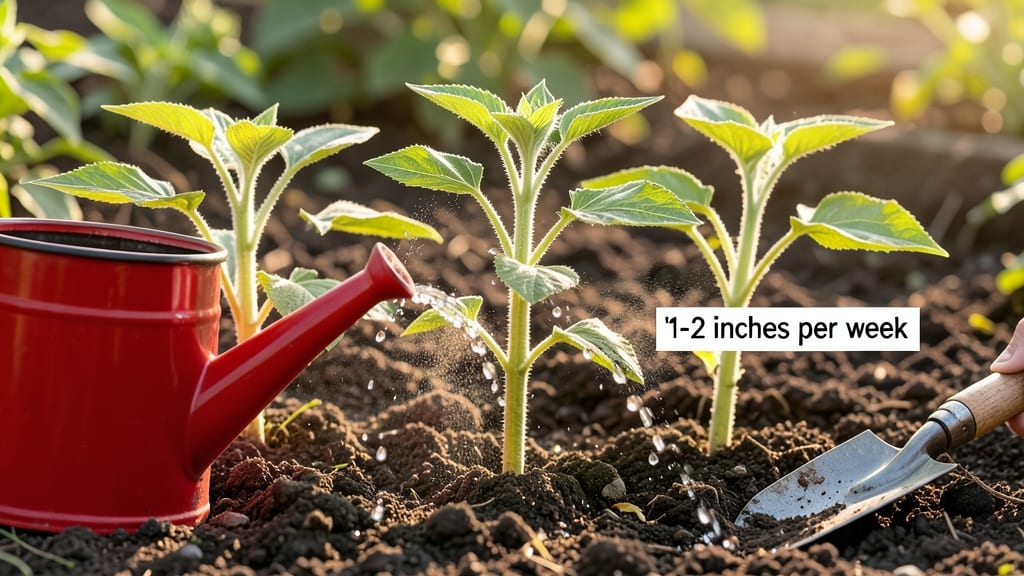
To water sunflower seedlings properly, timing is everything—too much and you risk drowning their roots, too little and they’ll wilt before reaching their towering potential. 🌻 The key lies in a consistent schedule that adapts as your seedlings grow, ensuring strong roots without the guesswork.
I’ve learned the hard way that sunflower seedlings in Zone 6a need more than just a quick splash from the hose. In their first 14 days, they crave moisture like a sponge, but as they mature, their thirst changes.
Let me break down the exact schedule to keep your seedlings thriving from sprout to sky-high stems.
You’ll discover how to check soil moisture like a pro, spot the signs of over- or under-watering before it’s too late, and adjust for your local climate. No more second-guessing—just a foolproof routine that saves time and grows healthier sunflowers.
Ready to unlock the secrets to fast root growth? Let’s dive into the daily checklist that’ll turn your seedlings into sun-soaked giants by summer.
Optimal watering frequency for sunflower seedlings by growth stage
Sunflower seedlings start their lives with tiny roots that need just the right amount of moisture to establish strong growth. Too little water stunts development, while too much triggers damping-off disease—a fungal nightmare for young plants.
The key is understanding their three critical growth phases and adjusting your watering routine accordingly.
During the germination phase (3-5 days), seeds require constant moisture to break dormancy, but their delicate sprouts can't handle soggy soil. After germination, the seedling phase (7-14 days) demands careful balance, and by early growth (15-30 days), roots deepen and can tolerate slightly longer dry spells.
Let's break down the science-backed schedule that prevents both thirst and rot.
| Growth Stage | Watering Frequency | Soil Moisture Test | Key Risks | Pro Tip |
|---|---|---|---|---|
| Germination (Days 3-5) | Keep soil evenly moist (light misting daily) | Top ½ inch should feel damp but not wet | Damping-off from overwatering | Use spray bottle for gentle hydration |
| Seedling Phase (Days 7-14) | Water every 2-3 days (deep soak) | Top 1 inch should be moist but not soggy | Root rot from poor drainage | Water at soil level, not leaves |
| Early Growth (Days 15-30) | Water every 3-5 days (adjust for heat) | Top 2 inches should be 60% moist | Wilting from underwatering | Use mulch to retain moisture |
For the germination phase (3-5 days), I recommend using a spray bottle to maintain consistent moisture without disturbing seeds. The goal is to keep the top ½ inch of soil damp—never soggy.
A simple test: stick your finger in and feel for moisture. If it feels dry at that depth, it's time to water lightly.
Once seedlings emerge (around 7-14 days), shift to deep watering every 2-3 days. This encourages roots to grow downward rather than staying shallow. Use your finger to check 1 inch deep—the soil should feel moist but not clingy.
Overwatering here is dangerous; it creates the perfect conditions for damping-off disease, which turns seedlings to mush overnight.
By 15-30 days, your sunflowers are building stronger root systems and can handle slightly longer dry spells. Water every 3-5 days, adjusting based on your climate. In hot, dry weather, you might need to water daily, while cooler conditions allow for 5-day intervals.
Always water at the base of the plant to avoid wetting leaves, which can cause fungal issues.
One of my biggest mistakes early on was assuming "more water = better growth." I once lost an entire tray of seedlings to root rot because I kept them too wet. The lesson? Drainage matters.
Use containers with drainage holes and avoid letting seedlings sit in saucers of water. If your soil feels cold or clumps together when squeezed, it's too wet.
For outdoor seedlings, morning watering is ideal—it gives moisture time to penetrate before the heat of the day. In containers, check soil moisture more frequently since they dry out faster.
Pro tip: Mulch with straw or shredded leaves to lock in moisture and keep roots cool. This simple step can reduce your watering frequency by 20-30%.
Watch for visual cues like wilting leaves or yellowing at the base—these signal underwatering. Conversely, dark spots or mold mean you're overdoing it. Adjust your schedule based on these signs rather than sticking rigidly to the timeline.
Remember, sunflowers are resilient once established, but those first few weeks are critical for setting them up for success.
When in doubt, less water is better than too much. Sunflowers can bounce back from brief dry spells, but they'll never recover from waterlogged roots. With this stage-by-stage approach, you'll give your seedlings the perfect foundation to grow into those towering beauties you planted them to be. 🌻
Signs your sunflower seedlings need water (and when to hold back)
Your sunflower seedlings rely on consistent moisture to develop strong roots and reach their full 10-foot potential—but too much water can suffocate them. The key is learning to read their subtle signals. Young seedlings need daily moisture checks, especially in sandy soil where water drains quickly.
Start by pressing your finger 1 inch deep into the soil. If it feels dry at that depth, it's time to water. Seedlings also show thirst through leaf drooping or stems that snap when bent. These are clear signs they need hydration within 24 hours to prevent stress.
Watering Sunflower Seedlings: Pros & Cons
DO Water When...
- 🌱 Soil feels dry 1" deep
- 🌿 Leaves wilt or droop
- 💧 Stems snap when bent
- ☀️ Temps exceed 80°F (increases evaporation)
DON'T Water When...
- 🌧️ Soil is damp (soggy = root rot risk)
- 🍂 Leaves yellow or feel mushy
- 🌱 Mold appears on soil surface
- 🌡️ Rain forecasted (wait 24 hours)
Pro Tip: Use a moisture meter for accuracy—sunflower roots hate soggy conditions!
Overwatering is just as dangerous as underwatering. Look for yellowing leaves or a white, fuzzy mold on the soil—these are red flags for root rot.
If you notice these symptoms, hold off on watering and let the soil dry slightly. Seedlings can recover from mild stress, but waterlogged roots won't.
For container-grown seedlings, check moisture daily since pots dry out faster. In-ground seedlings can go 3-5 days between waterings, depending on your climate. Always water deeply in the morning to encourage strong root growth and reduce fungal diseases.
Adjust your routine based on your local humidity and soil type. Clay soil holds moisture longer, while sandy soil drains quickly. Mulching with straw helps retain moisture and keeps roots cool—just avoid piling it against the stems to prevent rot.
When in doubt, observe your seedlings' growth rate. Healthy ones grow 1-2 inches per week and stand upright. Slow growth or leaning stems signal either too little water or too much. Balance is everything!