
Light Requirements
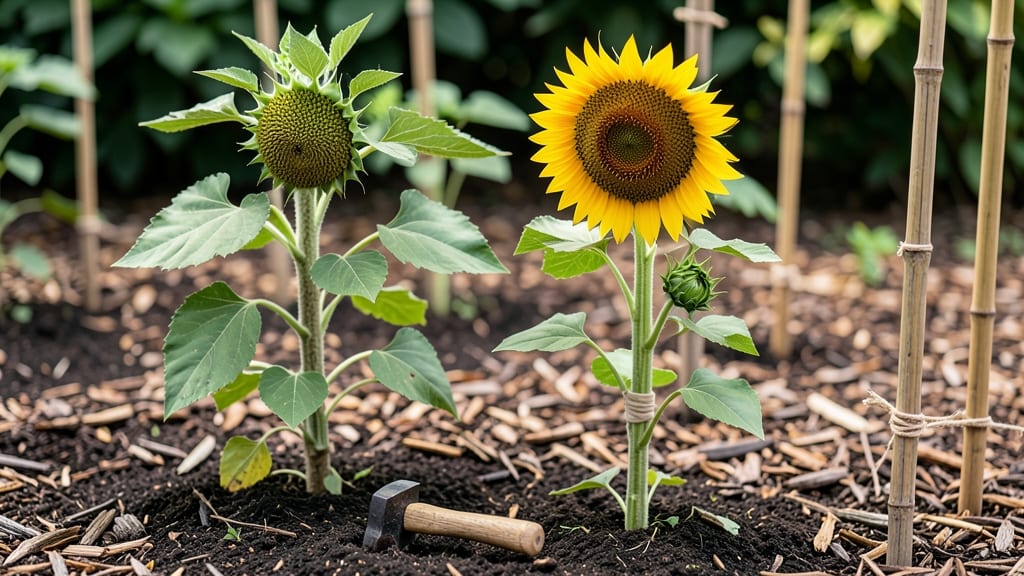
When you picture a sunflower 🌻 standing tall in your garden, you might wonder: do sunflowers need to be staked? The answer isn’t as straightforward as you’d think—whether your sunflowers need support depends entirely on their height and growing conditions.
Skipping staking could mean losing those stunning blooms to wind or weak stems.
Tall varieties like 'Russian Giant' or 'Mammoth' can reach 12 to 16 feet, making them prime candidates for staking, especially in windy areas or loose soil. Dwarf types, however, often stand proudly without support.
The key is understanding your sunflower's growth habits and local climate before deciding whether to invest in stakes or natural alternatives.
If you're growing sunflowers in USDA Zone 6a or similar regions, wind exposure becomes the most critical factor. Even sturdy stems can snap under gusts, leaving you with broken plants and disappointed dreams of those iconic golden faces.
I'll show you exactly when to stake, how to do it right, and what to do if you've already missed the window.
From simple bamboo stakes to creative DIY supports, there are easier ways to protect your sunflowers than you might think. Let’s dive into the best methods to keep your towering beauties standing strong—without turning your garden into a stake jungle.
When and why sunflowers Actually Need Staking (And When They Don’t)
Not all sunflowers need staking—but the ones that do desperately need it. Tall varieties like 'Russian Giant' or 'Mammoth' can reach 12+ feet, creating a top-heavy structure that snaps in strong winds or heavy rain.
The key? Variety height and growth conditions determine whether staking is a must or a nice-to-have.
Dwarf sunflowers (1-3 feet, like 'Teddy Bear') rarely need support unless grown in high-wind zones or loose soil. But standard varieties (6-10 feet) often lean or flop, especially when overwatered or crowded.
The rule of thumb: if your sunflower’s stem diameter is less than 1 inch at maturity, staking is highly recommended.
Staking isn’t just about wind resistance—it also prevents stem rot from wet soil splashing onto leaves. In humid climates, even dwarf varieties may benefit from light support to improve airflow. The critical threshold? When your sunflower’s height exceeds its stem thickness by 10x, support becomes non-negotiable.
🌻 Comparison Table: Do Sunflowers Need Staking?
The maturity stage also dictates staking needs. Young sunflowers (first 3 feet) are flexible and rarely snap, but once they hit 50% of their mature height, their woodiness decreases—making them vulnerable.
For example, a 12-foot 'Russian Giant' should be staked by 6 feet tall to prevent mid-stem breaks.
Soil quality plays a huge role. In sandy or rocky soil, roots struggle to anchor, increasing the need for staking. Amend your soil with compost to improve stability naturally.
If you’re growing sunflowers in containers, staking is mandatory—even for dwarf varieties—since pots offer zero root support.
Wind exposure is the #1 factor for staking decisions. In open fields, even 5-foot sunflowers may need support if winds exceed 10 mph. A quick test: if your hand wiggles the stem at the base and it moves more than 1 inch, it’s time to stake.
Pro tip: Plant in windbreaks or use group staking for clusters.
Timing matters too. Install stakes early—when plants are 4-6 inches tall—to avoid damaging roots later. Use soft ties (like cotton strips) to prevent stem girdling. The goal is to guide growth, not restrict it. Over-tightening can strangle the stem as it thickens.
For container growers, opt for cage supports or tomato cages instead of individual stakes. These provide 360-degree support without crowding roots. In high-humidity areas, add stakes to improve air circulation and reduce fungal diseases like powdery mildew.
Remember: staking isn’t about preventing all movement—sunflowers need to sway slightly to develop stronger stems. The sweet spot is minimal support that keeps them upright without restricting
How to stake sunflowers: step-by-step methods for maximum stability
Staking sunflowers isn’t just about preventing them from toppling over—it’s about giving them the structural support they need to thrive, especially when they reach 6 feet or taller. The right technique depends on your sunflower variety, local wind conditions, and the materials you have on hand.
Whether you’re growing 'Russian Giant' sunflowers or dwarf varieties, knowing how to stake properly can mean the difference between a garden showstopper and a broken stem.
I’ve tried everything from individual bamboo stakes to DIY wire mesh cages, and each method has its pros and cons. The key is to choose a support system that won’t strangle the stem or restrict growth while still providing stability.
Below, I’ll walk you through the best staking methods, including when to use them and how to avoid common mistakes that can damage your plants.
- Choose the right stakes: Use bamboo stakes (1-2 inches wide) for tall varieties or soft plant ties to avoid stem damage. For multiple plants, wire mesh cages or tomato cages work well.
- Insert stakes early: Place stakes 3-4 inches deep into the soil when plants are 12-18 inches tall. This gives roots time to anchor before the plant gets top-heavy.
- Secure gently: Tie the stem to the stake using soft cloth strips or rubber bands—never wire or tight knots. Adjust as the plant grows to prevent stem girdling.
- Use spiral wraps for flexibility: For wind-prone areas, wrap the stem loosely with plastic spiral plant ties as it grows. This allows movement while providing support.
- Group supports for clusters: If planting multiple sunflowers, use a central stake or cage and weave stems together for shared support. This mimics natural wind resistance.
- Avoid root damage: Never stake too close to the stem—keep stakes 2-3 inches away to prevent circulation issues or rot.
- Monitor and adjust: Check ties every 1-2 weeks and loosen if the stem thickens. Remove stakes once the plant is fully mature and seed heads are dry.
For container-grown sunflowers, consider using smaller stakes or plant cages to save space. If you’re in a high-wind area, I recommend using multiple stakes per plant or a triangular support system for extra stability.
The goal is to mimic the natural wind resistance of sunflowers growing in the wild, where they lean into the breeze rather than snap.
One of my favorite DIY solutions is repurposing old wire hangers or plastic milk jugs as supports. Cut the jugs into strips and weave them around the stem for a low-cost, flexible option.
Just make sure whatever you use is breathable and non-restrictive—sunflowers grow fast, and their stems can outgrow tight supports in no time.
If you’re unsure whether your sunflowers need staking, watch how they grow. If they start leaning excessively or bending at the base, it’s time to add support.
And remember: prevention is easier than repair. A little effort now will keep your sunflowers standing tall and proud all season long. 🌻