
Plants
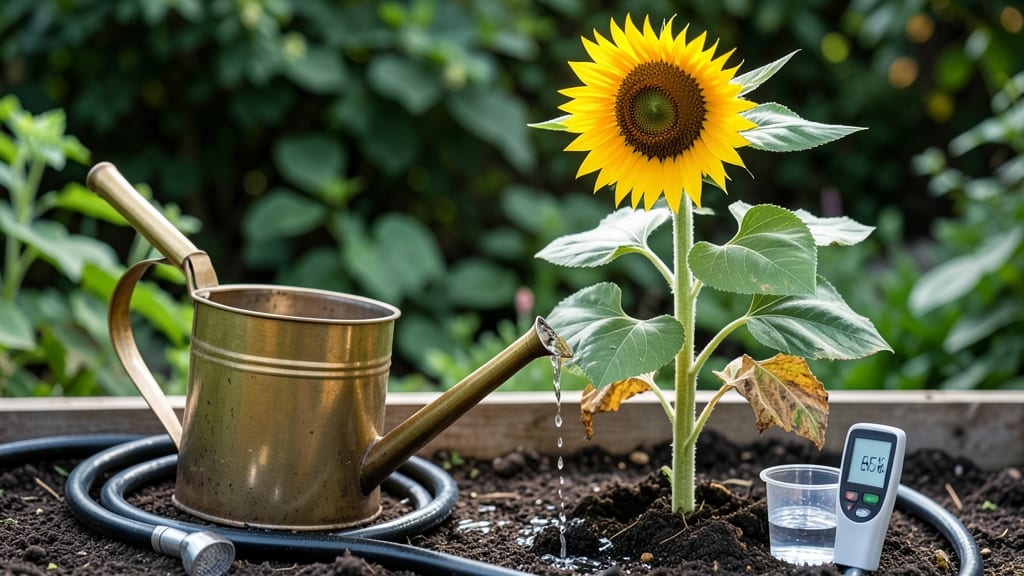
Sunflower watering schedule by growth stage: seedling to bloom
Sunflowers need consistent moisture to grow strong, but their watering needs change dramatically from seedling to bloom. Too much water early on causes rot, while too little later stunts their towering growth. The key is targeted watering—deep soaks at the right soil depth and frequency for each stage.
I’ve grown sunflowers from 3-foot dwarfs to 12-foot giants, and the difference comes down to watering. Seedlings need gentle, frequent moisture, while mature plants thrive with deep, infrequent watering. Let’s break it down by stage so you can adjust your schedule like a pro.
🌱 Pro Tip: Always water at the base of the plant (not the leaves) to prevent fungal diseases like powdery mildew. Early morning is the best time—it gives foliage time to dry before evening humidity sets in.
During the seedling stage, keep the soil evenly moist—like a damp sponge. Use a spray bottle or gentle watering can to avoid disturbing tender sprouts.
If the top 1 inch of soil feels dry, it’s time to water. Overwatering here leads to damping-off disease, which kills seedlings overnight.
As sunflowers enter the vegetative stage (3-6 weeks), they crave deep hydration. Water until moisture reaches 6-12 inches deep—this encourages roots to grow downward, not just spread outward.
A soil moisture meter is worth its weight in gold here. If the soil feels dry at 3 inches, your plants are thirsty.
When buds form (flowering stage, 7-12 weeks), reduce frequency but increase depth. Aim for 12-18 inches deep—this supports the plant’s rapid growth and prevents stem weakness. Look for wilting in the afternoon (a sign of thirst) or yellowing leaves (a sign of overwatering).
Adjust based on your climate: desert gardens need less, while humid zones may require more.
In drought conditions, extend the gap between waterings by 1-2 days but always check soil moisture. If the soil is bone-dry at 6 inches, your sunflowers are begging for water.
Conversely, after heavy rain, skip watering for 2-3 days to avoid soggy roots. Mulching with straw or wood chips helps retain moisture and keeps roots cool.
One common mistake is watering the leaves instead of the base. This invites powdery mildew, a fungal foe that turns leaves white and stunts growth. Always direct water at the soil, not the foliage.
For large sunflower patches, a soaker hose or drip irrigation is a game-changer—it delivers water slowly and efficiently right where it’s needed.
By the time your sunflowers bloom, they’ve built a massive root system. At this point, water deeply but less often—every 5-7 days—to let the roots access stored moisture.
If you’re growing sunflowers for seeds, reduce watering 2 weeks before harvest to toughen the seed heads and prevent cracking.
Remember: Consistency is key. Sunflowers hate boom-and-bust watering—alternating between drought and deluge. Stick to your stage-specific schedule, and you’ll reward yourself with sunflowers that reach for the sky—not just your expectations.
Deep-soil watering technique: the secret to stronger sunflower stems
Most gardeners make one critical mistake when watering sunflowers: they focus only on the surface. Shallow watering creates weak stems that snap under the plant’s own weight—especially when those 12-foot giants start reaching for the sky.
The solution? Deep-soil watering that encourages strong root systems and nutrient absorption down to 12-18 inches deep. This method isn’t just about survival—it’s how you grow sunflowers that stand tall and proud.
Sunflower roots spread wide and deep, but they need consistent moisture at their root zone to thrive. When you water only the top inch of soil, roots stay shallow, leading to stunted growth and floppy stems.
By contrast, deep watering sends roots searching for moisture, creating a sturdy anchor that supports those towering blooms. Think of it like building a skyscraper: you wouldn’t pour concrete just on the first floor—you need a deep foundation.
Here’s how to master the deep-soil technique for sunflowers, including the best tools and timing to avoid common pitfalls:
- 🌱 Step 1: Choose the Right Time – Water in the early morning (6-9 AM) to allow foliage to dry before evening. Avoid night watering, which promotes fungal diseases.
- 💧 Step 2: Use the Proper Tools – Opt for a soaker hose or drip irrigation to deliver water slowly to the root zone. Hand watering with a deep-watering wand works too.
- ⏰ Step 3: Water Until Saturated – Apply water until it seeps 12-18 inches deep. Check by inserting a screwdriver into the soil—if it slides in easily, you’ve reached saturation.
- 🌿 Step 4: Focus on the Base – Direct water at the soil surface near the stem, not the leaves. This prevents leaf diseases and ensures roots absorb moisture efficiently.
- 📅 Step 5: Adjust Frequency by Stage –
- Seedlings (first 2 weeks): Water every 2-3 days to keep soil moist.
- Vegetative (3-6 weeks): Water every 3-4 days for deep root growth.
- Flowering (6+ weeks): Water every 4-5 days unless drought occurs.
Timing is everything when it comes to sunflower watering. Early morning sessions reduce evaporation and give plants a full day to absorb moisture before the heat of afternoon sun. Evening watering might seem logical, but it leaves leaves damp overnight, inviting powdery mildew and other fungal issues.
Think of your watering schedule like a sunrise: start early, and let the day’s light fuel growth.
Don’t overlook the tools that make deep-soil watering effortless. A soaker hose or drip irrigation system delivers water directly to the roots without wetting foliage, while a deep-watering wand lets you control the flow for precise saturation.
For large sunflower patches, consider a timed irrigation system to maintain consistency—especially during peak summer heat when evaporation rates skyrocket.
Watch your sunflowers transform when you switch to deep-soil watering. Thicker stems, healthier blooms, and plants that stand upright—even in breezy conditions—are the rewards of this simple technique.
The key is patience: let the soil dry slightly between waterings to encourage roots to seek deeper moisture, but never let it become bone-dry. With this method, your sunflowers won’t just survive—they’ll thrive and reach new heights.