
Watering
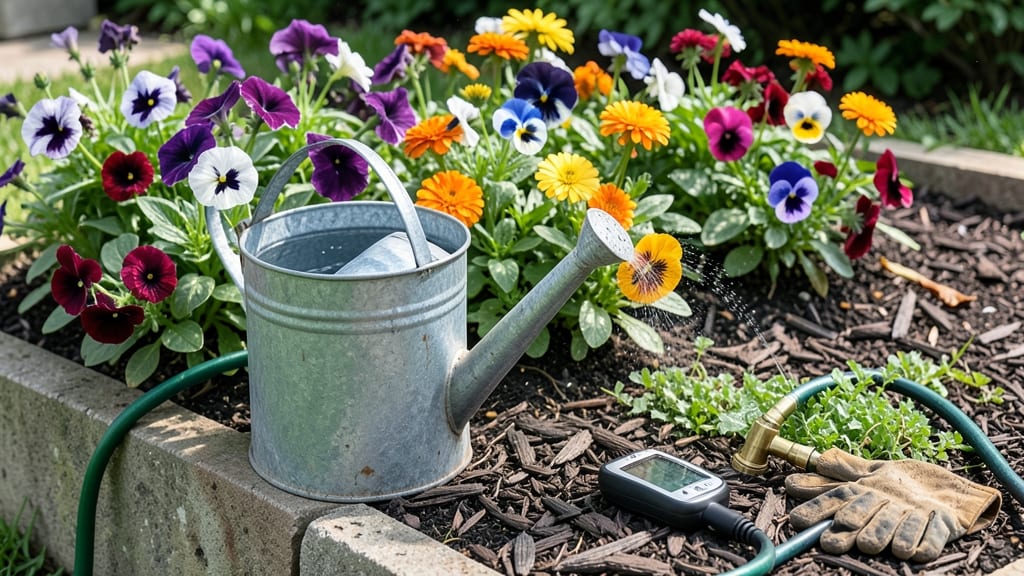
Should you water flowers every day? This common habit is actually drowning more gardens than drought ever could. Most gardeners don't realize that overwatering stresses plants just as much as underwatering—yet the signs are often overlooked until it's too late.
The key to lush, healthy blooms lies in understanding your flowers' unique needs rather than sticking to a one-size-fits-all schedule.
Think about it: your 🌸 flowers in USDA Zone 6a need moisture, but not the kind that turns their roots into a soggy mess. Too-frequent watering prevents oxygen from reaching roots, inviting pests and diseases while starving your plants of what they truly need.
What you actually want is a rhythm that keeps soil consistently moist without creating swampy conditions—something most gardeners get wrong by default.
Here's what you'll discover in this guide: the exact watering schedule tailored to your flowers' type, your local climate, and even the time of day that makes all the difference.
We'll cover how to tell when your plants are thirsty versus when you're overdoing it, plus pro tips to adjust for spring planting in Zone 6a. No more guesswork—just science-backed routines that save water and keep your garden thriving.
Ready to transform your watering game? Let's start with the one critical rule that will change how you care for your flowers forever—and why checking the soil is the first step to perfect hydration. Your blooms will thank you with stronger stems and brighter colors than ever before.
How often to water flowers based on plant type and climate
Watering flowers isn't one-size-fits-all—what works for thirsty impatiens can drown drought-tolerant lavender. The key lies in understanding your plant types and local climate. Annuals like petunias need consistent moisture, while perennials such as black-eyed Susans store water in their roots.
Even within the same species, water needs shift with seasonal heat or humidity levels. Let's break down the science so you can water with confidence, not guesswork.
Climate plays a massive role—arid desert gardens in Arizona thrive with deep but infrequent watering, while humid Southeast gardens may need daily checks during summer. The USDA hardiness zone is a starting point, but microclimates (like shady spots or windy areas) demand adjustments.
For example, container-grown flowers dry out 3x faster than in-ground plants, requiring more frequent watering. Let's explore how to tailor your approach.
Here's your watering cheat sheet—a visual guide to match your flowers' needs with your climate zone. Use this as your reference before grabbing the hose!
For annual flowers, consistency is critical. Plants like petunias and geraniums wilt dramatically when thirsty but also suffer from soggy roots. Stick to the 1-inch-per-week rule: water until moisture penetrates 6 inches deep, then wait until the top inch feels dry.
In hot climates, this might mean daily watering, while cooler zones can stretch it to every other day.
Perennials like coneflowers and daylilies are more resilient once established. Their deep roots store water, so they thrive on deep but infrequent watering. In USDA zones 5-7, aim for 1 inch of water per week during growing season, reducing to every 2 weeks in winter.
The exception? Newly planted perennials, which need consistent moisture for the first 30 days to establish roots.
Drought-tolerant flowers like lavender and yarrow are the low-maintenance superstars. These plants hate soggy soil—overwatering causes root rot faster than drought does. In arid zones, water every 10-14 days with deep soaks, while humid climates may require weekly checks.
Pro tip: Group these with succulents and sedum in the same bed to create a self-sustaining drought garden.
Thirsty species like hydrangeas and roses demand attention, especially in full-sun locations. These plants transpire rapidly—losing moisture through leaves up to 3x faster than drought-tolerant varieties. In hot, dry summers, water daily in the morning to prevent wilting.
For hydrangeas, consistent moisture also affects bloom color—blue flowers need acidic, moist soil, while pink blooms thrive in drier conditions.
Your local climate dictates the biggest adjustments. In humid zones (like Florida or the Southeast), water early in the morning to reduce fungal diseases from prolonged leaf wetness. In arid zones (like Arizona or California), water deeply at night to minimize evaporation.
Always check soil moisture with your finger—dry top inch means it's time to water, regardless of your schedule.
Don't forget about container gardens, which dry out 3-5x faster than in
5 Signs your flowers are overwatered (and how to fix it)
Even with good intentions, I’ve drowned more flowers than pests have eaten. The problem? Overwatering tricks gardeners into thinking soggy soil equals happy plants—until yellow leaves and mold reveal the truth. Most flowers prefer well-draining soil and consistent moisture, not a swampy home.
Let’s decode the 5 red flags your blooms are getting too much love (and how to fix it fast).
Before diving into symptoms, here’s the hard truth: 90% of overwatered flowers suffer from root rot, a silent killer that chokes oxygen from roots. Unlike drought stress, which shows gradual wilting, overwatering symptoms hit fast—often within 24-48 hours of excess moisture.
The key is catching these signs early before your petunias, roses, or impatiens turn into sad, mushy souvenirs.
🚨 Warning: Should You Water Flowers Every Day?
Hard no. Daily watering is a fast track to root rot and fungal diseases like powdery mildew. Most flowers need deep, infrequent watering—aim for 1-2 inches of soil dryness between sessions. Exceptions: Container plants (check soil daily) and heatwaves (increase frequency temporarily). Always test soil moisture with your finger: if the top 1 inch feels damp, wait.
Pro Tip: Use a moisture meter ($10 at garden centers) to avoid guesswork. Overwatering is the #1 cause of yellowing leaves and stunted growth—fix it by adjusting your watering routine today.
Sign #1: Yellowing Leaves (But Not the Classic Drought Kind) – Overwatered leaves turn yellow and mushy, often starting at the bottom. Unlike nutrient deficiencies (which yellow between veins), overwatered leaves stay soft to the touch and may smell sour or rotten. This is your roots screaming for air—cut back watering immediately and let the top 2 inches of soil dry out before watering again.
Sign #2: Wilting Despite Wet Soil – If your roses or geraniums droop even though the soil feels soggy, root rot is likely. Stick your finger in the soil: if it’s cold and clumpy, you’ve overdone it. Fix it by improving drainage—amend heavy soil with perlite or compost, or repot container plants into terracotta pots (they dry faster than plastic). For severe cases, trim blackened roots and replant in fresh soil.
Sign #3: Mold or Fungus on Soil or Stems – White, gray, or black fuzzy growth on soil or stems? That’s powdery mildew or botrytis, thriving in excess moisture. Act fast: Remove infected leaves, space plants for airflow, and water at the base (not overhead). For prevention, mulch with straw (not plastic) to regulate moisture without suffocating roots.
Sign #4: Slow or No Growth – Flowers that refuse to bloom or grow spindly stems often lack oxygen due to compacted, waterlogged soil. Revive them by reducing water to every 3-5 days (check soil first!) and aerate the soil with a fork. Add slow-release fertilizer (like 10-10-10) to encourage root recovery—just skip it if roots smell rotten.
Sign #5: Pests Invade – Overwatered plants attract slugs, snails, and fungus gnats like a buffet. If you spot tiny black flies hovering near soil or chewed leaves, your watering schedule is too aggressive. Fix it by letting soil dry between waterings and adding diatomaceous earth around stems to deter pests. For gnats, let the topsoil dry completely before watering again.