
Flowers
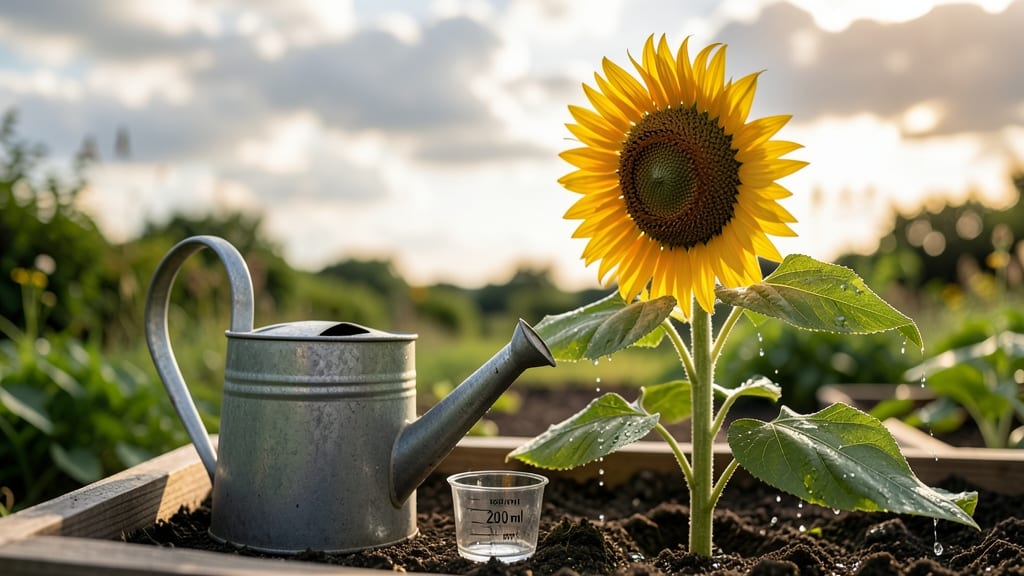
To keep your sunflowers 🌻 reaching for the sky without wilting or rotting, you need to water them just right—not enough and they’ll droop, too much and their roots suffocate.
The secret lies in deep, infrequent soaks that encourage strong roots, especially in USDA Zone 6 where spring planting kicks off in April.
Most gardeners overestimate how thirsty sunflowers really are—once established, they’re surprisingly drought-resistant. But those first few weeks after planting in April–May are critical. I’ll show you exactly how often to water based on their growth stage, from delicate seedlings to towering blooms.
You’ll learn to spot the signs of thirst (or overwatering) before they become problems, like yellowing leaves or mushy stems. With the right schedule, you can cut watering time in half while keeping your sunflowers thriving until harvest in July–September.
Ready to master the art of sunflower hydration? Let’s dive into a foolproof watering plan that saves time and keeps your garden’s sunshine stars shining bright.
Sunflower watering schedule by growth stage: deep roots need smart hydration
Sunflowers may look like they can handle anything, but their water needs change dramatically as they grow. From delicate seedlings to towering flowering giants, each stage demands a different approach to keep roots happy without drowning them.
The key? Deep, infrequent watering that encourages strong root systems—especially in drought-prone climates. Let’s break down exactly how much water sunflowers need at every phase, plus pro tips to save water without sacrificing blooms.
Most gardeners make two critical mistakes: overwatering seedlings (which causes rot) or underwatering mature plants (leading to weak stems). Sunflowers are surprisingly drought-tolerant once established, but their early stages are delicate and thirsty. The solution?
A stage-specific watering schedule that matches their growth pace. Below, we’ll cover seedling care (weeks 1-4), vegetative growth (weeks 4-8), and blooming/maturity (weeks 8-12), plus how to adjust for heatwaves or clay soil.
For seedlings (weeks 1-4), think of watering like a gentle rain shower. Their roots are tiny, so frequent light waterings keep them from drying out. Use a fine mist spray to avoid dislodging soil or damaging sprouts.
A good rule of thumb: stick your finger 1 inch deep—if it’s dry, it’s time to water. Overwatering now leads to rotten stems and mold, which can kill seedlings before they even reach 6 inches tall.
Once sunflowers hit the vegetative stage (weeks 4-8), they’re ready for deep watering sessions. This is when their roots explode downward to find moisture, so aim for 4-6 inches deep per watering.
Use a soaker hose or drip irrigation to deliver water directly to the soil, not the leaves. I’ve seen gardeners waste gallons by watering from above—this method saves water and cuts down on fungal spores that thrive in damp foliage.
During blooming (weeks 8-12), sunflowers need less frequent but deeper water. Their massive flower heads act like solar panels, pulling up moisture from deep in the soil. Let the top 1-2 inches of soil dry out between waterings to prevent root rot.
If your sunflowers start drooping in the afternoon, it’s a sign they’re thirsty—but don’t overcompensate. A single deep watering in the morning will revive them faster than multiple shallow drinks.
Mature sunflowers (especially dwarf varieties) are drought-tolerant champions. Once they’ve reached their full height, you can reduce watering to every 7-10 days, unless your area is experiencing a heatwave over 90°F.
At this stage, focus on soil moisture checks: Insert a screwdriver or moisture meter 2 inches deep. If it slides in easily, wait a few more days. If it’s stubborn, it’s time to water. This method has saved me hundreds of gallons over the years.
For clay soil or container-grown sunflowers, adjust your schedule
How to tell if your sunflowers are thirsty (or drowned): 5 key signs
Sunflowers are surprisingly resilient, but their leaf color and stem texture reveal hydration secrets. A yellowing lower leaves signals thirst, while drooping petals mean you’ve waited too long. These visual cues help you adjust before damage sets in—because sunflowers hate soggy roots as much as they hate drought.
First, check the soil moisture 1-2 inches down. Stick your finger in—if it feels dry, your sunflower needs water. But if it’s muddy or smells sour, you’ve overdone it. Sunflowers develop root rot quickly in waterlogged soil, and once that happens, recovery is tough.
Here’s the watering paradox: Sunflowers need deep watering (1-2 inches per week) but hate shallow puddles. A common mistake is sprinkling lightly daily, which encourages weak roots. Instead, soak the base thoroughly every 3-5 days—adjust for heat or clay soil.
💧 Sunflower Watering: Pros & Cons
| DO ✅ | DON'T ❌ |
|---|---|
| Water deeply 1-2x/week (1-2 inches) | Shallow sprinkles daily (encourages weak roots) |
| Morning watering (reduces evaporation) | Evening watering (promotes fungal diseases) |
| Mulch heavily (retains moisture) | Overhead watering (wets leaves/fungi risk) |
| Check soil before watering (finger test) | Guesswork (leads to over/under-watering) |
Pro Tip: Yellowing leaves = thirsty; black stems = drowned.
A wilting stem that doesn’t perk up after watering is a red flag. If the center stem softens or develops dark spots, it’s root rot—move fast! Trim affected areas with sterilized scissors and repot in fresh, dry soil. For mild cases, reduce watering and improve drainage with perlite.
Watch for crispy leaf edges in hot weather—this means your sunflower’s thirst outpaced your watering. Increase frequency to every 2-3 days in summer, but always water at the base, not the leaves. A dull, grayish hue on foliage? That’s heat stress, not hydration.
Fix hydration issues by adjusting your routine: deep water in the morning, mulch with straw, and avoid soggy soil. Sunflowers forgive occasional slips, but consistency is key. With the right balance, your giant blooms will reach for the sky—no wilting in sight! 🌻