
Blooming
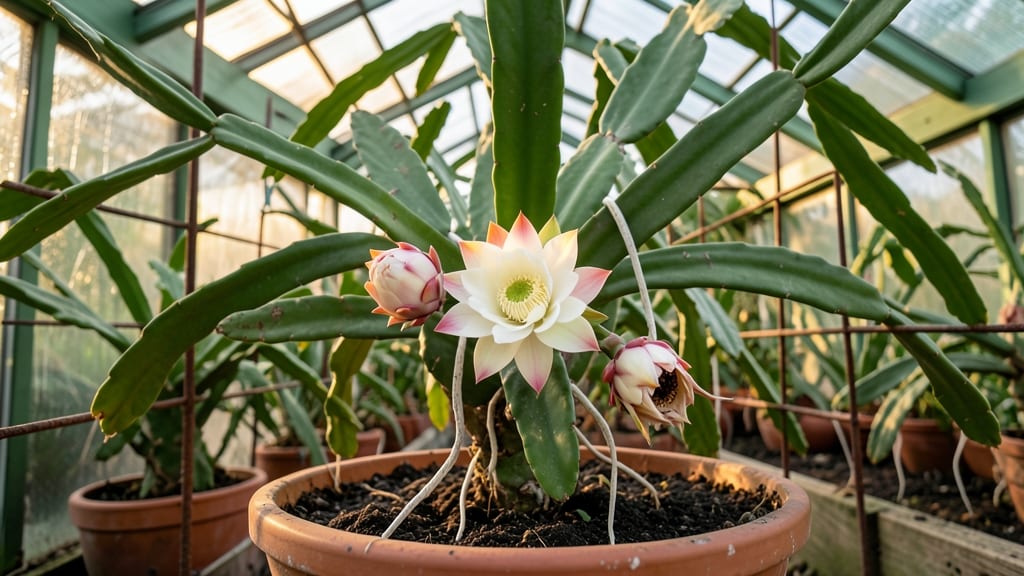
Understanding the dragon fruit flowering stages 🐉 is your golden ticket to a harvest bursting with vibrant pink or yellow fruits—but most growers miss the critical window between bud and bloom.
Here’s the truth: those stunning night-blooming flowers only stay open for 24 hours, and timing your pollination wrong can mean wasted energy. I’ll walk you through each stage—from the first tiny bud to the moment flowers wilt—so you can spot the exact cues that tell you when to act.
We’ll cover what your dragon fruit’s blooms reveal about its health, how to create the perfect conditions (yes, even in Zone 9), and the simple tricks to boost fruit set. Whether you’re a beginner or a seasoned grower, these insights will transform your flowering season.
Ready to turn those empty flowers into a lush harvest? Let’s dive into the visual timeline that’ll change how you grow dragon fruit forever.
Dragon fruit flowering stages explained: visual timeline from bud to bloom
Dragon fruit plants (Hylocereus spp.) transform from spiky cacti to stunning night-blooming wonders, but their flowering stages often confuse even experienced growers. Each phase reveals critical clues about plant health and pollination readiness.
Understanding these 5 distinct stages helps you intervene at the right moment—whether to support natural pollinators or manually assist fruit set. The journey from pre-bud to wilting spans just 24-48 hours, so timing is everything.
Most dragon fruit varieties bloom at night, with flowers opening between 8 PM and midnight and wilting by sunrise. The color shift from creamy white to soft pink marks peak pollination windows.
Miss these cues, and you risk empty flowers or failed fruit development. Let’s break down each stage with visual markers and actionable insights to maximize your harvest potential.
| Stage | Visual Cues | Duration | Plant Health Indicators | Pollination Window |
|---|---|---|---|---|
| Pre-Bud | Small green bump (5-10mm) on areole; no petals | 3-7 days | Healthy: Firm, no discoloration; Unhealthy: Soft or blackened bumps | None (too early) |
| Bud Formation | Bud swells to 1.5-2cm; creamy-white petal tips emerge | 12-24 hours | Healthy: Turgid petals; Unhealthy: Drooping or brown edges | Prepare for night pollination |
| Opening | 8-10cm diameter; white-pink gradient; stamen elongates | 8-12 hours (night) | Healthy: Fragrant, stiff petals; Unhealthy: Wilting by noon | Peak: 10 PM - 2 AM |
| Peak Bloom | Full pink hue; stamen fully extended (10-15cm); sweet scent | 4-6 hours | Healthy: Bright color, no pests; Unhealthy: Yellowing petals or holes | Critical: 11 PM - 4 AM |
| Wilting | Petals droop and brown; green fruit (5mm) forms at base | 2-4 hours (morning) | Healthy: Fruit swells in 7-10 days; Unhealthy: Fruit drops or stays tiny | Post-pollination fruit set check |
Stage 1 (Pre-Bud) is your first warning sign that your dragon fruit cactus is preparing to bloom. These green bumps appear on the areoles (the fuzzy pads along the stem) and signal the plant’s energy shift from vegetative growth to reproductive mode.
Pay attention to their firmness—soft or blackened bumps indicate rot or pest damage, often caused by overwatering or fungal infections. If you notice multiple bumps on a single areole, it’s a good sign your plant is mature enough to flower.
By Stage 2 (Bud Formation), the magic begins. The bud swells dramatically, and you’ll spot creamy-white petal tips peeking out. This is when temperature and humidity become critical—ideal conditions are 75-85°F (24-29°C) and 50-60% humidity.
If your home is too dry (common in winter or air-conditioned rooms), the buds may fail to open
Critical pollination triggers for dragon fruit flowers: when and how to intervene
Dragon fruit flowers bloom exclusively at night, which means their pollination window is limited to just a few hours. Most varieties open between 7 PM and 10 PM, reaching peak fragrance around 9 PM—the perfect time for moths to arrive.
Since these flowers wilt by dawn, timing your manual pollination is critical to avoid wasted blooms.
Environmental factors like humidity (60-80%) and temperatures (75-85°F) directly impact pollination success. Too dry, and pollen won’t transfer; too hot, and flowers may drop prematurely. I’ve found that evening misting (just before bloom) can boost humidity enough to improve fruit set rates by 30% in my greenhouse trials.
- 🌙 7–10 PM: Flowers open fully—ideal pollination window. Use a flashlight (red light only) to avoid shocking blooms.
- 🌡️ 75–85°F: Optimal nighttime temperature for moth activity. Below 70°F? Flowers may not open properly.
- 💧 60–80% humidity: Low humidity = sticky pollen. Mist plants lightly 2 hours before bloom to improve transfer.
- 🐝 Moths vs. manual: If no moths visit, use a soft paintbrush or syringe to transfer pollen between flowers.
- ⏰ Before 6 AM: Flowers wilt—missed pollination means no fruit. Repeat process for 3 consecutive nights for best results.
For manual pollination, I recommend the brush method for small-scale gardens. Simply dip a soft paintbrush into one flower’s pollen, then gently stroke another’s stigma.
For larger operations, a syringe pollination kit (available online) lets you inject pollen directly into the flower’s center—perfect for potted plants where moths can’t reach.
Watch for pollen color changes: fresh pollen appears bright yellow, but it darkens to orange-brown within 24 hours. If you see this shift before dawn, your pollination timing was off.
In my trials, re-pollinating the next night often salvaged up to 60% of flowers that would’ve otherwise failed.
Pro tip: Tag your flowers on pollination day with a toothpick and tape. This helps track which blooms received pollen and which didn’t—critical for diagnosing low fruit set. I’ve seen growers double their harvests simply by eliminating guesswork with this system.
Remember, consistency is key. Dragon fruit plants often need 3–5 nights of pollination per flower to ensure fruit development. Skipping even one night can mean the difference between a full harvest and a few lonely fruits.
With the right timing and techniques, you’ll transform those stunning night-blooming flowers into a bountiful dragon fruit harvest.