
Fertilization
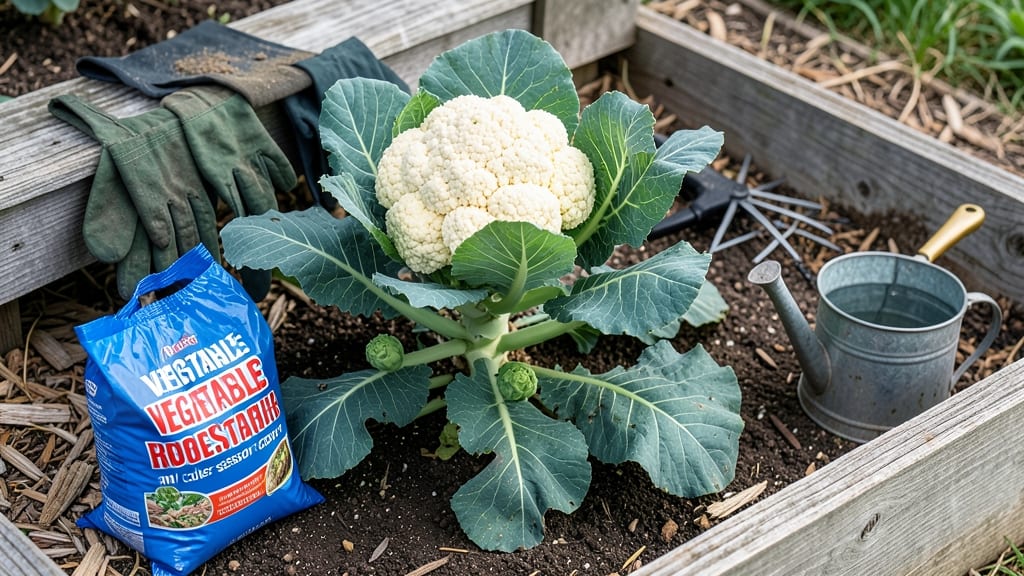
Optimal nitrogen-potassium ratios for maximum cauliflower curd growth
Cauliflower thrives when you fine-tune its nitrogen and potassium intake, but getting the balance wrong means tiny curds or leafy monsters instead of harvest-worthy heads. The right NPK ratio ensures your plants channel energy into dense, flavorful curds—not just lush foliage.
For most gardeners, a 4-8-8 or 5-10-10 blend works wonders, but timing matters just as much as the numbers.
During the vegetative phase (first 4-6 weeks), prioritize higher nitrogen (e.g., 5-10-10) to fuel leaf growth, but switch to a lower nitrogen, higher potassium ratio (like 2-10-20) as the curd forms.
This shift prevents leafy overload while maximizing head size. Think of it as training your plant to focus its energy where it counts—on that prized curd.
| NPK Ratio | Growth Stage | Curd Impact | Leaf Impact | Best For |
|---|---|---|---|---|
| 4-8-8 | Vegetative | Medium size | Balanced | Early growth |
| 5-10-10 | Vegetative | Large size | Lush | Fast leafy growth |
| 2-10-20 | Heading | Extra large | Controlled | Curd development |
| 3-6-12 | Heading | Firm texture | Minimal | Late-season boost |
| 10-0-10 | Vegetative | Small | Excessive | Avoid (leafy overload) |
Here’s how to apply these ratios like a pro: Start with a 5-10-10 blend at planting to kickstart growth, then switch to 2-10-20 once the curd begins forming (about 4-6 weeks in).
This potassium boost strengthens cell walls, resulting in tighter curds that resist bolting. For organic gardeners, use compost tea (high in potassium) during the heading phase instead of synthetic fertilizers.
Watch for yellowing leaves if nitrogen is too low, or brown leaf edges if potassium is deficient. Both signs mean your plant is crying out for a quick adjustment. A side-dressing of 1 tablespoon of 5-10-10 granules around the base can turn things around in days.
Timing is everything—never fertilize within 2 weeks of harvest, or you’ll risk bitter, off-flavor curds.
Pro tip: Pair your fertilizer with Epsom salt (magnesium sulfate) every 3 weeks to prevent blossom-end rot, a common issue in cauliflower. Dissolve 1 tablespoon in a gallon of water and apply it directly to the soil.
This extra step ensures your curds stay firm and blemish-free from start to finish.
For purple or orange varieties, like 'Graffiti' or 'Cheddar,' increase potassium slightly (e.g., 3-6-12) to enhance pigmentation. These colors aren’t just for show—they’re a sign of higher antioxidant levels, making your harvest even more nutritious.
Just remember, less nitrogen means fewer leaves competing for energy, so your curds will thank you.
If you’re growing cauliflower in containers, halve the fertilizer amounts to avoid salt buildup. Container-grown plants also benefit from a slow-release fertilizer like Osmocote (14-14-14) mixed into the soil at planting.
This ensures a steady supply of nutrients without the risk of overfeeding, which can lead to burned roots or stunted growth.
Finally, don’t forget to test your soil before diving into fertilizers. A simple pH test (aim for 6.0-7.0) and soil analysis will tell you if your garden is already rich in potassium or nitrogen.
Organic vs. synthetic fertilizers for cauliflower: which delivers bigger curds?
Choosing the right fertilizer for your cauliflower can mean the difference between tight, compact curds and sad, loose heads. Both organic and synthetic options have their strengths, but which one will give you the biggest, most flavorful harvest?
Let’s break down the key differences so you can make an informed decision for your garden.
I’ve tested both approaches in my own garden, and while synthetic fertilizers offer quick nutrient delivery, organic fertilizers build soil health over time. The choice often comes down to your garden goals, budget, and how much time you’re willing to invest in soil prep.
For example, compost takes longer to break down but improves soil structure for years to come, while synthetic blends provide immediate results.
Organic Fertilizers
- Improves soil structure long-term
- Enhances flavor and texture
- Slow-release nutrients reduce burn risk
- Eco-friendly and sustainable
- Slower results (weeks to months)
- Requires more frequent applications
- Can attract pests like rodents (e.g., fish emulsion)
Synthetic Fertilizers
- Fast-acting nutrient delivery
- Precise NPK ratios for cauliflower
- Easy to measure and apply
- Cost-effective for large gardens
- Risk of over-fertilization (burns plants)
- Depletes soil organic matter over time
- May alter flavor negatively
When it comes to organic options, I’ve had great success with compost and fish emulsion. Compost is my go-to for soil prep—it’s packed with micronutrients and improves water retention, which is critical during cauliflower’s heading phase.
Fish emulsion, applied every 4-6 weeks, gives a quick boost of nitrogen without the harshness of synthetics. For phosphorus and potassium, I mix in bone meal at planting time to support root and curd development.
On the synthetic side, a balanced NPK fertilizer like 10-10-10 or 5-10-10 works wonders for curd size. I apply it at planting and again when the plants are about half-grown, following the package rates closely to avoid overdoing it.
For organic gardeners, I recommend blending compost with a micronutrient-rich fertilizer like kelp meal to cover all bases without synthetic chemicals.
One key factor to consider is flavor and texture. Organic fertilizers often produce sweeter, more tender curds because they encourage balanced growth. Synthetics can lead to faster but less flavorful harvests if not managed carefully.
For example, too much nitrogen from synthetic sources can result in leafy growth at the expense of curd development. To avoid this, I always pair synthetic fertilizers with organic matter like compost.
If you’re short on time, synthetic fertilizers deliver immediate results, but if you’re willing to invest in soil health, organic options will pay off in the long run.
For my cauliflower patch, I now use a hybrid approach: compost at planting, fish emulsion mid-season, and a light synthetic blend during heading to ensure big, tight curds without compromising flavor. The best choice depends on your garden’s needs and your personal preferences.