
Watering
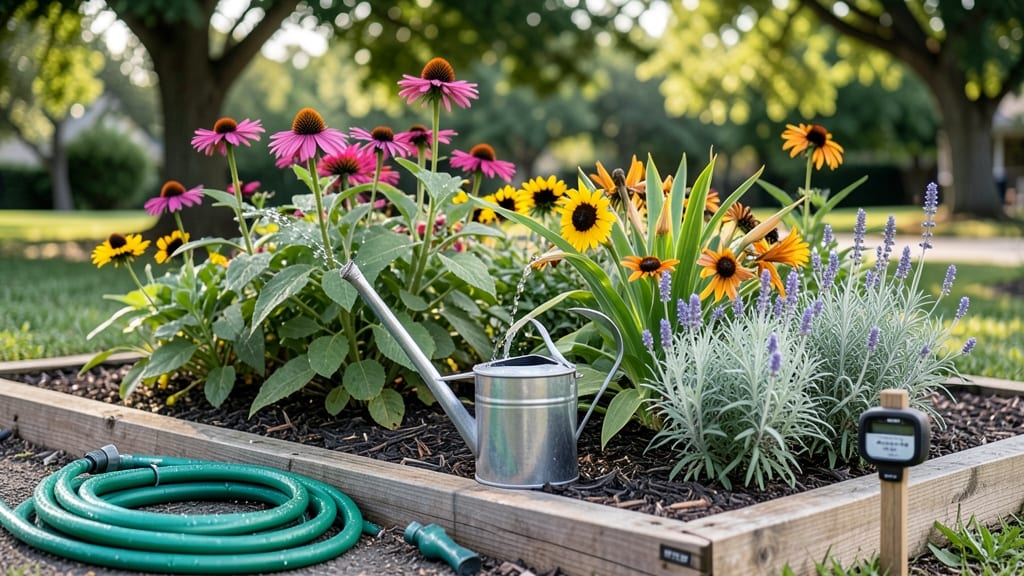
Want to know how often to water flower beds 🌸 so they stay vibrant without drowning your plants? Most gardeners either overwater (wasting resources) or underwater (stressing their blooms), and neither approach works long-term.
Watering flower beds isn’t a one-size-fits-all task—it depends on your climate, soil type, and even the time of year. Too much water rots roots, while too little stunts growth, but the right balance keeps your garden thriving with minimal effort.
I’ll break down the seasonal watering schedule you need, from the driest summer days to the cooler fall months, so you can water with confidence. No more guesswork—just healthy, blooming flower beds all season.
Ready to master the art of watering? Let’s dive into the simple, science-backed methods that’ll transform your garden care routine.
Seasonal watering schedule for flower beds: month-by-month guide
Watering your flower beds isn't a one-size-fits-all task—it changes dramatically with the seasons. In spring, your plants wake up from dormancy and need consistent moisture to establish roots, while summer demands frequent deep watering to combat evaporation.
Even fall and winter require adjustments based on rainfall and frost. Let’s break down the ideal watering schedule for each season, plus how to adapt for your local climate.
Your flower beds thrive on deep watering—aim for 1-2 inches of water per session to encourage strong root growth. Shallow watering leads to weak roots and stressed plants. In dry climates, you’ll need to water more often, while humid regions may require less frequent but deeper soakings.
Always water in the early morning to reduce evaporation and fungal risks.
Here’s your month-by-month guide, tailored for USDA Zone 6a (adjust for your region). Remember: overwatering is just as harmful as underwatering—look for yellowing leaves (overwatered) or wilted foliage (underwatered) to spot issues early.
In spring, focus on establishing roots—water deeply every 3-5 days in dry areas or 5-7 days in humid zones. This is when your flowers need the most attention, as they transition from dormancy.
Use a soaker hose or drip irrigation to deliver water slowly and evenly, avoiding wet foliage.
When summer heat arrives, increase frequency to every 2-3 days, or daily during heatwaves. Mulch heavily (2-3 inches) to retain moisture and cool roots. Watch for wilting—even if soil feels moist, some flowers (like petunias or marigolds) may need extra hydration.
Early morning watering is critical to prevent fungal diseases from overnight dampness.
As fall approaches, reduce watering to every 5-7 days in dry climates. Your flowers are preparing for dormancy, so let the soil dry slightly between waterings.
In humid regions, you might only need to water every 7-10 days. Stop fertilizing by late fall to avoid encouraging new growth before frost.
Winter watering is minimal—only water bi-weekly if there’s no snow cover in dry areas. In humid climates, you may skip watering entirely.
If you do water, use a gentle spray to avoid disturbing frozen soil. Evergreens like boxwoods or holly may need occasional water, but most perennials tolerate dormancy with little moisture.
Pro tip: Use a moisture meter to check soil depth (aim for 1-2 inches of moisture at 2-3 inches deep). For container gardens, water more frequently—small pots dry out faster.
Adjust your schedule based on rainfall and temperature fluctuations, and always prioritize deep, infrequent watering over light, frequent sprinkles.
🌸
How to check soil moisture like a pro: 3 key methods
Watering your flower beds isn't just about following a schedule—it's about understanding when your plants actually need water. Overwatering suffocates roots, while underwatering stresses blooms, and both can kill your garden.
The key is checking soil moisture before reaching for the hose. Here's how I determine the perfect watering time for my flower beds, no guesswork required.
Different soil types hold moisture differently: clay soil stays wet longer, sandy soil drains quickly, and loamy soil strikes a balance. That's why I use three proven methods to check moisture—each tailored to your garden's unique conditions.
Whether you're a beginner or a seasoned gardener, these techniques will help you water smarter and keep your blooms thriving all season long.
- 🌱 Morning Watering: Always water before 10 AM to reduce evaporation and fungal risks.
- 🌡️ Clay Soil: Water every 5-7 days—it holds moisture longer but risks waterlogging.
- ☀️ Summer Heat: Increase frequency to every 2-3 days (or daily for extreme drought).
- 🌿 Sandy Soil: Water every 2-3 days—it drains fast and needs frequent top-ups.
- 🌧️ Rainy Days: Skip watering if 1 inch of rain falls in the past 24 hours.
- 🌱 Deep Watering: Always soak 6-8 inches deep to encourage strong root growth.
- ⏰ Winter Adjustments: Reduce to bi-weekly unless snow covers the soil.
First, try the finger test, my go-to method for quick checks. Stick your index finger about 1-2 inches deep into the soil near your plants. If it feels dry, it's time to water.
For sandy soil, go deeper—up to 3 inches—to account for its fast-draining nature. I always test in multiple spots, especially in large flower beds, since moisture can vary.
A moisture meter takes the guesswork out of watering. These handheld tools give you an instant reading of soil moisture levels, often with color-coded indicators. I love using one for container gardens or when I'm unsure about the soil type.
For clay soil, aim for a reading in the "moderate" range—overwatering can lead to root rot. Pro tip: Calibrate your meter to your specific soil type for accurate results.
Don't overlook visual cues from your plants. Wilting leaves or crispy edges often signal thirst, but yellowing foliage can mean overwatering. For loamy soil, I watch for when the top inch feels dry to the touch—this usually means it's time to water.
Mulch helps retain moisture, so I always check beneath it. Remember, deep watering encourages roots to grow downward, making plants more resilient.
Adjust your watering based on seasonal changes too. In summer, I water more frequently but in shorter bursts to prevent runoff, while in winter, I barely water at all unless there's a prolonged dry spell.
For drought-tolerant flowers like lavender or succulents, I let the soil dry out completely between waterings. The key is observing your plants and adapting your routine.
Mastering soil moisture checks transforms your watering routine from a daily chore into a precise science. Start with the finger test, then graduate to a moisture meter for consistency.
Pay attention to your plants' signals, and soon you'll have a watering schedule that keeps your flower beds lush and vibrant all season long. Your blooms will thank you! 🌷