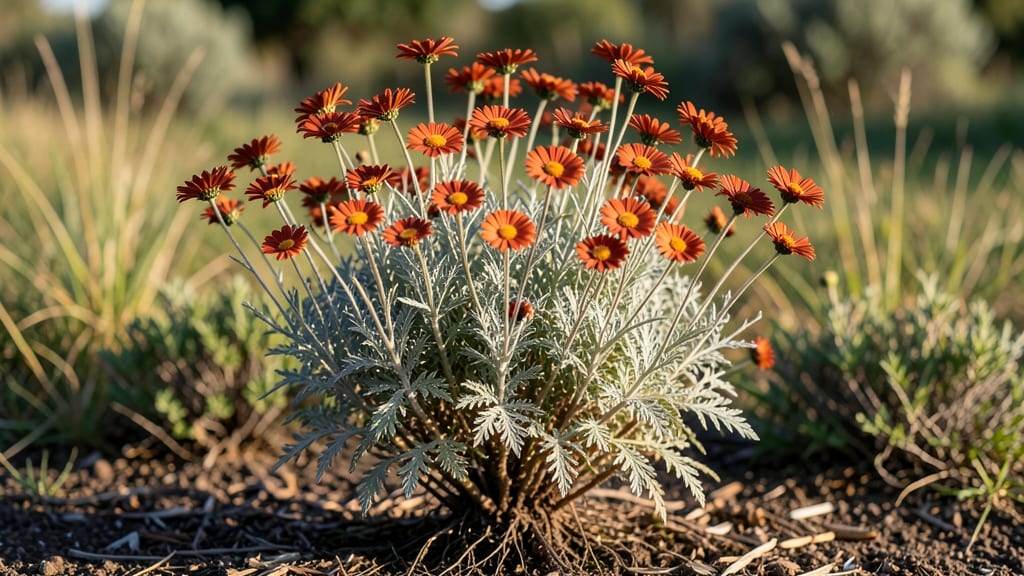
How to calculate your strawflower harvest date based on planting time
Timing your strawflower harvest correctly means planning around the days to maturity for your chosen variety, combined with your local last frost date.
Most strawflowers take 60-120 days to reach full bloom from seed, but this varies by type—dwarf varieties often mature faster (around 60-80 days) while standard types can take up to 120 days. Knowing these details helps you avoid waiting too long for blooms or harvesting too early.
Start by checking your seed packet for the days to maturity listed—this is your baseline. For example, 'Princess' strawflowers typically mature in 90 days, while 'Mona Lisa' may take 100-110 days.
Next, subtract this number from your average last frost date in your growing zone to determine the ideal planting window. In USDA Zone 7, with a last frost around April 15, planting 'Princess' strawflowers by January 15 ensures blooms by mid-July.
STRAWFLOWER HARVEST CALCULATOR
- 📅 Step 1: Note your variety's days to maturity (e.g., 90 days for 'Princess').
- 🌡️ Step 2: Find your last frost date (e.g., April 15 in Zone 7).
- ⏳ Step 3: Subtract days to maturity from last frost date (April 15 - 90 days = January 15 planting).
- 🌱 Step 4: Plant seeds 4-6 weeks before your calculated date for seedlings.
- 📋 Step 5: Adjust for fall planting by adding 120 days to first frost date.
✅ PRO TIP: For container growing, add 10-14 extra days to maturity estimates due to limited root space.
For fall planting, reverse the calculation. Add the days to maturity to your average first frost date (e.g., October 15 in Zone 7). If your strawflowers take 90 days to bloom, plant by July 15 to enjoy flowers before winter.
This works best in warmer climates (USDA Zones 8-10) where frost arrives later. In cooler zones, opt for container growing to extend the season indoors.
Extend your strawflower season by 3-4 weeks using greenhouses or cold frames. These structures create a microclimate that delays frost damage, allowing you to plant earlier in spring or later in fall.
For example, in Zone 6, where last frost is May 1, a greenhouse lets you plant 'Mona Lisa' strawflowers by February 15 (90 days before May 1) and still enjoy blooms by early August.
Track your strawflower progress with a simple growth journal. Note the date you plant seeds, when seedlings emerge (typically 7-14 days later), and when buds form. Adjust your harvest date if growth slows due to cool temperatures or poor soil.
For instance, if buds appear 2 weeks later than expected, extend your maturity estimate by 10-14 days to avoid early harvesting.
With these steps, you’ll harvest vibrant, long-lasting strawflowers at the perfect time—whether for cutting gardens, dried arrangements, or fresh bouquets. Happy planting! 🌼
★★★★★5.0(14 reviews)
|