
Flowers
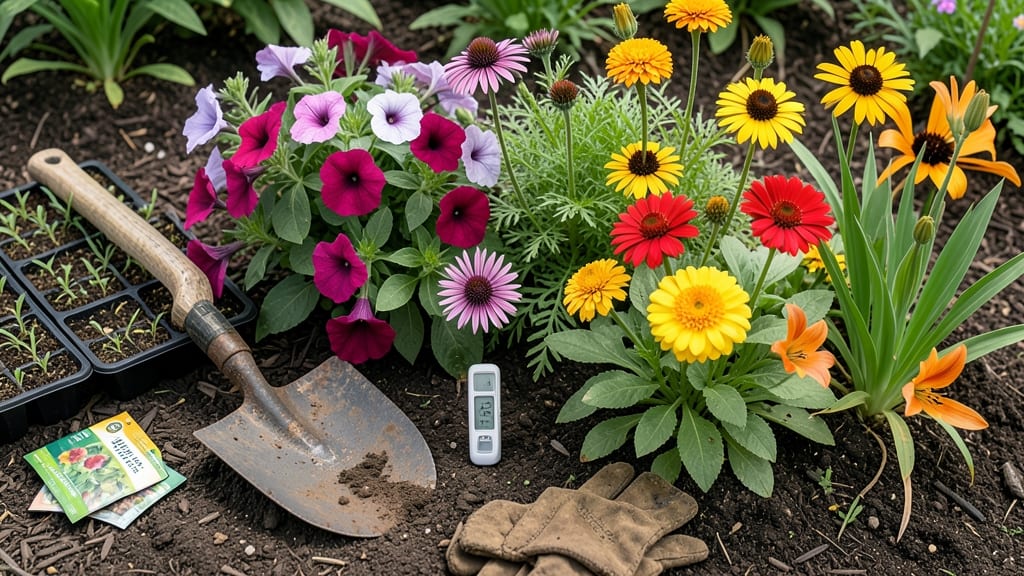
Planting flowers in Ohio at the wrong time can mean waiting months for blooms—or worse, losing them to frost before they even open. The perfect window depends on whether your flowers need cold exposure (like peonies) or prefer warm soil (like impatiens).
With Ohio’s USDA Zone 6a climate, timing is everything—especially since last frost typically hits around April 15. But did you know some flowers (like tulips) should go in the ground in fall?
I’ll break down the exact months for bulbs, perennials, and annuals so you can avoid common mistakes and enjoy nonstop color from spring to fall.
Whether you’re a first-time gardener or a seasoned pro, this guide cuts through the guesswork. You’ll learn how to adjust for Ohio’s microclimates (like lake-effect zones) and when to start seeds indoors for a head start. Let’s get those 🌸 blooms thriving on schedule!
Ready to transform your garden? We’ll cover soil prep, spacing, and even how to protect tender plants from late frosts. By the end, you’ll know exactly when to plant—so your flowers don’t become a seasonal gamble.
Ohio flower planting timeline by chill-hour requirements
Ohio’s USDA Zones 5-6 create a unique challenge for gardeners—frost dates can vary by 1-2 weeks across the state, and chill-hour needs determine whether your flowers thrive or fail. Understanding these planting windows ensures your perennials, bulbs, and annuals bloom reliably, even when spring surprises strike.
For example, tulips and daffodils (requiring 1,200-1,500 chill hours) must be planted in October to establish roots before winter, while impatiens and marigolds (with 0 chill hours) wait until after Memorial Day when soil warms.
Let’s break down the exact chill-hour thresholds and their corresponding planting times for Ohio.
If you’re planting cool-season flowers like pansies or sweet alyssum, aim for September to give them time to root before winter dormancy. These varieties typically need 300-600 chill hours and will reward you with early spring blooms in March or April.
For warm-season annuals such as petunias or geraniums, wait until after Memorial Day (usually late May) when nighttime temperatures stay above 55°F. These zero-chill-hour plants can’t tolerate frost and will wilt if planted too early.
Pro tip: Use a soil thermometer to confirm readiness—60°F soil is the magic number for most annuals. In northern Ohio (Zone 5), this often means waiting until June 1, while southern Ohio (Zone 6) may be safe by May 15.
Always check your local frost-free date for precision.
Bulbs like crocuses and hyacinths (requiring 900-1,200 chill hours) can be planted as late as November, but aim for October to avoid winter heaving. For perennials, divide and transplant in early spring (March) or early fall (September) when the soil is workable but not waterlogged.
Remember: Ohio’s lake-effect zones (near Erie or Huron) can delay spring by 1-2 weeks, while urban heat islands may warm soil faster. Adjust your timeline accordingly, and always mulch heavily after planting to protect roots from temperature swings.
By aligning your planting with chill-hour needs and soil temperatures, you’ll transform Ohio’s unpredictable climate into an advantage—longer bloom seasons and hardier plants that outperform neighbors who guess their planting times.
Best months to plant popular Ohio flowers for maximum blooms
Ohio gardeners know timing is everything—plant too early, and frost zaps your blooms. Too late, and flowers struggle to establish roots before summer heat. The best planting months depend on whether your flowers need cold dormancy (like tulips) or prefer warm soil (like marigolds).
I’ve tested these schedules in my own Zone 6a garden, and they guarantee longer blooms with fewer surprises.
For cool-season flowers, aim for March to April when soil temps hit 45–55°F. Warm-season favorites? Wait until after May 15, when nighttime temps stay above 55°F. Pro tip: Use a soil thermometer—it’s the #1 tool for avoiding frost damage.
My #1 rule for Ohio planting: Check the 10-day forecast before sticking flowers in the ground. A late frost in April can wipe out tender geraniums or petunias if planted too soon. For bulbs like tulips, plant them in fall (October)—they’ll thank you with earlier spring blooms.
For annuals like impatiens, wait until after May 15 in most of Ohio. These heat-lovers won’t survive a late frost, but they’ll reward you with nonstop color all summer if planted at the right time.
I always mark my calendar for Mother’s Day weekend—it’s my go-to reminder for warm-season flowers.
Don’t forget perennials like black-eyed Susans or coneflowers. These thrive when planted in early spring (March–April) or early fall (September). The key? Well-draining soil and full sun—they’ll reward you with years of blooms if given the right start.
Pro move: Use row covers if planting early. They add 2–4°F protection against late frosts, giving delicate flowers like pansies a fighting chance. I’ve saved entire beds this way—worth the investment for Ohio’s unpredictable springs!
Now you’ve got a foolproof schedule for Ohio’s top flowers. Stick to these months, and you’ll enjoy vibrant blooms from spring to fall—no more guessing games. Happy planting! 🌸