
Flowers
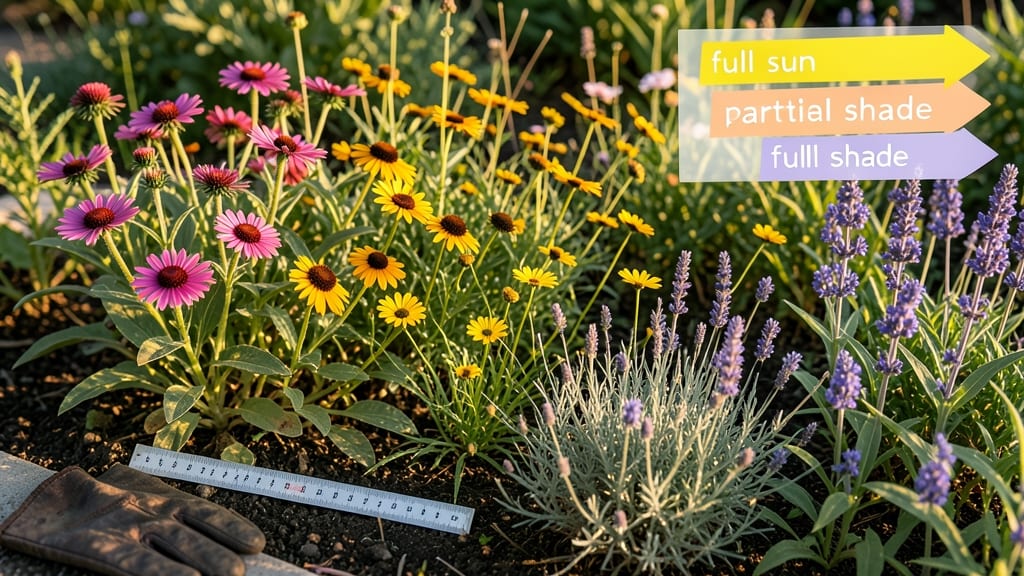
Wildflower sunlight requirements by type: full sun vs partial shade breakdown
Sunlight is the most critical factor for wildflower success, but not all varieties thrive under the same conditions. Some crave full sun to burst into vibrant blooms, while others wilt in intense heat and prefer dappled shade.
Understanding these needs helps you design a balanced, low-maintenance garden that attracts pollinators year-round.
For example, Black-Eyed Susans and Coneflowers bask in 6+ hours of direct sunlight, while Bleeding Hearts and Columbines prefer 3-6 hours of filtered light. Even shade-loving varieties like Virginia Bluebells need at least 3 hours to avoid leggy growth.
Let’s break down the sunlight spectrum for wildflowers to help you match plants to your garden’s light conditions.
🌱
| Wildflower Type | Sunlight Needs | Best For | Examples |
|---|---|---|---|
| Full Sun Lovers | 6+ hours direct | South-facing beds, meadows | Black-Eyed Susan, Coneflower, Blanket Flower |
| Partial Shade Tolerators | 3-6 hours direct | East/west exposures, under trees | Rudbeckia, Phlox, Coreopsis |
| Shade-Friendly Varieties | <3 hours direct | North-facing beds, woodland gardens | Bleeding Heart, Foamflower, Wild Ginger |
Full sun wildflowers like Black-Eyed Susans and Blanket Flowers thrive in 6+ hours of direct sunlight, making them ideal for south-facing gardens or open meadows. These varieties often produce larger blooms and attract more pollinators like bees and butterflies.
However, planting them in low-light areas can result in stunted growth and fewer flowers.
If your garden receives 3-6 hours of sun daily, you’re in the partial shade sweet spot for wildflowers like Rudbeckia and Phlox. These adaptable plants tolerate morning sun with afternoon shade, perfect for east-west exposures or areas near trees.
They also handle heat better than full-shade varieties, making them great for border plantings.
For shady spots with less than 3 hours of sun, focus on woodland wildflowers like Bleeding Hearts or Virginia Bluebells. These delicate bloomers thrive in dappled light and even deep shade, though they may require more moisture to prevent drying out.
Pair them with ferns or hostas for a lush, low-maintenance understory.
Regional adjustments matter too. In desert climates, even full-sun wildflowers may need afternoon shade to avoid heat stress, while high-altitude gardens can often extend partial shade due to intense UV exposure. Always observe your garden’s microclimates—a north-facing wall might get more sun than expected!
Pro tip: Group wildflowers by sunlight needs to create natural transitions in your garden. Start with full-sun varieties in the center of beds, then layer partial shade plants around the edges, and finally shade lovers in the darkest corners.
This stratified approach mimics wild meadow ecosystems and reduces competition for light.
Finally, don’t overlook mulch—a 2-3 inch layer of organic mulch helps retain moisture for shade-loving wildflowers while preventing soil overheating for sun-lovers. This simple step extends the lifespan of your wildflower garden, no matter the sunlight conditions.
🌻
Signs your wildflowers aren’t getting enough (or too much) sunlight
Wildflowers thrive when they receive the right amount of sunlight, but too little or too much can send them into distress. If your once-vibrant blooms are struggling, it might be a sunlight imbalance.
Many gardeners overlook subtle clues that reveal whether their wildflowers are basking in just the right glow or suffering from light deprivation or sunburn.
One of the first signs of insufficient sunlight is pale, yellowing leaves that lose their vibrant green hue. This is your wildflowers' way of signaling they're stretching toward the light, a condition called etiolation.
Meanwhile, excessive sunlight can cause leaves to turn crispy or brown at the edges, a clear sign of heat stress.
⚠️ callout-warning ⚠️
Another red flag is sparse or stunted blooms. When wildflowers don’t get enough sunlight, they focus energy on leaf growth instead of producing flowers, leaving you with a leafy but barren garden.
On the flip side, overly aggressive sunlight can cause flowers to bolt prematurely, meaning they produce seed heads instead of vibrant blooms.
If your wildflowers are growing leggy or stretched, they’re reaching for more light. This happens when plants don’t get enough sunlight and grow tall and weak in an attempt to access it.
Conversely, crispy or curled leaves indicate too much sun, especially in hot climates where midday heat can scorch delicate petals.
To fix low-light issues, consider relocating your wildflowers to a sunnier spot or pruning nearby trees/shrubs that might be blocking sunlight.
For excessive sunlight, provide afternoon shade with a sheer curtain or plant taller varieties nearby to cast gentle shade. Mulching can also help regulate soil temperature and retain moisture for stressed plants.
Regularly monitor your wildflowers’ growth patterns and adjust their placement as the seasons change. In summer, morning sun with afternoon shade often works best, while winter may require moving containers to sunnier spots.
With the right balance, your wildflowers will reward you with bold blooms and lush foliage all season long. 🌻