
Fertilization
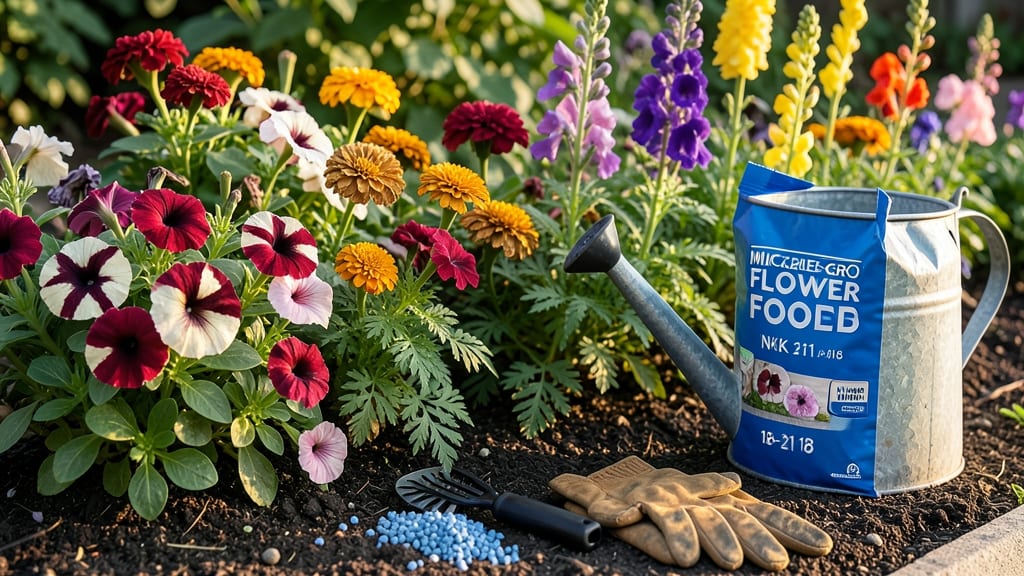
Understanding Miracle Gro Flower Food NPK ratios: what the numbers mean for your blooms
When you look at the label on Miracle Gro Flower Food, you'll see the numbers 12-12-17. These aren't random digits—they're a precise nutrient recipe designed to supercharge your plants' blooming potential.
This NPK ratio tells you exactly how much nitrogen (N), phosphorus (P), and potassium (K) your flowers need to thrive, and why this specific combination works wonders for vibrant blooms.
Most gardeners focus only on NPK, but Miracle Gro Flower Food also contains 13 essential micronutrients like iron, manganese, and zinc—each playing a critical role in flower color intensity, stem strength, and disease resistance.
Understanding these numbers helps you apply the fertilizer at the right time for maximum impact, whether you're growing petunias in containers or roses in your backyard beds.
The 12-12-17 NPK ratio in Miracle Gro Flower Food is carefully balanced to support flowering plants at every stage. The equal nitrogen and phosphorus (12-12) ensures your plants develop strong roots and foliage while producing abundant blooms, rather than just leafy growth.
Meanwhile, the higher potassium (17) boosts flower color vibrancy and helps plants resist stress—whether from heat, pests, or drought.
Science backs this ratio too. Studies show that flowering plants need more phosphorus than nitrogen during bud formation, but too much phosphorus can lead to nitrogen deficiency.
Miracle Gro's 12-12 balance strikes the perfect middle ground, while the extra potassium enhances photosynthesis efficiency, leading to brighter, longer-lasting blooms. For example, petunias and geraniums thrive on this ratio because they require moderate nitrogen for foliage but high phosphorus for prolific flowering.
One common misconception is that higher numbers always mean better results. While a 20-20-20 fertilizer might seem stronger, it can burn plants or lead to excessive foliage at the expense of flowers.
Miracle Gro's 12-12-17 is gentler yet effective, making it ideal for container gardens, window boxes, and small-space gardening where you need fast, vibrant blooms without overgrowth. The lower nitrogen also prevents leggy, weak stems that can't support heavy flower clusters.
Don't overlook the micronutrients either. While NPK gets all the attention, elements like magnesium (for chlorophyll) and boron (for cell wall strength) are crucial for preventing yellowing leaves and weak stems.
Miracle Gro Flower Food includes these in chelated forms, meaning your plants can absorb them immediately rather than waiting for soil microbes to break them down. This is especially helpful for container plants where nutrients leach out quickly.
If you're growing roses, you'll notice the higher potassium helps produce darker red blooms and thicker petals. For white flowers like gardenia, the same ratio enhances purity of color and fragance intensity.
Even vegetable plants with edible flowers (like nasturtiums) benefit from this balance, producing brighter blooms that attract pollinators while maintaining plant vigor. The key is applying it correctly—not just pouring it on willy-nilly.
For best results, start using Miracle Gro Flower Food when your plants are 6-8 inches tall and have 4-6 true leaves. This is when they're entering the active flowering stage and need the phosphorus boost to form buds.
Apply it every 2 weeks during the growing season (spring to fall) for continuous blooming. In containers, you might need to apply it weekly since nutrients wash out faster.
Always water thoroughly after application to prevent root burn and ensure nutrients reach the root zone where they're needed most.
Remember, the numbers on the label aren't just for show—they're a roadmap to healthier, more vibrant blooms. By understanding how nitrogen fuels growth, phosphorus sparks flowering, and potassium intensifies color, you can **fine
Step-by-step Miracle Gro Flower Food application guide for maximum blooms in 4 weeks
Transforming your garden into a vibrant bloom paradise starts with understanding how to apply Miracle Gro Flower Food NPK correctly. This 12-12-17 formula is designed to fuel rapid flower production, but timing and technique are everything.
Whether you're nurturing container plants or in-ground gardens, following these steps ensures your flowers reach peak beauty in just four weeks.
Before diving in, gather your supplies: the Miracle Gro Flower Food, a watering can, gloves, and a measuring cup. The key to success lies in applying the right amount at the right time—pre-bloom for root development and bloom stage for sustained color.
Let’s break it down step by step to avoid common pitfalls like over-fertilizing or applying it at the wrong time of day.
Your 4-Week Bloom Boost Plan
- 1 Pre-Bloom Stage (Weeks 1-2): Mix 1 tbsp of Miracle Gro Flower Food in 1 gallon of water (dilution ratio: 1:12). Apply to soil surface around plants, avoiding foliage. Water thoroughly to distribute nutrients.
- 2 Bloom Stage (Weeks 3-4): Increase concentration to 2 tbsp per gallon (dilution ratio: 1:6) to support flower production. Apply every 7-10 days during active blooming. For container plants, reduce to 1 tbsp per 2 gallons to prevent root burn.
- 3 Frequency for In-Ground Gardens: Feed every 2 weeks during spring and summer. Reduce to monthly in fall to avoid overstimulating new growth before winter.
- 4 Container Plant Adjustments: Use half the dose (e.g., 0.5 tbsp per gallon) due to limited soil volume. Flush soil with plain water after feeding to prevent salt buildup, which can harm roots.
-
5
Avoid These Mistakes:
- Applying on hot days (risk of leaf burn)
- Skipping watering after feeding (nutrients won’t reach roots)
- Over-fertilizing newly planted seedlings (can stunt growth)
Apply your Miracle Gro Flower Food in the early morning when temperatures are cool and plants are hydrated. This timing minimizes stress on roots and maximizes nutrient absorption.
For container gardens, always water thoroughly after feeding to ensure nutrients penetrate the root zone—limited soil volume means nutrients can concentrate too quickly.
Watch your plants respond within 7-10 days! You’ll notice darker green leaves (a sign of nitrogen uptake) and more buds forming. If blooms slow down after Week 3, it’s time to increase the concentration slightly or check for pests or diseases that might be stressing your plants.
For long-term success, alternate Miracle Gro Flower Food with a balanced organic fertilizer every other feeding. This approach maintains soil health while keeping your garden bursting with color. Remember, consistency is key—stick to your schedule, and you’ll see those maximum blooms in just 4 weeks! 🌸