
Watering
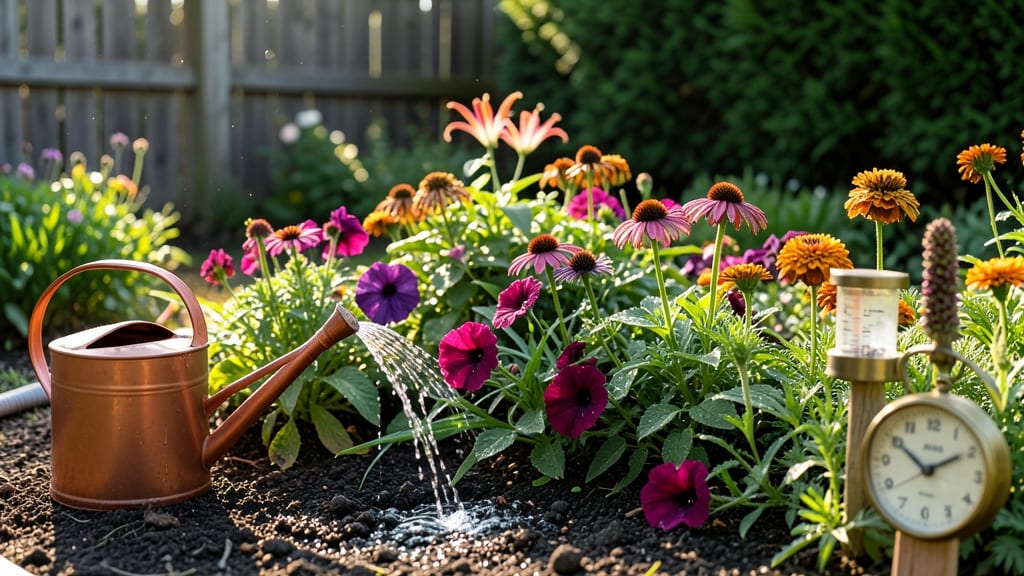
Wondering how often to water your flower garden without guessing? Overwatering can drown roots while underwatering leaves your blooms drooping—yet most gardeners still wing it. The truth is, your watering schedule should change with the seasons, soil type, and even the weather forecast.
In Zone 6a, where spring blooms like tulips and daffodils light up the garden, April through May demands consistency—think deep watering every 2-3 days when soil feels dry an inch below the surface. But summer heat? That’s when your routine needs a major upgrade.
I’ll show you exactly how to adjust your watering based on your flower types, from drought-tolerant lavender to thirsty petunias. You’ll learn the smartest ways to check soil moisture, the best times to water (hint: mornings win), and how mulch can cut your watering time in half.
Skip the trial-and-error—let’s turn your flower garden from wilting to thriving with a schedule that actually works for your climate. Ready to make watering effortless?
Seasonal watering schedule for flower gardens by climate zone
Your flower garden’s health hinges on watering consistency, but timing varies dramatically by season, climate zone, and plant type. In USDA zones 3-6, cold winters mean minimal watering, while zones 7-10 demand year-round attention.
Even drought-resistant flowers like lavender need deep watering every 7-10 days in summer, while thirsty petunias may require daily hydration during heatwaves. Let’s break down the exact schedule for each season and how to adapt for your garden’s needs.
First, identify your USDA hardiness zone—this determines your baseline watering needs. For example, zone 3 (Alaska, northern Midwest) gardens need 50% less water than zone 10 (Florida, Southern California). Even within zones, microclimates (like shaded spots or south-facing beds) change the equation.
Start by grouping your flowers into three water-need categories: low (succulents, lavender), medium (roses, marigolds), and high (hydrangeas, impatiens). This simple classification saves time and prevents over/under-watering.
Now, let’s tackle the comparison-table for seasonal watering by zone and plant type—your go-to reference for how often to water flower gardens at a glance.
Spring is all about balancing moisture as soil warms. In zones 3-6, start with weekly watering in April, then adjust based on rainfall. For zones 7-10, where spring arrives earlier, every 3-5 days is typical. Focus on deep-watering—stick your finger 2 inches into soil; if it’s dry, water until moisture reaches 6 inches down. This prevents shallow roots and wilting later in the season. Mulch with 2-3 inches of straw or wood chips to retain moisture and suppress weeds.
Summer is the most critical season for watering discipline. In zones 7-10, daily watering may be necessary for high-thirst flowers like hydrangeas or begonias, especially during heatwaves. Use the "soil squeeze test": Grab a handful of soil—if it crumbles, water; if it stays clumped, wait. For drought-resistant gardens, deep watering every 5-7 days is sufficient. Morning watering (before 10 AM) reduces evaporation and fungal diseases like powdery mildew. Avoid overhead sprinklers—they waste water and promote leaf diseases. Instead, use drip irrigation or a soaker hose for precise hydration.
As fall approaches, reduce watering frequency by 30-50% compared to summer. Zones 3-6 can drop to **bi
Signs your flower garden needs water (and when to hold back)
Your flower garden is whispering for help—but are you listening? Wilting leaves and drooping stems are obvious signals, but subtle clues like dull petals or yellowing foliage often mean it’s time to water.
The key is reading these cues before your plants scream for attention (literally—some flowers wilt dramatically within hours of thirst).
Don’t rely on a set-and-forget sprinkler—those often lead to uneven watering or root rot from over-saturation. Instead, check your soil’s moisture level by sticking your finger 1-2 inches deep.
If it feels dry, your flowers are thirsty. Pro tip: Morning watering (before 10 AM) gives roots time to absorb moisture without fungal risks.
⚠️ callout-warning ⚠️
⚠️ How Often to Water Flower Gardens (Without Guessing)
Rule #1: Water deeply 2-3 times per week (not daily light sprinkles). Shallow watering encourages weak roots that can’t reach moisture.
Rule #2: Adjust for season and heat—daily watering in summer (Zone 6a) vs. bi-weekly in winter. Use a moisture meter for precision.
Rule #3: Mulch 2-3 inches deep to retain moisture and reduce evaporation. Organic mulch (like straw) also improves soil as it breaks down.
Overwatering is just as deadly as underwatering. Watch for mushy stems, yellowing leaves, or white mold on soil—these are red flags for root rot.
If your garden feels soggy after rain, hold off on watering for a few days. Drip irrigation or soaker hoses help deliver water directly to roots without drowning the foliage.
Different flowers have different thirst levels. Drought-tolerant varieties like lavender or succulents (yes, they count as flowers!) need water only when soil is bone-dry. Meanwhile, thirsty bloomers like petunias or impatiens may wilt by midday in hot weather. Group plants by their water needs to simplify your routine.
Evening watering is a common mistake—wet leaves overnight invite fungal diseases like powdery mildew. Stick to morning watering to give foliage time to dry. For container gardens, check soil moisture daily since pots dry out 3x faster than in-ground beds.
A quick finger test in the pot’s center tells you everything you need to know.
Your garden’s water needs shift with the seasons. In spring (Zone 6a), aim for 2-3 deep waterings per week as roots establish.
By summer, increase to daily watering if temps hit 85°F+. Fall and winter slow down to every 7-10 days, unless you’re growing winter-blooming varieties like pansies.