
How To
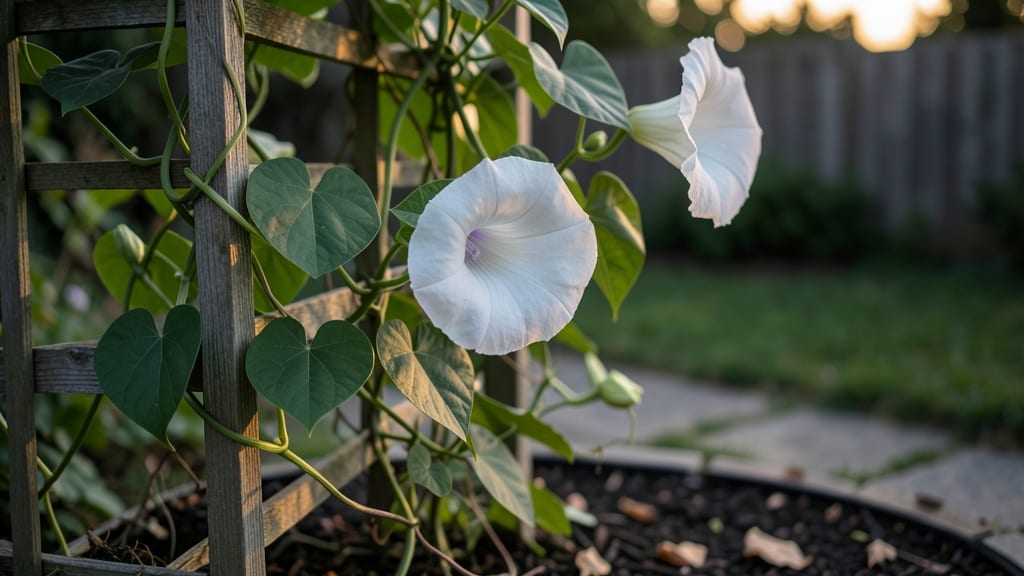
If you’re wondering how tall will moonflower grow, the answer might surprise you—this fast-climbing vine can reach heights of 10 to 25 feet in just one growing season! 🌙 With the right support and care, your moonflower could soon be scaling trellises, pergolas, or even fences, creating a dramatic vertical display of silvery-white blooms that open at dusk.
But here’s the catch: without proper guidance, even the most enthusiastic gardeners can end up with a moonflower that doesn’t reach its full potential. The key lies in understanding how sunlight, trellis strength, and soil conditions influence its growth.
Whether you’re working in USDA Zone 6a or a warmer climate, knowing these factors will help you maximize—or gently manage—that impressive height.
In this guide, I’ll break down everything you need to know, from the fastest-growing varieties to the best trellis materials for supporting 20-foot vines. You’ll also discover simple pruning tricks to encourage upward growth and avoid common mistakes that keep moonflowers from reaching their skyward potential.
Ready to turn your garden into a moonlit canopy? Let’s dive into the secrets behind moonflower’s rapid ascent—and how you can cultivate it to its full, breathtaking height.

Moonflower vine height: expected growth ranges by variety and growing conditions
Moonflowers (Ipomoea alba) are famous for their dramatic vertical growth, often reaching 10 to 25 feet in ideal conditions. But their final height depends on variety, sunlight exposure, trellis support, and even your local climate.
Without proper care, these vines can struggle to reach their full potential—sometimes maxing out at just 8–10 feet if conditions aren’t right.
If you’re planning to grow moonflowers near a pergola, arbor, or tall fence, expect them to climb aggressively. In tropical climates (Zones 9–11), they can grow 20–25 feet in a single season, while temperate zones (6–8) typically see 10–15 feet of growth.
The key? Full sun, strong trellises, and consistent moisture—all of which I’ll break down in detail below.
The 'White Dawn' variety is the tallest, often surpassing 20 feet in tropical climates, while 'Starlight' stays more compact at 10–15 feet.
If you’re in USDA Zones 9–11, you’ll see the fastest growth—sometimes 15 feet in a single season—but even in cooler zones, moonflowers can still reach 10–15 feet with the right care.
Sunlight is non-negotiable: Moonflowers need 6–8 hours of direct sun daily to reach their full height. In shadier spots, they’ll grow 50% slower and may only reach 8–10 feet.
I’ve seen them struggle in partial shade, producing fewer blooms and weaker vines. If your garden is shady, consider supplemental grow lights or choose a morning glory instead.
Trellis support makes or breaks moonflower height. A weak or flimsy trellis can’t handle their weight, leading to stunted growth or broken vines. For 20+ foot varieties, use metal or heavy-duty wooden trellises.
In my garden, I’ve had success with bamboo poles tied to stakes for smaller varieties, but for 'White Dawn', a pergola is a must.
Climate plays a huge role. In humid, tropical climates, moonflowers grow aggressively due to warm nights and long growing seasons. But in cooler temperate zones, growth slows after late summer, capping height at 10–15 feet.
If you’re in Zone 6 or colder, start seeds indoors 8–10 weeks before last frost to give them a head start.
Soil quality also matters. Moonflowers thrive in well-draining, slightly acidic soil (pH 6.0–7.0). Poor soil can limit height by 30–50%. I always amend my soil with compost before planting and use a balanced fertilizer (5-10-10) every 4–6 weeks during the growing season.
Over-fertilizing with nitrogen can boost foliage but reduce blooms, so balance is key.
Watering habits affect height too. Deep, infrequent watering encourages deeper root growth, which supports taller vines. In my experience, watering every 3–5 days (or daily in
How to maximize moonflower height: trellis tips, pruning secrets, and Fast-growth hacks
Moonflowers (Ipomoea alba) can reach 20+ feet with the right support and care, but many gardeners underestimate how much they need guidance to reach their full potential.
The key lies in trellis selection, pruning techniques, and nutrient balance—all of which directly impact vine strength and vertical growth. Without proper support, even the hardiest varieties will flop or grow unevenly, limiting their height to just 10–15 feet.
Let’s unlock that extra 5–10 feet with science-backed hacks.
Your first move should be choosing the right trellis material. Bamboo poles are lightweight and flexible, ideal for smaller gardens, while metal or wooden lattice provides sturdier support for taller structures like pergolas.
Avoid plastic trellises—they can warp under the weight of heavy vines. Pair this with a balanced fertilizer (5-10-10 NPK) to encourage steady, upward growth without excessive leafy growth that can weigh down the vine.
🌱 Step-by-Step Guide to Maximizing Moonflower Height
-
Step 1: Install a Sturdy Trellis Early
Place your trellis within 2–3 weeks of planting seeds. Use T-posts or metal frames for heights over 15 feet to prevent bending. -
Step 2: Prune Strategically for Height
Remove side shoots below 6–8 inches to redirect energy upward. Avoid cutting the topmost buds, as these drive vertical growth. -
Step 3: Water Deeply in the Evening
Give 1–2 gallons per plant every 3–5 days to encourage deep root growth. Shallow watering leads to weak stems that struggle to support height. -
Step 4: Fertilize with Nitrogen Early, Phosphorus Later
Start with high-nitrogen fertilizer (e.g., 10-5-5) for the first 6 weeks to build vine strength. Switch to phosphorus-rich (5-10-10) when buds form to boost flowering. -
Step 5: Avoid Over-Pruning
Never trim more than 20% of the vine at once. Heavy pruning can shock the plant and stunt growth, especially in hot climates where recovery is slower.
One of the biggest mistakes I see is using weak or flimsy supports, like twine or chain-link fences, which can’t handle the weight of a 20-foot vine. Even if your moonflower variety is naturally tall (like ‘Starlight’), poor support will limit its height by 30–50%.
Another pitfall? Over-pruning for bushier growth—this actually reduces vertical expansion by diverting energy to lateral shoots. Instead, focus on selective pruning to maintain an upward trajectory.
For fastest growth, pair your trellis with mulch around the base to retain moisture and cool roots. Moonflowers thrive in warm soil (70–80°F), so in cooler climates, use black plastic mulch to accelerate germination and early growth.
Combine this with evening watering to prevent fungal issues while keeping roots hydrated for rapid vine elongation.
Pro tip: If you’re in a tropical or subtropical zone, moonflowers can grow 30% faster due to longer growing seasons. In these areas, provide partial shade during peak afternoon sun to prevent leaf scorch, which can weaken the vine’s structure.
Even in ideal conditions, consistent care—not just luck—will determine whether your moonflower hits 15 feet or 25 feet.
With these hacks, your moonflower will not only reach its maximum height but also bloom prolifically along its entire length. Imagine waking up to a 20-foot vertical garden of fragrant, velvety blooms—it’s closer than you think! 🌿🌙