
Flowers
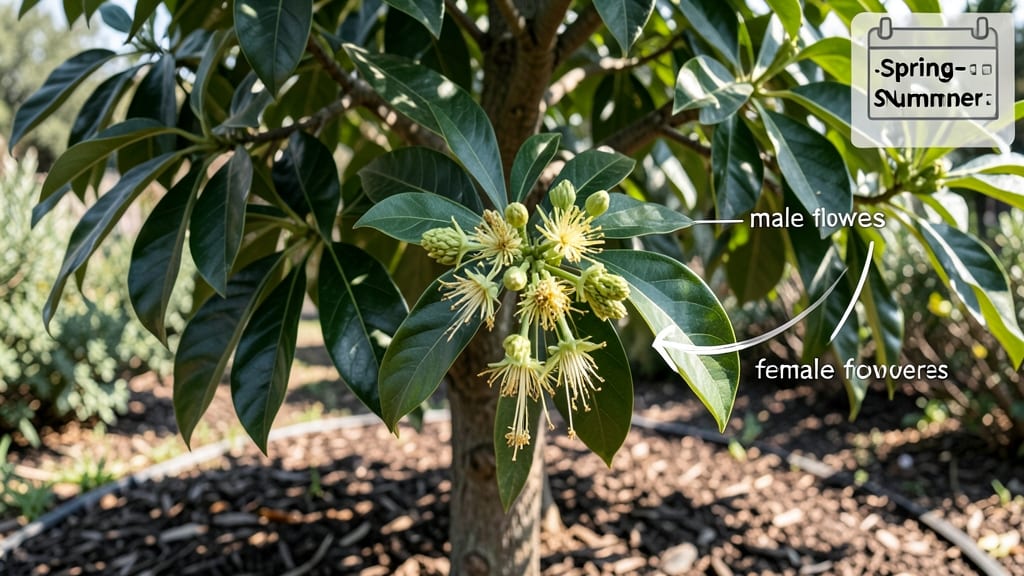
If you’ve ever spotted tiny purple blooms on your 🥑 avocado tree and wondered, "When does the avocado flower?"—the answer depends more on your climate than you might think.
Unlike many fruit trees, avocados have a highly unpredictable flowering cycle, triggered by temperature shifts that vary wildly between USDA Zones 9b and 11.
In frost-free tropical regions, like Hawaii or southern Florida, avocados often flower year-round, though peak blooms typically arrive in late winter or early spring—just as new leaves push out.
But in cooler microclimates (like parts of California's Zone 9b), the timing shifts dramatically, with blooms sometimes appearing as late as summer after a dry spell. This variability can leave gardeners scratching their heads—especially when a tree refuses to flower at all.
What if I told you the secret to encouraging blooms lies in understanding your tree's type (Type A vs. Type B) and how water stress or pruning can trick it into flowering?
Whether you're in a warm coastal zone or a high-desert microclimate, these insights will help you predict—and even influence—when your avocado tree decides to put on its delicate purple show.
Let’s break down the exact seasons by zone, plus proven tips to coax your tree into flowering like a pro. Your patience (and your future harvest) will thank you.
Avocado flowering seasons by USDA Zone: exact timing guide
Avocado trees are fascinating because their flowering cycles depend heavily on temperature fluctuations and USDA zones. Unlike many fruit trees, avocados have two distinct flowering types—Type A and Type B—that bloom at different times.
Understanding these patterns helps you predict when your tree will flower and set fruit. In Zones 9-11, timing varies dramatically between regions like California, Florida, and Hawaii, where microclimates create unique conditions.
The key to successful avocado flowering lies in cool winter nights followed by warm days. This temperature shift triggers blooms, but the exact timing depends on your zone.
For example, Type A varieties (like Hass) often bloom in late winter to early spring, while Type B varieties (like Fuerte) may flower in late spring to summer.
If you’re in Zone 9b, you might see blooms as early as February, whereas Zone 11 trees may flower year-round with seasonal peaks.
Here’s a quick breakdown of what to expect in each zone, including regional variations that can shift flowering by weeks or even months.
| USDA Zone | Primary Flowering Window | Type A Varieties (e.g., Hass) | Type B Varieties (e.g., Fuerte) | Regional Notes |
|---|---|---|---|---|
| Zone 9b (e.g., Los Angeles, Phoenix) | Feb–Mar (Type A) / May–Jun (Type B) | Late winter blooms; frost risk in Mar | Summer blooms; heat stress possible | Cooler coastal areas may bloom earlier |
| Zone 10a (e.g., San Diego, Miami) | Jan–Feb (Type A) / Apr–May (Type B) | Year-round potential; peaks in cooler months | Spring blooms; minimal heat stress | Florida’s humidity may delay blooms |
| Zone 10b (e.g., Honolulu, Key West) | Year-round (peaks Jan–Mar) | Minimal seasonal variation; blooms triggered by rain | Year-round blooms; less predictable | Hawaii’s trade winds promote consistent blooms |
| Zone 11 (e.g., Puerto Rico, South Florida) | Year-round (peaks Sep–Nov) | Tropical climate; blooms year-round | Tropical climate; blooms year-round | Hurricane season may disrupt blooms |
In Zone 9b, such as in Southern California or Arizona, avocado trees experience a more defined seasonal cycle. Type A varieties like Hass typically bloom in February or March, while Type B varieties like Fuerte may flower in May or June.
The risk of late frost in March can damage early blooms, so protecting your tree with frost cloth is wise if you’re in a cooler microclimate. Meanwhile, coastal areas like San Diego may see blooms as early as January due to milder winters.
Moving to Zone 10a, where cities like Miami and San Diego reside, flowering becomes slightly more predictable. Type A varieties bloom in January or February, while Type B varieties follow in April or May.
The humidity in Florida can delay blooms slightly, but the overall cycle remains consistent. In contrast, Hawaii (Zone 10b-11) offers a unique advantage: year-round flowering potential.
While peaks occur in January–March, avocado trees in Hawaii can bloom at any time, especially after heavy rains or trade winds that mimic seasonal changes.
If you’re in Zone 11, like in Puerto Rico or South Florida, your avocado tree may flower year-round, with the most active blooming periods in September–November. The tropical climate eliminates seasonal stress, but hurricane season can disrupt flowering cycles.
To encourage blooms, focus on consistent watering and nutrient-rich soil, as these trees rely less on temperature shifts and more on environmental stability.
One of the
How to identify avocado flowers and predict blooming success
Avocado trees produce tiny, delicate flowers that are easy to miss if you don’t know what to look for. These blooms appear in clusters and are crucial for fruit production, but distinguishing between male and female flowers is key to understanding your tree’s potential yield.
Without proper identification, you might overlook the early signs of flowering—or worse, assume your tree isn’t blooming at all when it actually is!
Understanding avocado flower anatomy and the environmental triggers that prompt blooming can help you predict success. For example, Type A and Type B varieties flower at different times, and even a single day of temperature fluctuation can signal your tree to bloom.
Let’s break down how to spot these flowers and what conditions encourage them to thrive.
When Avocado Trees Typically Flower
- 🌱 Type A Varieties (e.g., Hass, Fuerte): Bloom in late spring (May-June) after warm days and cool nights.
- 🌿 Type B Varieties (e.g., Reed, Choquette): Flower in winter (January-February), triggered by dry, cooler conditions.
- ☀️ Tropical Zones (10-11): Year-round flowering possible, but peaks in spring and fall with temperature shifts.
- 🌡️ Cooler Microclimates (Zone 9b): Blooms late winter (Feb-Mar) after frost risk passes.
- 💧 Water Stress Trigger: Reduce watering 4-6 weeks before expected bloom to mimic drought conditions.
Once you’ve identified your avocado tree’s variety, focus on the physical differences between male and female flowers. Female flowers have a small, bulbous base where the fruit will develop, while male flowers are longer and lack this swelling.
Both types grow in clusters, but female blooms are rarer—sometimes just 1-5% of the total flowers—so pay close attention!
Pollination is another critical factor. Avocado trees rely on bees and wind to transfer pollen, but Type A and Type B varieties must be planted nearby for successful cross-pollination. Without this, your tree may flower but produce no fruit.
If you’re growing a single tree, consider hand-pollinating with a small brush to transfer pollen from male to female flowers during peak bloom.
Environmental stress can also delay or prevent flowering. For example, overwatering or excessive shade can stunt blooms, while sudden temperature drops (below 50°F) can damage flowers before they open.
To encourage healthy flowering, ensure your tree gets 6+ hours of sunlight daily and well-draining soil. A balanced fertilizer (like 6-6-6 NPK) applied in early spring can also boost flower production.
If your avocado tree isn’t flowering after 2-3 years of growth, troubleshoot by checking for root bound conditions, nutrient deficiencies, or improper pruning. Young trees may need light pruning to encourage air circulation, while mature trees benefit from structured pruning to remove dead wood.
Patience is key—some varieties take up to 5 years to flower, especially in cooler climates.
With the right conditions, your avocado tree will reward you with abundant blooms—and eventually, juicy fruit. Keep an eye out for those tiny, fragrant flowers, and don’t hesitate to adjust your care routine if blooming seems slow.
A little attention to detail now can mean a harvest full of avocados in the future! 🌱