
Flowers
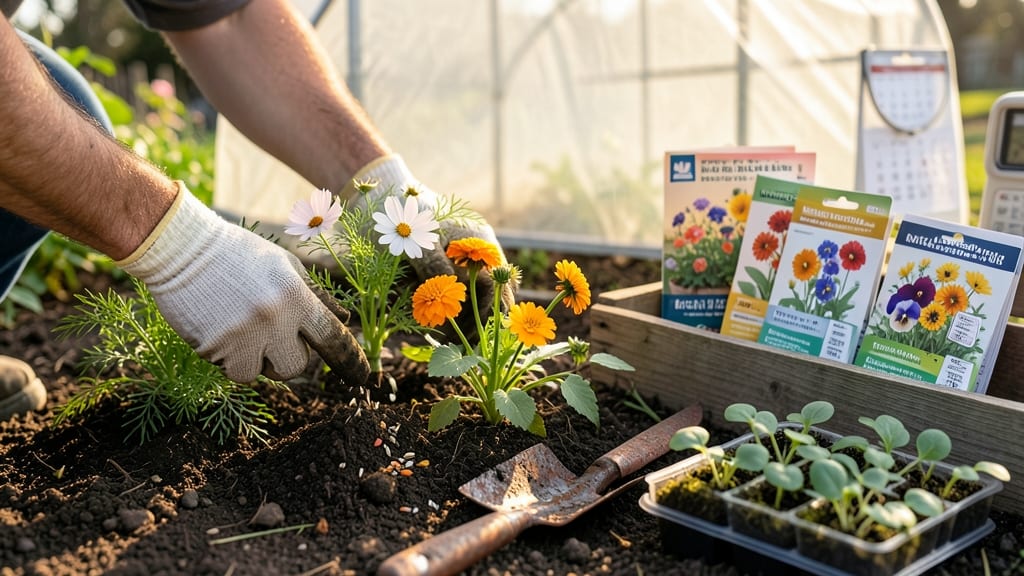
Planting flower seeds in Wisconsin isn't just about the right time—it's about beating the unpredictable frosts that can turn your garden dreams into a 6-week wait for blooms. With USDA Zones 3-5, timing matters more than you might think, especially when early spring frosts can still linger into May.
I've learned the hard way that rushing seeds into cold soil or waiting too long means missing the ideal planting window for vibrant summer flowers like coneflowers and black-eyed Susans.
The key is understanding your last frost date and adjusting for microclimates—whether you're in the chilly Northwoods or the slightly milder southern regions.
What sets Wisconsin apart is how quickly conditions change. A 10-day buffer between your calculated frost date and actual planting can mean the difference between thriving blooms and wilting disappointment.
I'll show you exactly when to start seeds indoors versus direct sowing for each month, so you can maximize your garden's potential.
Ready to transform your yard into a colorful haven? Let's dive into the science-backed schedule that will have your flowers blooming right on cue—no more guesswork, just guaranteed results. Your Wisconsin garden deserves better than a gamble with the weather.
Wisconsin flower seed planting timeline by month (Zone 3-5 guide)
Wisconsin’s USDA Zones 3-5 bring unique challenges for flower gardeners, with last frost dates ranging from mid-April in southern areas to early June in the north. Getting your flower seeds in the ground at the right time means the difference between vibrant blooms and wasted effort.
This month-by-month guide covers annuals, perennials, and cold-hardy flowers—plus when to start seeds indoors for maximum success.
Most Wisconsin gardeners follow the 50-degree soil temperature rule as their cue for direct sowing.
However, northern Wisconsin’s Zone 3 often waits until late May or early June, while Zone 5 areas can start as early as April. Frost dates vary dramatically—plan for a 10-day buffer on both ends to account for late frosts or early heatwaves.
Key terms to know: Last frost date (when to plant warm-season flowers), first frost date (when to stop planting), and hardening off (acclimating seedlings to outdoor conditions). This guide uses Madison’s average last frost (May 15) and Duluth’s (June 10) as benchmarks, with adjustments for your specific location.
| Month | Plant Type | Action | Notes | Zone 3 | Zone 4 | Zone 5 |
|---|---|---|---|---|---|---|
| March | Cold-Hardy Annuals | Start Indoors | Snapdragons, Sweet Alyssum | 4-6 weeks before last frost | 4-6 weeks before last frost | 4-6 weeks before last frost |
| April | Perennials | Direct Sow | Coneflowers, Black-Eyed Susans | After soil reaches 50°F | After soil reaches 50°F | Early April (Zone 5) |
| May | Warm-Season Annuals | Direct Sow or Transplant | Marigolds, Zinnias, Petunias | After May 15 (last frost) | After May 1 (last frost) | After April 15 |
| June | Heat-Tolerant Flowers | Direct Sow | Sunflowers, Cosmos, Vinca | After June 1 (safe) | After May 20 | Any time |
| July-August | Fall-Blooming Perennials | Direct Sow | Asters, Goldenrod, Sedum | July 15 (6-8 weeks before frost) | July 1 | June 15 |
| September | Cool-Season Annuals | Direct Sow |
How to adjust planting dates for Wisconsin’s microclimatesWisconsin’s diverse geography means your neighbor’s last frost date might be weeks earlier or later than yours. Factors like lake effects, urban heat islands, and elevation changes create microclimates that shift planting windows dramatically. For example, Madison’s average last frost is May 15, but a farm 50 miles north could see frost linger until June 1—meaning your cosmos seeds might bloom two weeks earlier in the city than in rural areas. To avoid frost damage or wasted seeds, I recommend checking NOAA’s local frost data for your exact zip code. Their 1981-2010 climate normals provide the most reliable frost-free dates. For instance, Milwaukee’s lake effect often delays spring planting by 7-10 days compared to inland areas like Waukesha. Even within a single county, a south-facing slope might warm up 2-3 weeks faster than a north-facing valley.
For high-value flowers like peony seeds or delphiniums, I swear by the "5-4-3 Rule": Start seeds indoors 5 weeks before your adjusted last frost date, transplant 4 weeks later, and harden off 3 weeks before moving outdoors. This accounts for unpredictable late frosts that can wipe out tender seedlings overnight. Pro tip: Use row covers for an extra 2-4°F protection in early spring. Don’t forget that fall planting also varies by microclimate. In Zone 4 areas, you can sow hardy annuals like calendulas as late as September 15, but in colder Zone 3b regions, cut it off by September 1 to avoid winter kill. Always check NOAA’s frost probability maps—a 10% chance of frost in October might justify delaying until November. My go-to tool for local adjustments is the Midwestern Regional Climate Center’s frost calculator. Plug in your latitude, longitude, and elevation, and it spits out historical frost dates with a 90% confidence interval. For example, if the calculator shows a May 22 last frost with a ±5-day range, I’ll plant cold-hardy flowers like lupines on May 10 to account for the worst-case scenario. Remember: Microclimates don’t follow calendars. What works for your friend’s garden in Sheboygan might fail in your Eau Claire yard. The key is local data + personal observation. Keep a garden journal for 3 years to spot patterns—you’ll soon know exactly when to adjust your flower seed schedule like a pro. 🌿 |