
Container Gardens
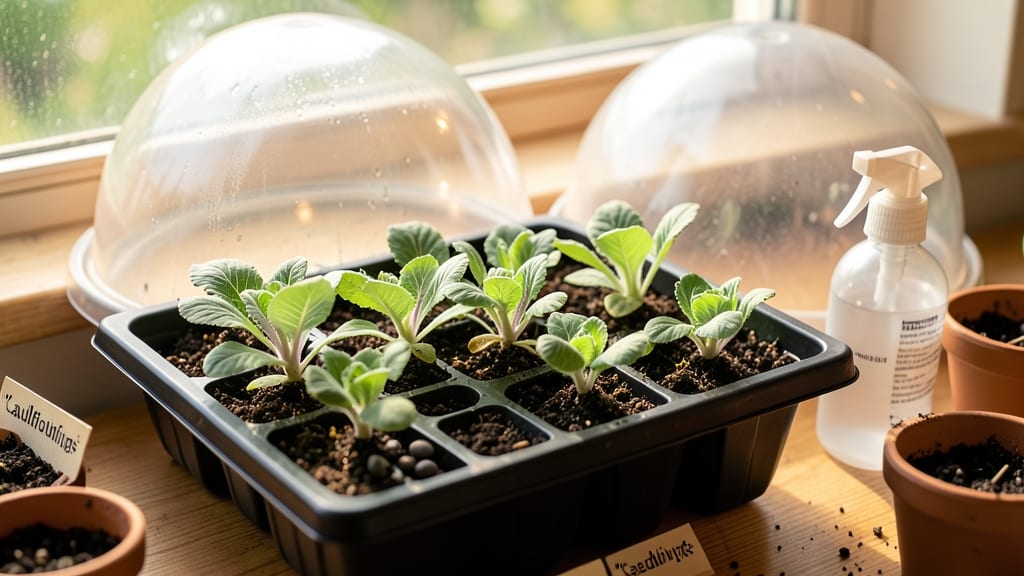
To start cauliflower seeds indoors for the biggest heads, timing is everything—and getting it wrong means tiny harvests or wasted effort. If you plant too early, your seedlings will outgrow their containers before transplanting, while starting too late risks bolting before heads form properly.
For most gardeners in Zone 6a, the sweet spot is February to early March, giving you a full 8-week head start before your last frost date in mid-April.
This window ensures your 🥬 plants are robust enough to handle outdoor conditions by early May, just as they’re ready to form those prized heads.
But here’s the catch: regional differences matter. Southern growers can push starts to late January, while Northern gardeners might need to wait until late February. The key is calculating 6-8 weeks before your local last frost—because that’s when your seedlings should be ready to graduate to the garden.
Ready to avoid the common pitfalls? I’ll walk you through the exact countdown, from seed selection to hardening off, so you can skip the guesswork and grow cauliflower heads that’ll impress even the pickiest eaters.
Best indoor start times by US hardiness Zones for maximum cauliflower head size
Your cauliflower dreams start indoors, but timing is everything. Plant seeds too early, and you’ll waste space on leggy seedlings. Too late, and your heads stay small.
The key? Start 6-8 weeks before your last frost date, but adjust for your USDA zone. Here’s your zone-by-zone guide to bigger, better heads.
For Zones 3-5 (cold climates like Minnesota or Maine), begin seeds indoors in early March (8 weeks before your last frost). In Zones 6-8 (Midwest or Southeast), start in late February. Meanwhile, Zones 9-11 (California or Florida) can plant as early as January—but watch for heat stress.
High-altitude gardens (think Denver or Salt Lake City) need an extra 2 weeks earlier. That’s because cooler temps slow growth. For example, if your last frost is May 15, start seeds by March 1 (not April 1).
🌱
Pro tip: Use your local extension office’s frost date for precision. For example, if your last frost is April 10, count back 8 weeks to February 13—that’s your start date.
Missed it? No problem! Cauliflower tolerates light frosts, so you can transplant even if temps dip to 28°F.
For high-altitude gardens (1,000+ feet above sea level), add 2 extra weeks to your start time. Cooler nights slow germination, so begin seeds by February 15 in Zone 5 if you’re at 5,000 feet. Test soil temps—ideal germination range is 60-70°F.
Once seedlings hit 4-6 inches tall with 3-4 true leaves, they’re ready for outdoor transplanting. Harden them off for 7-10 days by gradually exposing them to outdoor conditions. This toughens stems and prevents shock.
🌿
Remember: Purple varieties (like ‘Graffiti’) handle heat better than white types. If you’re in Zone 9-11, opt for heat-tolerant varieties to avoid bolting. And if your zone isn’t listed? Use the 8-week rule as your baseline—adjust based on your local climate quirks.
Finally, mark your calendar for staggered starts. Plant a second batch 4 weeks later to extend your harvest window. This ensures you’re not overwhelmed with mature heads all at once.
✂️
8-Week countdown: weekly checklist for transplant-ready cauliflower seedlings
Starting cauliflower seeds indoors requires precision—each week brings critical milestones that determine whether your seedlings thrive or struggle. The 8-week countdown begins with seed selection and ends with hardened-off plants ready for transplant. My goal? To help you avoid leggy stems and damping off while maximizing head size.
Week 1 kicks off with seed sowing in sterile, well-draining seed-starting mix. Use 2-3 seeds per cell in a 72-cell tray, pressing them just below the surface. Keep the mix moist but not soggy—overwatering here invites fungal diseases.
Place trays in a warm spot (70-75°F) for germination, which typically takes 7-14 days.
By Week 3-4, your seedlings should have 2-3 true leaves and be ready for their first fertilizer dose. Use a balanced 5-10-10 at half-strength to avoid burning tender roots.
This is also when you’ll thin to one seedling per cell, snipping weaker stems at soil level with clean scissors. Leggy seedlings signal insufficient light—move trays under grow lights (14-16 hours/day) immediately.
Troubleshooting damping off (black stems at soil line) requires quick action: remove affected seedlings, sterilize trays with hydrogen peroxide, and reduce watering. Increase airflow with a small fan on low setting—this mimics outdoor conditions and strengthens stems. Yellowing leaves? Overwatering or nutrient deficiency—fluff the soil and fertilize lightly.
As you near Week 7, shift focus to hardening off. Start with brief outdoor sessions (5-10 minutes) in morning sunlight, gradually increasing duration. This acclimates seedlings to wind, sun, and temperature fluctuations. Swap to a low-nitrogen fertilizer (like 5-5-5) to encourage head formation over leafy growth.
Your 8th week culminates with transplanting. Choose a cool, cloudy day to minimize stress, and plant seedlings 1/4 inch deeper than their current pots. Water deeply to settle soil and reduce transplant shock.
Mulch with straw to retain moisture and deter weeds—now your cauliflower’s journey to bountiful heads begins in earnest.