
Fertilization
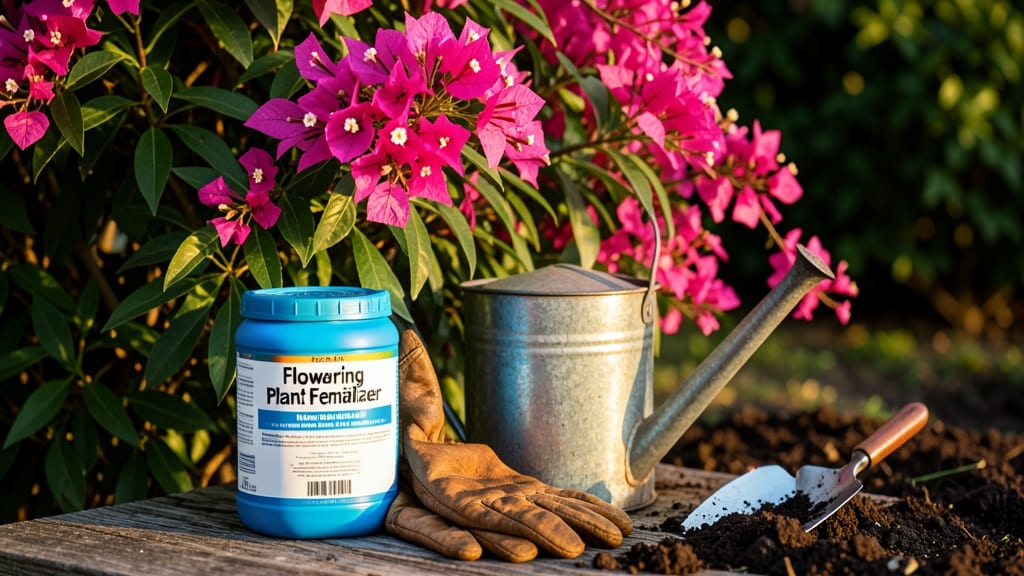
The perfect NPK ratio for bougainvillea flowering: what science says
If your bougainvillea is throwing more leaves than flowers, the NPK ratio in your fertilizer is likely the culprit. Bougainvillea thrives on a low-nitrogen, high-phosphorus approach to encourage vibrant blooms instead of lush foliage.
Science shows that too much nitrogen (N) shifts energy toward leaves, while phosphorus (P) and potassium (K) fuel flower production. Let’s break down the ideal ratios and seasonal adjustments to maximize those stunning bracts.
The golden ratio for bougainvillea flowering is typically 7-9-5 or 10-10-10. This balance ensures phosphorus and potassium dominate, promoting blooms while nitrogen remains controlled.
For example, a 7-9-5 ratio delivers 7% nitrogen (to support minimal growth), 9% phosphorus (to trigger flowering), and 5% potassium (to strengthen stems and drought resistance). This ratio mirrors what bougainvillea needs in its natural tropical habitats.
Here’s why these numbers matter: Phosphorus (P) is the flowering catalyst. It helps bougainvillea develop strong root systems and energy reserves for blooms.
Potassium (K) enhances stress tolerance and vibrant color, while nitrogen (N)—though necessary—must stay low to prevent leafy growth at the expense of flowers. Think of it as a bloom-boosting equation: P + K > N.
| NPK Ratio | Best For | Seasonal Use | Application Tips |
|---|---|---|---|
| 7-9-5 | New plantings, early spring | March-May | Use granular; water deeply after applying |
| 10-10-10 | Established plants, peak bloom | June-August | Dilute liquid fertilizer to half-strength |
| 5-10-10 | Late summer, post-bloom | September-October | Reduce frequency to every 6-8 weeks |
| 0-10-10 | Flowering boost, no new growth | April-July | Apply every 4 weeks; avoid nitrogen |
Seasonal adjustments are key to keeping your bougainvillea in bloom mode. In spring (March-May), focus on a 7-9-5 ratio to kickstart growth and flower buds. As summer arrives (June-August), switch to a 10-10-10 or 5-10-10 to sustain blooms without overfeeding.
For late summer (September-October), reduce nitrogen entirely with a 0-10-10 ratio to encourage a final flush of flowers before dormancy.
Timing matters just as much as the ratio. Apply fertilizer in the early morning to allow nutrients to absorb before the heat of the day. For granular fertilizers, scratch a 1-inch layer into the soil around the base of the plant.
If using liquid fertilizers, dilute to half-strength to avoid root burn, especially in hot, dry climates where bougainvillea thrives. Always water thoroughly after applying to help nutrients penetrate the root zone.
Avoid the temptation to fertilize in fall or winter, even if your bougainvillea looks healthy. During these months, the plant enters a dormant phase, and extra nutrients can lead to weak growth or even root rot.
Instead, focus on pruning dead blooms and ensuring the soil remains well-draining. This prepares your bougainvillea for the next blooming cycle without unnecessary stress.
Watch for signs of nutrient imbalance. If your bougainvillea produces mostly leaves with few flowers, it’s craving more phosphorus and potassium. Yellowing leaves may indicate over-fertilization, while sparse blooms could mean under-fertilization or wrong NPK ratio.
Adjust your feeding schedule or switch to a low-nitrogen, high-phosphorus fertilizer to correct the issue. For example, if you’ve been using a 10-10-10 all year, try a 5-15-10 for a month to push flowering.
For container-grown bougainvillea, reduce fertilizer amounts by half since potted plants have limited root space. Over-fertilizing can lead to salt buildup in the soil, which harms roots. Flush the soil with water every 2-3 months to prevent this. Also, consider using slow-release fertilizers
Best fertilizers for bougainvillea: organic vs synthetic options compared
Choosing the right fertilizer for your bougainvillea can transform a sparse display of blooms into a vibrant, year-round spectacle. Unlike many plants, bougainvilleas thrive on a low-nitrogen, high-phosphorus diet to encourage flowering.
But with so many organic and synthetic options, how do you decide? Let’s break down the top choices, their benefits, and when to use each for continuous, show-stopping blooms.
Organic fertilizers like bone meal and fish emulsion offer slow-release nutrients that improve soil health over time, while synthetic options like bloom-boosting formulas deliver instant results. Each has its place in your bougainvillea care routine, depending on your goals—whether you prioritize soil enrichment or quick floral response.
Let’s compare the best of both worlds.
Organic vs. Synthetic Fertilizers for Bougainvillea
Organic Options
- Bone Meal: High in phosphorus (3-15-0), ideal for bloom initiation.
- Fish Emulsion: Balanced NPK (5-5-5) with micronutrients for root and foliage health.
- Compost: Slow-release, improves soil structure and microbial life.
- Worm Castings: Gentle, nutrient-rich, perfect for container-grown bougainvilleas.
Synthetic Options
- Bloom Booster (10-30-20): High phosphorus for immediate floral response.
- Slow-Release Granules (7-7-7): Balanced feed for steady growth and blooms.
- Liquid Fertilizers (5-10-5): Quick absorption, great for potted plants.
- Citrus Bloom (10-10-10): Versatile for year-round feeding.
For organic fertilizers, I recommend starting with bone meal in early spring to kickstart blooming. Mix 1-2 tablespoons into the soil around the base of your plant. Follow up with fish emulsion every 4-6 weeks during the growing season to maintain balanced nutrition.
These options are perfect for gardeners who prioritize long-term soil health and want to avoid synthetic chemicals.
If you need faster, more dramatic results, synthetic fertilizers like Bloom Booster (10-30-20) are my go-to. Apply every 6-8 weeks during peak blooming seasons (spring and fall) to see vibrant flowers in as little as 4-6 weeks.
For container-grown bougainvilleas, liquid fertilizers like Citrus Bloom are ideal—they dissolve quickly and provide nutrients directly to the roots.
Switching between organic and synthetic fertilizers can maximize your bougainvillea’s potential. For example, use organic options in early spring to build soil fertility, then switch to synthetic blooming formulas in late spring to trigger heavy flowering.
This two-step approach ensures your plant gets the best of both worlds: nutrient-rich soil and immediate floral response.
Cost-effectiveness is another key factor. Organic fertilizers like compost or worm castings are budget-friendly if you make your own, while synthetic options may require a larger upfront investment.
However, synthetics often deliver visible results faster, making them worth the cost if you’re aiming for a showcase-worthy display in record time.
Remember, the key to bougainvillea success is consistency and balance. Whether you choose organic, synthetic, or a mix of both, always follow the NPK ratio guidelines and avoid over-fertilizing. Your bougainvillea will reward you with lush, continuous blooms all season long! 🌸