
Planting
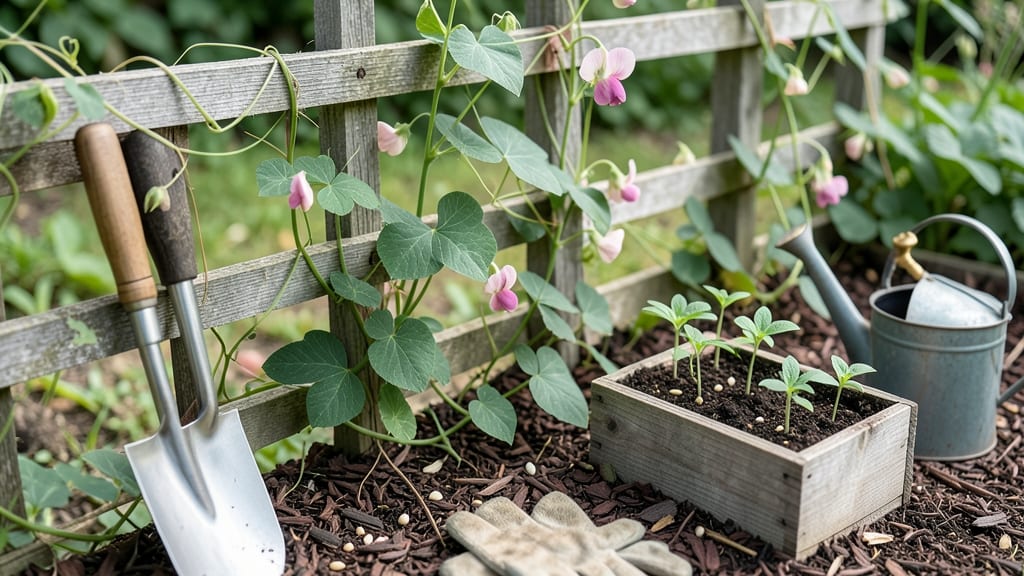
To plant sweet pea flowers 🌸 that burst into fragrant blooms faster than you can say "spring," you need the right timing and technique.
These delicate climbers thrive when sown directly in March or April, but a little prep work makes all the difference between weak vines and a lush, fragrant display.
Most gardeners struggle with sweet peas because they don’t know the secrets to strong germination. Unlike other flowers, these seeds need a cool, damp environment to wake up properly—almost like they’re waiting for winter’s last kiss.
I’ll show you exactly how to mimic those conditions at home so your seeds sprout in just 7-10 days instead of weeks.
Once your sweet peas are in the ground, the real magic happens with proper spacing and support. Plant them too close, and they’ll compete for sunlight; too far apart, and your trellis will look sparse.
The key is 18-24 inches between plants and a sturdy trellis right from the start—because these vines grow fast, and you don’t want them flopping over by summer.
By the time June rolls around, you’ll be rewarded with clusters of fragrant blooms that perfume your garden. But getting there takes just a few simple steps—so let’s dive into the exact method that works every time, no guesswork required.

When and how to plant sweet pea seeds for maximum blooms
Sweet peas thrive when planted at the right time and in the perfect conditions. The key to maximum blooms starts with understanding their ideal planting window—typically late winter to early spring (March–April in most USDA zones).
These fragrant climbers need 60–90 days to reach full bloom, so timing is everything. If you miss the spring window, you can try a fall sowing (8–10 weeks before your first frost) for late-season flowers.
Before planting, prepare your seedlings or soil with cold stratification, a process that mimics winter conditions to break seed dormancy. This trick speeds up germination and ensures stronger vines.
For best results, soak your seeds overnight in lukewarm water before planting. This simple step can boost your germination rate from 50% to nearly 90%!
Step-by-Step Guide to Planting Sweet Pea Seeds
-
Step 1: Choose Your Planting Method
- Direct sow outdoors in well-draining soil after last frost.
- Start indoors 6–8 weeks before last frost for earlier blooms.
-
Step 2: Prep the Soil
- Mix compost or aged manure into the top 6 inches of soil.
- Ensure pH 6.0–7.0 (test with a soil kit if unsure).
-
Step 3: Stratify Seeds (Optional but Recommended)
- Place seeds in a damp paper towel in a sealed bag.
- Refrigerate for 7–14 days to break dormancy.
-
Step 4: Sow Seeds at the Right Depth
- Plant seeds 1 inch deep in rows 12–18 inches apart.
- Space individual seeds 2–3 inches apart for better airflow.
-
Step 5: Water Gently and Keep Moist
- Use a fine mist spray to avoid displacing seeds.
- Maintain consistent moisture (not soggy) until germination.
-
Step 6: Provide Support Early
- Install a trellis or stakes as soon as seedlings emerge.
- Gently tie vines to support with soft twine.
Sweet peas love well-draining soil rich in organic matter. If your garden soil is heavy clay or sandy, amend it with compost or coconut coir to improve structure. These plants are not drought-tolerant, so mulch around the base with straw or shredded leaves to retain moisture and suppress weeds.
This simple step reduces watering needs by up to 30% while keeping roots cool.
After sowing, place a clear plastic dome or row cover over seedlings to create a mini greenhouse effect. This speeds up germination and protects young plants from pests like slugs. Remove the cover once sprouts appear (usually in 7–14 days).
For faster growth, place your sweet pea patch in a spot with morning sun and afternoon shade, especially in hotter climates.
One common mistake gardeners make is overcrowding seeds. Sweet peas need room to sprawl, so thin seedlings to 3–4 inches apart once they reach 2 inches tall.
This prevents fungal diseases and ensures each plant gets enough nutrients and sunlight. If you’re growing multiple varieties, plant them in separate rows to avoid cross-pollination.
For continuous blooms, stagger your planting by 2–3 weeks. This ensures a longer flowering season from early summer until frost. Choose dwarf varieties (like 'Cupani') for containers or standard types (like 'Blue Moon') for trellises.
Always pick flowers in the morning for the best vase life—this keeps stems fresh and encourages more blooms.
Sweet peas are self-supporting climbers, but they need a strong trellis to reach their full 6–8 foot height. Install supports at planting time to avoid disturbing roots later.
Use bamboo stakes, obelisks, or wire cages for best results. Avoid plastic trellises—they can overheat in sunlight and damage delicate vines.
With the right planting timing, soil prep, and care, your sweet peas will reward you with fragrant, abundant blooms all season long. Start with cold-stratified seeds, give them room to grow, and watch your garden transform into a romantic, fragrant paradise in just a few months! 🌸
Choosing the best trellis and support for sweet pea vines
Sweet peas need strong support to reach their full 6-8 foot height and display those fragrant blooms at eye level. Without the right trellis, vines sprawl, flowers droop, and your garden loses that romantic, climbing charm.
The best trellises provide secure anchorage while allowing airflow to prevent fungal diseases. I’ve tested obelisks, teepees, fences, and even simple string systems—here’s what works best for these delicate climbers.
Your choice depends on space constraints and vine density. A single sweet pea plant can produce 10-15 feet of vine, so spacing matters. For small gardens, obelisks save space while maximizing vertical growth.
Larger areas benefit from teepees or fences, which support multiple plants. Even a DIY string trellis works if installed correctly—just avoid flimsy materials that snap under weight.
Install your trellis at planting time to prevent root disturbance later. Sweet peas hate being transplanted, so bury support stakes 6 inches deep and secure them before seeds sprout. This gives vines immediate access to support as they grow. The worst mistake? Waiting until vines are already climbing—this causes tangled growth and weak stems that break easily.
For DIY options, repurpose materials like bamboo stakes or even old ladders. Wrap them with jute twine to create a textured surface that vines grip naturally. Avoid smooth metal or plastic—sweet peas struggle to cling without rough surfaces.
Pro tip: Add horizontal crossbars every 12 inches to distribute weight evenly, especially for heavy blooms like 'Cupani' or 'Perfume' varieties.
Watch for overcrowded trellises, which lead to tangled vines and poor airflow. Thin plants to 18-24 inches apart and prune side shoots to encourage upward growth. If vines start leaning, gently weave them through the support rather than tying them—this prevents stem damage.
With the right trellis, your sweet peas will climb 3-4 feet per week and reward you with months of fragrant blooms.
Remember: Sturdy support = happier vines. Invest time in installation now to avoid struggling with floppy plants later. Once your trellis is up, sit back and enjoy the show—because nothing beats a garden bursting with sweet pea perfume on a summer breeze. 🌸