
Blooming
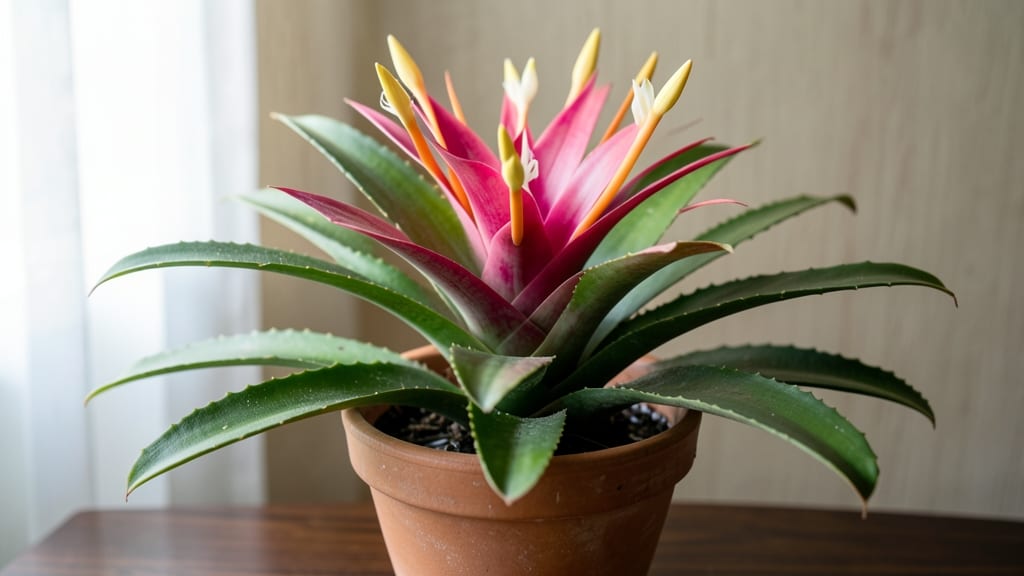
Bromeliads flower when they’re ready—and that timing depends on more than just luck. These stunning 🌺 plants typically bloom between 2 to 5 years after planting, but light, age, and even a little stress can speed things up or stall them entirely.
If you’ve ever watched your bromeliad’s vibrant leaves without seeing a single flower spike, you’re not alone. Many plant parents miss the subtle cues that trigger blooming, like bright indirect light or the right temperature shifts.
The good news? With a few simple adjustments, you can encourage your plant to follow its natural cycle—and enjoy those showstopping blooms sooner.
From understanding how daylight hours influence flowering to recognizing when your bromeliad is mature enough, this guide breaks down everything you need to know. Whether you’re growing yours indoors or in a warm climate, we’ll cover the secrets to coaxing those colorful bracts into view.
Ready to turn your bromeliad’s waiting game into a success story? Let’s dive into the science—and the tricks—that make all the difference in getting those flowers to appear when you least expect them.
How light exposure triggers bromeliad flowering (science-backed timing)
Bromeliads are fascinating plants that rely on light exposure as their primary trigger for flowering. Unlike many houseplants, these tropical beauties use day length and light intensity to signal when it’s time to bloom. Understanding these cues can help you coax your bromeliad into flowering—even indoors—by mimicking its natural environment.
The key lies in photoperiodism, the plant’s response to light duration, and light spectrum, which influences hormone production.
In their native tropical habitats, bromeliads experience consistent 12-hour daylight cycles year-round, but subtle shifts in light—like shorter days in winter—can prompt flowering. For indoor growers, replicating these conditions requires attention to light bulbs, window placement, and seasonal adjustments.
The right balance of blue and red light wavelengths is especially critical, as these trigger the hormonal changes that lead to that iconic central spike.
| Light Condition | Day Length Requirement | Flowering Trigger | Best Light Source |
|---|---|---|---|
| Natural Outdoor Light | 10-14 hours/day | Short-day plants (e.g., Aechmea) | East/west-facing windows |
| Indoor Grow Lights | 12-14 hours/day | Red/blue LED spectrum | Full-spectrum bulbs (6500K) |
| Seasonal Light Shift | <12 hours (winter) | Stress-induced blooming | Supplemental grow lights |
| Direct Sunlight | 6+ hours (filtered) | Leaf burn risk | Sheer curtain protection |
Most bromeliads are short-day plants, meaning they bloom when daylight hours shorten—typically in late summer or fall. However, some varieties like Guzmania and Vriesea may flower year-round if conditions are ideal. The critical threshold is usually 10-12 hours of light per day.
If your bromeliad receives less than this, it may stay vegetative indefinitely. For indoor plants, grow lights with a 12-hour cycle can simulate natural conditions and encourage flowering.
Light intensity also plays a role. Bromeliads thrive in bright, indirect light, but too little light weakens the plant, delaying blooms. A spot near an east- or west-facing window is ideal, while south-facing windows may require sheer curtains to prevent leaf scorch.
If your home lacks natural light, LED grow lights with a color temperature of 6500K can provide the right spectrum to trigger flowering hormones like florigen.
The red and blue wavelengths in light are particularly important. Red light (660nm) promotes flowering, while blue light (450nm) supports leaf growth. A 10:1 ratio of red to blue is often recommended for bromeliads. You can achieve this with full-spectrum LED bulbs or by combining red and blue LEDs.
For indoor bromeliads, place lights 12-18 inches above the plant and run them for 12-14 hours daily to mimic natural daylight cycles.
Seasonal light changes can also trigger flowering. In USDA Zones 10-12, outdoor bromeliads often bloom in spring or summer when temperatures rise and daylight lengthens. However, indoor bromeliads may not experience these natural shifts.
To encourage blooming, you can reduce light exposure slightly in winter (e.g., by moving the plant farther from a window) to simulate shorter days. After a few weeks, return it to full light to mimic the transition back to longer days, which can prompt flowering.
If your bromeliad isn’t flowering after a year or two, it might need a light adjustment. Start by moving it to a brighter location and ensure it’s getting at least 6 hours of indirect light daily.
If that doesn’t work, supplement with a grow light for 4-6 hours in the morning to replicate natural sunrise conditions. Patience is key—some bromeliads take 2-5 years to flower, but the right light conditions can significantly speed up the process.
For outdoor bromeliads in warm climates, flowering often coincides with the rainy season, when humidity rises and light intensity softens. If you’re growing bromeliads in containers outdoors, bring them indoors before winter to protect them from cold drafts and maintain consistent light exposure.
This stability helps prevent stress, which can delay or prevent flowering entirely.
Remember, bromeliads are epiphytes, meaning they naturally grow on trees in their habitat, where they receive dappled sunlight. Recreating this environment indoors—with bright, indirect light and occasional direct light—can encourage healthier growth and timely flowering.
By paying close attention to light duration, intensity, and spectrum, you’ll unlock the secrets to coaxing your bromeliad into its stunning bloom phase.
Age and stress signals: when to expect bromeliad flowers (and how to speed it up)
Bromeliads are patient plants, often taking 2 to 5 years to reach their first bloom. This timeline depends on their maturity, but you can spot the signs that your plant is ready to flower.
Look for darkening leaf tips or a slight sheen on the foliage—these are early signals that your bromeliad is nearing its flowering window. Patience is key, but understanding these cues helps you prepare for the stunning inflorescence that’s about to emerge.
Once your bromeliad hits maturity, it enters a phase where even small changes in care can trigger blooming. For example, a brief period of reduced watering or a slight drop in temperature can mimic natural stress signals that prompt flowering.
This is especially useful for indoor plants, where conditions are often more controlled. The goal isn’t to rush the process but to create the right conditions for your bromeliad to follow its natural cycle.
Here’s what to watch for—and how to encourage blooming without causing harm:
🌱 Numbered Highlights: Bromeliad Blooming Timeline & Triggers
- Year 1-2: Focus on bright indirect light and well-draining soil to build a healthy root system. Avoid fertilizing heavily—this stage is about growth, not blooms.
- Year 2-3: Look for pups (baby plants) forming at the base—this signals maturity. Reduce watering slightly in late fall to mimic seasonal stress.
- Year 3+: A central spike (inflorescence) begins to emerge. Move your plant to a cooler spot (60-65°F) for 2-3 weeks to encourage blooming.
- Bloom Time: Flowers last 6-12 weeks, followed by pups. Remove spent flowers to redirect energy to the pups for future blooms.
- Stress Trick: Let the soil dry 50% between waterings for 4-6 weeks before expected bloom time. This mimics drought conditions in the wild.
If your bromeliad is past its third year but hasn’t bloomed, it might need a little encouragement. A common trick is to place your plant in a cooler room (around 60°F) for a few weeks—this mimics the temperature drop that often triggers flowering in the wild.
Just be sure to return it to normal conditions once the spike appears, as extreme cold can damage the plant.
Another effective method is to reduce watering frequency for a short period. Bromeliads in their natural habitat experience dry seasons, and a brief drought can signal it’s time to bloom.
Water only when the soil is completely dry to the touch, but avoid letting the plant wilt. This controlled stress tells your bromeliad, “It’s time to focus on reproduction!”
Remember, bromeliads are monocarpic, meaning they bloom only once in their lifetime. However, the good news is that they produce pups around the base during or after flowering. These pups can be separated and repotted to grow into new plants, giving you a fresh start for future blooms.
This makes bromeliads a rewarding long-term investment—even if each parent plant flowers just once.
With the right care and a little patience, you’ll soon be rewarded with those vibrant, long-lasting flowers that make bromeliads so beloved. The key is to observe your plant closely, respond to its signals, and create the ideal conditions for it to thrive—and bloom—on its own timeline. 🌺