
Flowers
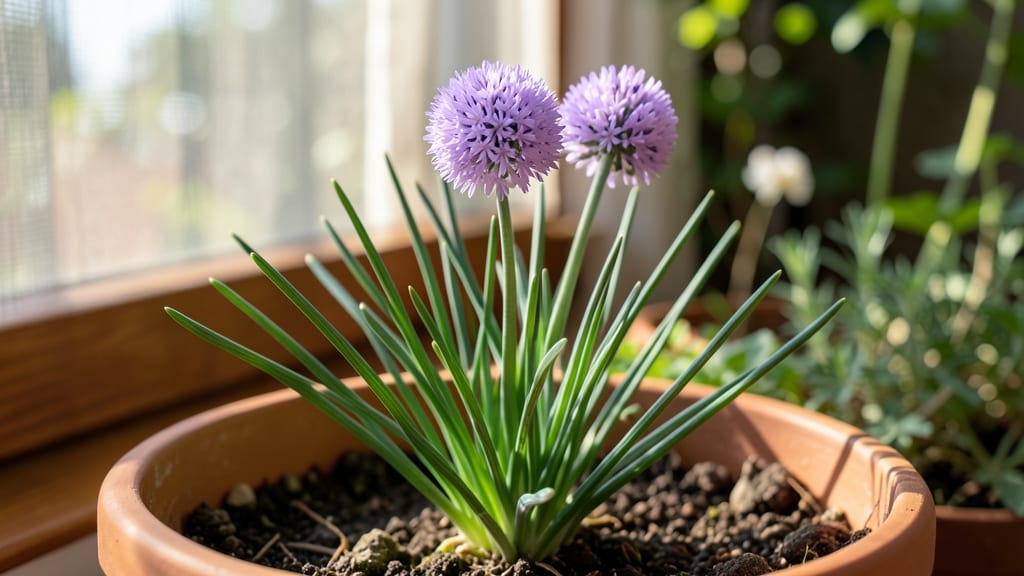
When those delicate purple spikes pop up from your 🌱 chives, you might wonder: Do chives have flowers?—and the answer is a resounding yes! These blooms aren’t just pretty; they’re edible with a mild onion flavor, and they’re actually a game-changer for your kitchen and garden.
Chives are one of those hardworking herbs that reward you with both foliage and flowers, making them a dual-purpose plant. The blooms appear in late spring to early summer, adding a pop of color while also attracting pollinators to your garden.
But here’s the kicker: harvesting them the right way keeps your chives thriving and your meals more flavorful.
If you’ve ever wondered whether to snip those flowers or leave them for the bees, I’ll break down the best practices—from when to harvest for peak flavor to how to encourage more blooms without sacrificing your green stems. Plus, I’ll share a few surprising ways to use them in cooking.
Ready to turn those purple spikes into a culinary and garden asset? Let’s dive into why chive flowers are worth celebrating—and how to make the most of them.
Chive flowers: when, why, and how they grow
Yes, chives do have flowers, and they’re not just pretty—they’re packed with flavor too! These delicate purple-pink blooms emerge in late spring to early summer, forming round umbel clusters that stand out against their grassy green leaves.
As a gardener, I’ve learned these flowers aren’t just decorative; they’re a harvestable bonus that can enhance your cooking while supporting pollinators in your garden.
Chive flowers grow from the plant’s central stalk, which elongates as it matures. The blooms appear after the plant has established a strong root system, typically 60-90 days after planting.
Understanding this growth cycle helps you decide whether to harvest the flowers or let them go to seed, both of which impact your chive plant’s health and future yield.
The flowering process begins when chives receive 6+ hours of sunlight daily and warm temperatures between 60-75°F. In my garden, I’ve noticed that chives planted in full sun locations flower earlier and more vigorously than those in partial shade.
This is because sunlight triggers the plant’s photoperiodic response, signaling it’s time to reproduce.
Flowering actually benefits your chive plant by encouraging new leaf growth after the blooms fade. When you harvest flowers, the plant often responds by producing fresh, flavorful shoots from its base.
However, if you let the flowers go to seed, the plant may slow its leaf production as it focuses energy on seed development.
Chive flowers have a distinct umbel shape, with multiple small blooms radiating from a single point like an open umbrella. Each flower is star-shaped with six petals, typically ranging from soft lavender to deep magenta.
The color intensity often depends on sunlight exposure—more sun = deeper hues. These flowers aren’t just beautiful; they’re edible and packed with mild onion flavor, making them a versatile addition to both gardens and kitchens.
One common question I hear is whether flowering harms the chive plant. The short answer is no—unless you’re harvesting leaves heavily during bloom time. The plant naturally balances energy between leaves and flowers, so unless you’re over-harvesting, both the leaves and flowers can thrive simultaneously.
In fact, many gardeners encourage flowering because it leads to more robust regrowth.
The flowering cycle typically lasts
Harvesting chive flowers for cooking: best practices and recipes
Ready to turn those purple chive flowers into culinary gems? The key is timing—harvest them when they’re fully open but before the seed pods form. This ensures the best flavor and prevents the plant from diverting energy to seed production, which can weaken your green chive stems.
For peak flavor, aim to harvest flowers in the morning after dew dries. This is when their onion-garlic notes are most intense. Use sharp clean scissors or pruning shears to snip the stems just above a leaf node, encouraging bushier regrowth.
- 1. Best Harvest Time: Late spring to early summer (May-June)
- 2. Flower Stage: Fully open blooms, before seed pods form
- 3. Cutting Technique: Snip stems 2-3 inches above base with clean shears
- 4. Culinary Uses: Garnishes, vinegars, pestos, and teas
- 5. Regrowth Tip: Leave 2-3 inches of stem to encourage new growth
When harvesting, compare the two methods: flower-only harvesting (snipping just the blooms) vs. stem harvesting (taking the entire flower stalk). Flower-only harvesting preserves your plant’s energy for leaf production, while stem harvesting gives you more edible material but may slightly reduce foliage yield.
Pro tip: Use the flowers immediately or dry them for later use. To dry, tie small bundles with twine and hang upside down in a dark, well-ventilated space for 1-2 weeks. Once dry, store in an airtight container away from light—these dried blooms make gorgeous garnishes that last for months.
For a simple yet stunning recipe, try chive flower vinegar. Fill a clean jar with blooms, cover with apple cider vinegar, and let sit for 2-3 weeks.
Strain and use this fragrant vinegar to dress salads or marinate proteins. The mild onion flavor pairs beautifully with creamy dishes like mashed potatoes or buttery pasta.
Don’t forget that chive flowers also make a delicate herbal tea. Steep 1-2 teaspoons of dried blooms in hot water for 5-10 minutes. The result is a soothing, slightly sweet tea that’s perfect for digestion or as a post-dinner refreshment.
Just remember: moderation is key—these flowers pack a subtle but potent flavor!