
Watering
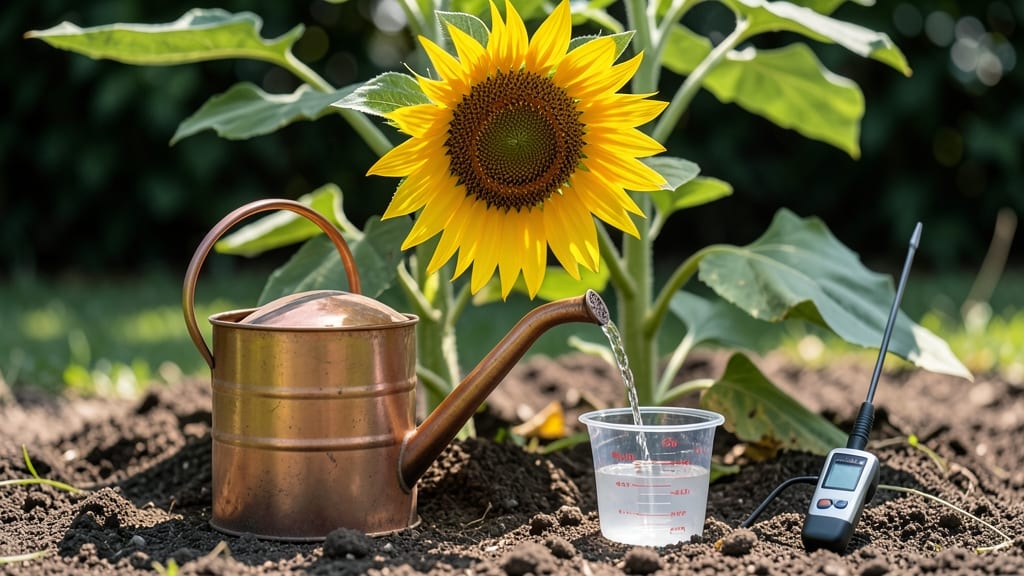
Daily water requirements for sunflowers: root depth and growth stage breakdown
Sunflowers have deep taproots that can extend 12–36 inches into the soil, but their water needs change dramatically as they grow. Unlike shallow-rooted plants, sunflowers store moisture deep underground, which means overwatering is just as dangerous as underwatering.
The key is matching your watering schedule to their root depth and growth stage—not just following a one-size-fits-all routine.
Young sunflower seedlings (0–4 weeks) need frequent, shallow watering to keep the top 2 inches of soil moist. Once they develop deeper roots (4–8 weeks), you’ll shift to deep, infrequent watering to encourage strong root growth.
During flowering and seed production, water demand peaks—but even then, consistency is critical to avoid stress.
| Growth Stage | Root Depth | Daily Water Needs | Frequency | Total Weekly Water |
|---|---|---|---|---|
| Seedling (0–4 wks) | 0–6 inches | ½–1 gallon | Every 1–2 days | 3–7 gallons |
| Vegetative (4–8 wks) | 12–24 inches | 1–2 gallons | Every 3–4 days | 5–10 gallons |
| Flowering (8–12 wks) | 24–36 inches | 2–3 gallons | Every 2–3 days | 10–15 gallons |
| Seed Production (12+ wks) | 36+ inches | 1–2 gallons | Every 4–5 days | 5–10 gallons |
*Adjust for climate (hot/dry = more water) and soil type (sandy = more frequent).
During the seedling stage, focus on keeping the soil consistently moist but never soggy. Use a spray nozzle to avoid disturbing delicate seedlings, and water in the early morning to reduce evaporation.
Once roots reach 12 inches deep (around week 4), switch to deep watering—this means soaking the soil to 18–24 inches at a time.
At the vegetative stage, sunflowers need 1–2 gallons per plant every 3–4 days, but the goal is to encourage roots to grow deeper. If you water too lightly, roots stay shallow and the plant becomes drought-prone later.
Use a soaker hose or drip irrigation to deliver water slowly and evenly, mimicking natural rain.
The flowering stage is when sunflowers demand the most water—up to 3 gallons per plant every 2–3 days in hot weather. This is when you’ll see buds forming and stems thickening, but insufficient water can cause buds to drop before opening.
Pay extra attention during heatwaves or if your soil is sandy or rocky, as these conditions drain moisture faster.
In the seed production phase, water needs decrease slightly because the plant is now focusing energy on seed development rather than rapid growth. However, consistent moisture is still critical—especially for large varieties like Mammoth or Russian Giant.
Cut back to 1–2 gallons every 4–5 days, but monitor for wilting or dry soil, which signals it’s time to water again.
One of the biggest mistakes gardeners make is watering based on schedule rather than soil conditions. Instead of sticking to a rigid calendar, check soil moisture weekly by inserting your finger 2–3 inches deep.
If it feels dry, water deeply; if it’s still damp, wait another day. In containers, sunflowers may need watering every 2–3 days because potted soil dries out faster.
For container-grown sunflowers, use pots that are at least 12 inches deep and 18 inches wide to accommodate their deep roots. Add perlite or vermiculite to the soil mix to improve drainage, and always water until you see excess water draining from the bottom.
This ensures roots get the hydration they need without sitting in waterlogged soil.
Remember, sunflowers are drought-tolerant once established, but that doesn’t mean they thrive on neglect. The key is to
Signs your sunflower is thirsty (or drowned): visual cues and fixes
Sunflowers send clear distress signals when their water needs aren't met. Underwatered plants show wilting leaves by midday that don't recover, while overwatered ones develop yellowing lower leaves and a mushy stem base. Both conditions stunt growth, but the fixes couldn't be more different.
I've seen firsthand how quickly sunflowers react to moisture stress. A dry soil test (stick your finger 2-3 inches deep) reveals the truth - if it feels like a powdery powder, water immediately. For overwatered plants, the soil stays clumpy and cold to the touch, signaling root suffocation.
How Much Water Does a Sunflower Need Per Day?
Daily Needs
- 🌱 Seedlings: 1/2 cup water
- 🌿 Vegetative: 1-2 gallons
- 🌼 Flowering: 2-3 gallons
Adjustments
- ☀️ Hot Days: +50% water
- 🌧️ Rainy Days: Skip watering
- 🌱 Mulched: -30% water
Underwatering Signs
- 🌱 Drooping leaves that don't recover
- 🌿 Crispy leaf edges
- 🌼 Slow stem growth (<1 inch/week)
Overwatering Signs
- 💧 Yellow lower leaves
- 🍄 White mold at soil line
- 🌱 Stunted stems (<3 inches/week)
For underwatered sunflowers, I recommend a deep watering schedule - soak the soil until water runs out the bottom of the pot or 6 inches into garden soil. This encourages deep root growth that sunflowers desperately need. Morning watering is best to prevent fungal diseases from evening moisture.
When you spot overwatering symptoms, act fast by improving drainage. Amend heavy clay soil with coarse sand or perlite, and consider repotting if using containers. Reduce watering frequency to every 5-7 days until the soil dries out 2 inches deep between waterings.
Remember, sunflowers are resilient once you correct moisture issues. With proper care, they'll bounce back with vibrant blooms and towering growth in just 2-3 weeks. The key is consistent monitoring and adjusting based on your local climate and soil type.
🌻