
Watering
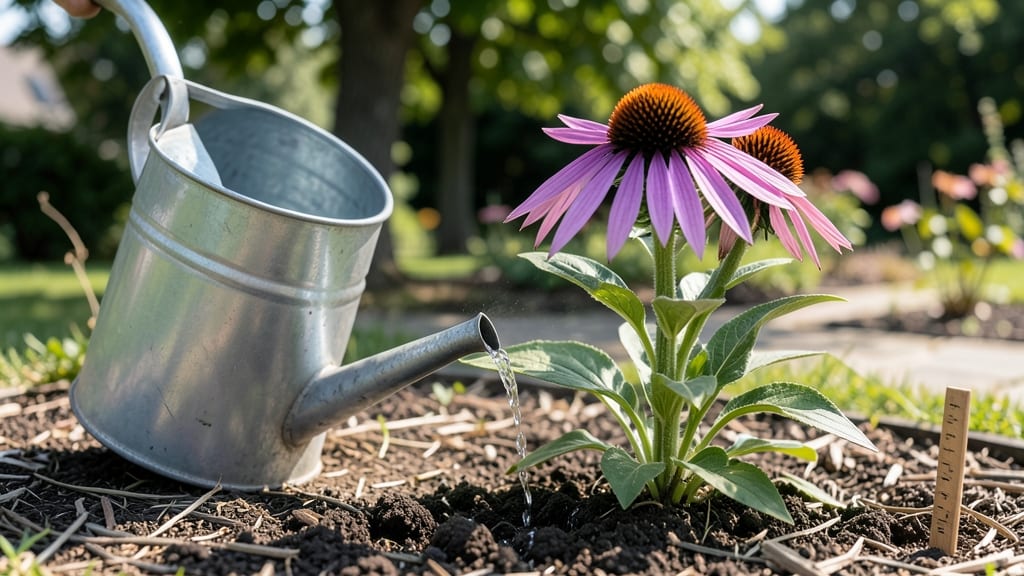
To keep your 🌼 coneflowers thriving, you might be surprised how little water they actually need—especially once they're established. These hardy perennials are built for resilience, but getting their watering routine wrong can mean fewer blooms or even plant stress.
The key is understanding when to water deeply and when to let their drought-resistant roots do the work.
Newly planted coneflowers in Zone 6a need consistent moisture during their first growing season, but after that, they can handle long stretches between waterings. I’ll break down the exact schedule for each season, so you never overwater or leave them thirsty.
Whether you’re dealing with hot summers or dry spells, this guide keeps your plants happy without the guesswork.
Most gardeners make one of two mistakes: either drowning their coneflowers with frequent shallow waterings or letting them dry out completely. The solution? Deep, infrequent watering that encourages strong root growth.
You’ll learn how to adjust your routine based on your soil type and climate, plus how to spot signs of over- or under-watering before it’s too late.
By the end, you’ll have a foolproof system for watering your coneflowers that saves time and keeps those vibrant blooms coming back year after year. Let’s get started with the seasonal schedule that works for even the busiest gardener.
Coneflower watering schedule by season: what you need to know
Coneflowers (Echinacea) are the superstars of the drought-tolerant world, but even these resilient perennials need the right watering approach to thrive. Overwatering can suffocate roots, while underwatering stresses plants—especially during their first year.
My seasonal schedule balances moisture needs from germination through dormancy, adjusted for climate zones 3-9.
The key is deep, infrequent watering that encourages strong root growth. Young plants need more frequent hydration, while mature coneflowers can handle bi-weekly soakings once established. Let’s break it down by season so you know exactly when to water—and when to hold back.
In spring, focus on consistent moisture to help young roots establish. After planting, water every 2-3 days until sprouts appear, then taper to weekly deep waterings as leaves emerge. Use a moisture meter to check—soil should feel like a wrung-out sponge.
Summer is where coneflowers show their drought tolerance. Shift to bi-weekly deep waterings (1-2 inches per session) to encourage root depth. In Zone 9+, morning watering prevents evaporative loss, while Zone 5-6 may need occasional mid-week top-ups during heatwaves.
As fall arrives, reduce watering to bi-weekly by September, then monthly by October. This mimics natural dormancy signals and prevents rot. Mulch with 2-3 inches of straw to retain moisture without suffocating roots.
Winter care is minimal—just a monthly check for dry soil. Snow acts as insulation, so no watering is needed unless you’re in a dry, windy climate. Overwatering now can drown roots before spring.
For container-grown coneflowers, increase frequency to every 5-7 days in summer, as pots dry out faster. Always use well-draining mix with perlite or sand to prevent root rot.
Remember: Yellowing leaves often mean overwatering, while drooping foliage signals underwatering. Adjust based on your local climate—these guidelines are a starting point, not a rulebook.
With this schedule, your coneflowers will reward you with bold blooms from summer through fall—all while conserving water like the pros. Happy gardening! 🌼
Signs your coneflowers are overwatered or underwatered (and how to fix it)
Your 🌼 coneflowers might look tough, but even these drought-resistant plants send clear signals when their watering routine is off. The most common mistakes I see are either soggy soil from overwatering or crispy leaves from underwatering.
Both issues can stunt growth and reduce blooms if ignored. Learning to read these plants helps you adjust before damage sets in.
Overwatered coneflowers often show yellowing leaves that start at the base and spread upward. The soil around them feels permanently damp, and you might notice mushy stems or even fungal growth.
On the flip side, underwatered plants develop brown, crispy edges on leaves and may wilt dramatically—even in the morning. The soil here feels bone-dry just an inch below the surface.
Here’s how to diagnose and fix both issues quickly, so your coneflowers stay healthy and vibrant all season.
Overwatering vs. Underwatering: Quick Fixes
| Issue | Signs | Fix |
|---|---|---|
| Overwatering | Yellow leaves, soggy soil, fungal spots, wilting despite moisture | Stop watering immediately. Loosen compacted soil with a fork. Add 1-2 inches of mulch to improve drainage. |
| Underwatering | Brown leaf edges, dry soil, wilting even in morning, stunted growth | Water deeply once a week (1 inch of water). Use a soaker hose to avoid runoff. Check soil moisture before watering. |
💧 Pro Tip: Always water at the base of the plant in the morning to reduce evaporation and fungal risks.
If your coneflowers are overwatered, the first step is to stop watering entirely until the soil dries out. Use a moisture meter to check—if it reads above 50% moisture two inches down, wait another day.
For severely waterlogged plants, gently lift them and transplant to drier soil if needed. Adding perlite or sand to the soil can also improve drainage long-term.
Underwatered coneflowers need a deep soak to revive them. Aim for 1 inch of water per week, delivered slowly to encourage root growth. If your soil is sandy, you may need to water more frequently, while clay soils can hold moisture longer.
Always water early in the day to prevent fungal issues from overnight moisture.
Pay attention to the roots—healthy coneflowers develop deep, white roots that spread outward. If roots look black or mushy, that’s a sign of root rot from overwatering.
Trim affected roots and repot in fresh, well-draining soil. For underwatered plants, you’ll see roots that are brittle or shriveled; these need consistent moisture to recover.
With these fixes, your coneflowers will bounce back in no time. The key is observation—check your plants weekly and adjust your watering routine based on their signals. Soon, you’ll have a thriving garden of vibrant blooms with minimal effort. 🌼