
Watering
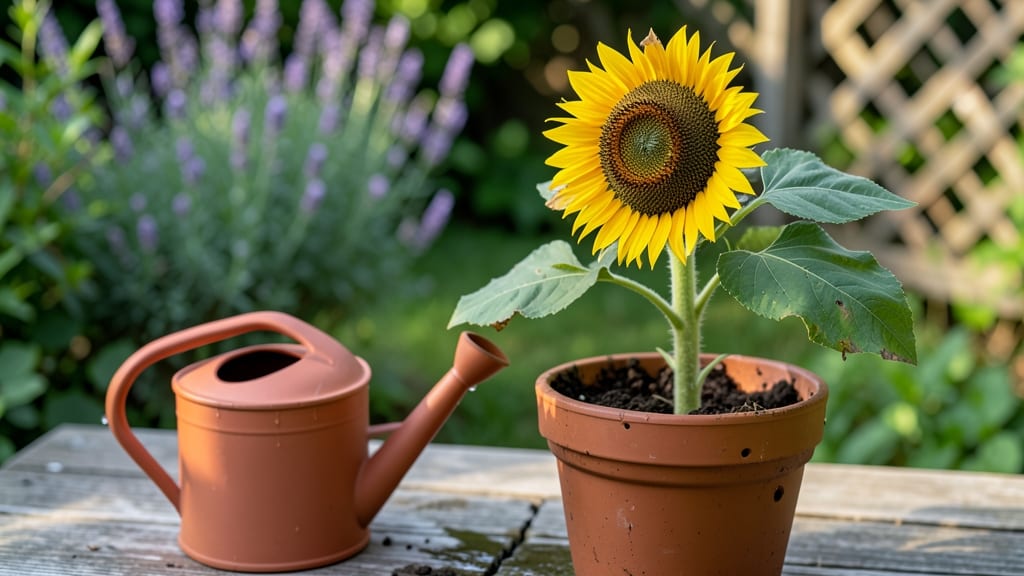
To keep your potted 🌻 sunflowers thriving, you might be guessing how often to water—but the wrong schedule can mean the difference between a lush, towering plant and a sad, wilted one.
These thirsty giants need consistent moisture, but their roots are confined to a pot, making them vulnerable to both drought and rot.
I’ve tested the drip test method with my own sunflowers, and it’s the simplest way to gauge when your plant truly needs water. Stick your finger an inch into the soil—if it feels dry, it’s time to hydrate.
But here’s the catch: pot size, season, and even your local climate play a huge role in how often you should water.
In USDA Zone 6a, where spring planting kicks off in April, your sunflowers will drink more eagerly as summer heats up. A 5-gallon pot might need water every 2-3 days in July, while a smaller container could dry out faster.
Let’s break down the exact schedule so you never over- or under-water again.
Mastering this balance isn’t just about survival—it’s about unlocking those 8-foot stalks and vibrant blooms you planted for. Ready to learn the foolproof routine? Let’s dive into the science and save your sunflowers from guesswork.
The drip test method: how to check sunflower soil moisture in pots
Sunflowers in pots need consistent moisture but hate soggy roots. The drip test method is my go-to technique to avoid overwatering or underwatering these thirsty giants. Unlike sticking your finger in the soil (which can compact it), this method gives you precise readings without disturbing the roots.
For sunflowers, timing is everything—especially since their deep roots need 1-2 inches of dryness between waterings in summer.
Start by gathering a few tools: a small trowel or your finger, a glass jar or cup, and a timer. The goal is to see how quickly water drains through the soil, which tells you whether your sunflower needs a drink.
This method works best in 5-gallon pots or larger, where roots have room to spread. For smaller pots, adjust the timing accordingly—shallow containers dry out faster.
Here’s why this method beats guesswork: Sunflowers in pots can double in height in a season, but their roots struggle if the soil stays too wet. The drip test helps you mimic natural rainfall patterns, ensuring water penetrates deeply without pooling.
In summer heat, sunflowers may need watering every 1-2 days, while spring and fall might stretch that to 3-4 days. The test accounts for these changes.
Step-by-Step Drip Test for Sunflowers
- 1 Step 1: Choose a dry spot near the pot’s edge, about 2-3 inches from the stem. Avoid areas where water pools.
- 2 Step 2: Poke a hole in the soil with your finger or trowel, about 1-2 inches deep. This is where sunflower roots thrive.
- 3 Step 3: Pour ½ cup of water into the hole. Use room-temperature water to avoid shocking the roots.
- 4 Step 4: Wait 5-10 minutes and check how far the water traveled. If it’s below 1 inch, your sunflower needs water.
- 5 Step 5: Adjust watering based on the season. In summer, repeat the test daily. In spring/fall, stretch it to every 3-4 days.
Pay attention to the soil texture after the test. If it feels clumpy and dark, your sunflower has enough moisture. But if it’s light and dry, it’s begging for water.
In summer heat, I’ve seen sunflowers wilt by noon if the soil is bone-dry—so check twice a day if temperatures hit 90°F or higher. The drip test helps you catch these signs early.
Seasonal adjustments are key. In spring, when sunflowers are sprouting, the soil stays moist longer. You might only need to water every 3-4 days unless it’s unusually dry. But by July, when the sun is relentless, I’m testing the soil daily in 5-gallon pots.
Smaller pots dry out faster, so cut that timeline in half if your sunflower is in a 1-gallon container.
Don’t ignore the visual cues either. Yellowing leaves often mean overwatering, while drooping (even with wet soil) signals underwatering. The drip test helps you distinguish between the two.
For example, if the soil is dry at 1 inch deep but your sunflower’s leaves are wilting, it’s time to deep-water immediately. If the soil is still damp but leaves are yellow, you’re overdoing it—let the top 2 inches dry out before watering again.
One mistake I see often is assuming all pots dry at the same rate. A terracotta pot loses moisture faster than a plastic one because it breathes. If your sunflower is in terracotta, perform the drip test morning and evening during summer.
For plastic, once a day suffices. Material matters just as much as size when using this method.
For container sunflowers, I also recommend adding perlite or sand to the potting mix to
Sunflower watering schedule by pot size and season: exact frequency guide
Sunflowers in pots drink differently depending on their container size and the season. A 5-gallon pot holds moisture longer than a 1-gallon pot, while summer heatwaves demand more frequent watering than spring’s gentle rains.
Even your USDA zone affects how quickly soil dries—Zone 10’s sunflowers may need daily watering in July, while Zone 6a plants can stretch to 3-5 days between drinks.
I’ve grown sunflowers in both pot sizes across multiple zones, and the key is adjusting your schedule to match soil moisture, not just a calendar.
For example, a 1-gallon pot in Zone 8 might need watering every 1-2 days in August, while the same pot in Zone 4 could go 3-4 days without water. Let’s break down the exact routine for each scenario.
Here’s your seasonal watering guide, tailored to pot size and climate. Use this as your cheat sheet to avoid the two biggest potted sunflower killers: root rot from overwatering and wilting from dehydration.
| Pot Size | Season | USDA Zones 3-6 | USDA Zones 7-10 | Notes |
|---|---|---|---|---|
| 1-Gallon Pot | Spring (Apr-May) | Every 2-3 days | Every 1-2 days | Soil stays moist; reduce if rain |
| 1-Gallon Pot | Summer (Jun-Aug) | Daily or every other day | Every 1-2 days | Check soil daily in heatwaves |
| 1-Gallon Pot | Fall (Sep-Oct) | Every 3-4 days | Every 2-3 days | Reduce as temps drop |
| 5-Gallon Pot | Spring (Apr-May) | Every 3-4 days | Every 2-3 days | Larger pots retain moisture longer |
| 5-Gallon Pot | Summer (Jun-Aug) | Every 2-3 days | Every 1-2 days | Deep watering preferred |
| 5-Gallon Pot | Fall (Sep-Oct) | Every 4-5 days | Every 3-4 days | Cut back as growth slows |
Notice how 5-gallon pots always need less frequent watering than 1-gallon pots? That’s because larger containers hold more soil moisture and give roots room to explore deeper.
In USDA Zones 7-10, the heat and dry air mean you’ll water more often than in cooler Zones 3-6, where humidity helps retain moisture.
Pro tip: Always water in the morning to let excess moisture evaporate during the day. If your sunflower’s leaves start drooping by noon, it’s a sign you’re underwatering—especially in 1-gallon pots. For 5-gallon pots