
Watering
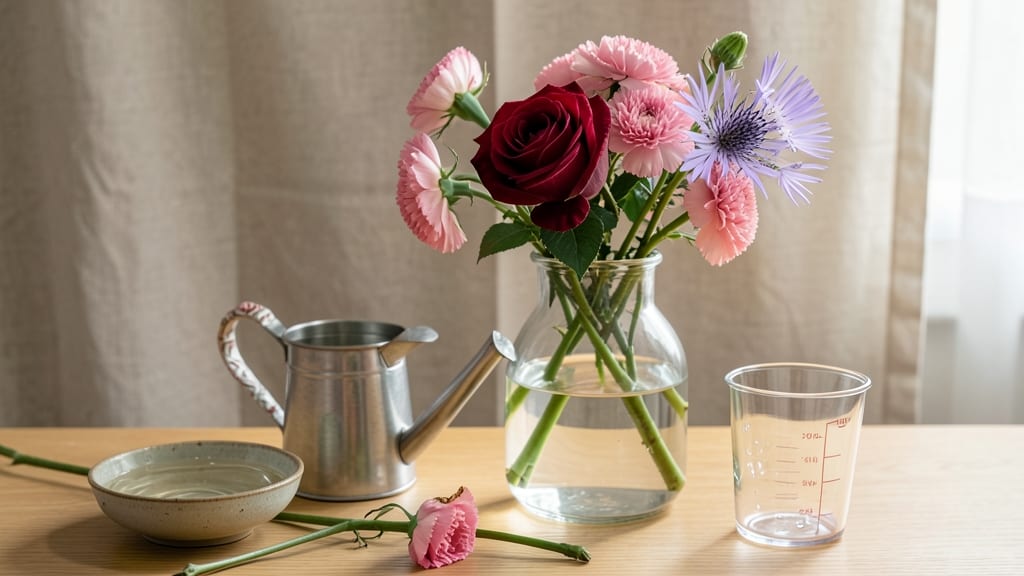
To keep your cut flowers 🌸 looking fresh longer than a grocery store bouquet, you might be surprised by how much water do flowers need in a vase—and when to refresh it.
Too little, and they wilt faster than your motivation on a Monday morning; too much, and you risk bacterial growth that turns your vase into a science experiment gone wrong.
Most blooms thrive with 1-2 cups of fresh water every 2-3 days, but some thirsty varieties—like orchids or lilies—demand daily top-offs, while hardy carnations can stretch water changes to 4-5 days.
The key isn’t just volume but also how you prep the stems and vase, which can add days (or even weeks) to your flowers’ life.
I’ve tested these rules with everything from roses to peony arrangements, and the difference between a droopy mess and a showstopping centerpiece often comes down to simple habits: trimming stems at an angle, using room-temperature water, and ditching the murky vase water before it turns into a bacterial buffet.
Let’s break down the exact amounts and schedules your flowers need to stay perky.
Whether you’re a bouquet newbie or a seasoned floral fanatic, these science-backed tips will help you avoid the most common mistakes—like overfilling the vase or skipping the weekly water swap. Stick with me, and your cut flowers will outlast any sad, forgotten bouquet you’ve ever received.
Daily water requirements for cut flowers by bloom type
Not all cut flowers drink the same! Some blooms guzzle water like thirsty gardeners at a summer BBQ, while others sip delicately like tea lovers.
The key to vase longevity lies in understanding your flowers' natural thirst levels, which depend on stem thickness, leaf density, and even petal structure. For example, a lily's thick stems absorb water differently than a delicate orchid's slender stems.
Let's decode the science so you can keep your bouquet fresh without drowning it—or letting it wilt from neglect.
First, consider that water absorption rates vary wildly. A rose with its thick, woody stems might only need a 1-inch water level in its vase, while a carnation with its thin stems can handle a deeper soak.
Even the type of leaves matters—foliage-heavy arrangements like eucalyptus or gypsophila transpire faster, pulling water up like a straw. This means they need more frequent top-ups than sparse-stemmed varieties like tulips or daffodils.
Here’s the golden rule: Refill when water level drops 1-2 inches from the top of the vase. But don’t just guess—check your flowers’ specific needs based on their category. Below, I’ve broken down the most popular cut flowers into three thirst groups: high-thirst, moderate-thirst, and low-thirst.
Pro tip: Always use room-temperature water (never straight from the fridge!) to avoid shocking the stems.
Let’s start with the high-thirst group, where flowers drink like they’re in a desert. Orchids and eucalyptus top this list because their thin stems and dense foliage create a constant water demand. For these, I recommend using a narrow-neck vase to minimize water loss from evaporation.
Also, add a splash of bleach (1 drop per cup) to prevent bacterial growth in the murky water that forms in just 24 hours. Think of it as a flower spa—clean water equals longer-lasting blooms.
Moving to moderate-thirst flowers like lilies and peonies, these blooms strike a balance. Lilies, for instance, need 1.5 cups of water but can go 48 hours between refills if the stems are fresh.
Peonies, with their heavy blooms, might need a wider vase to support their weight without toppling. Here’s a trick: Recut stems every 2 days at a 45-degree angle to maximize water uptake. This simple step can add 3-5 extra days to your arrangement’s life.
Finally, the low-thirst crowd—carnations and
5 Signs your flowers are thirsty (and how to fix it)
Cut flowers send silent signals when they’re thirsty—or drowning in too much water. The key is learning to read these cues before they wilt beyond repair. Unlike garden plants, cut blooms can’t tap roots for moisture, so their survival depends entirely on your vase care.
I’ve seen roses revive after just a few hours with fresh water, while others face irreversible damage from neglect. Let’s decode the visual clues and fix them fast.
Start by checking the stem condition. Healthy stems should feel firm when gently squeezed—like a fresh carrot. If they bend or snap easily, that’s your first warning sign. Next, inspect the petal edges: crisp, vibrant petals mean happy flowers, while curling or browning edges scream for hydration.
Even the leaves hold secrets—wilted or yellowing foliage is often a red flag for dehydration before the blooms show signs.
⚠️ WARNING: The Golden Rule of Vase Water ⚠️
✅ DO: Use room-temperature water (never cold) in a clean vase—bacteria thrives in stagnant water. Most cut flowers need 1-2 cups of water initially, but high-thirst blooms (like orchids or lilies) may need daily top-ups. Trim stems at a 45-degree angle every 2-3 days to maximize water absorption.
❌ DON’T: Let water sit for more than 48 hours—it becomes a bacterial breeding ground. Avoid tap water with chlorine (let it sit out for 24 hours) or overcrowding stems in the vase, which blocks water flow. Never add sugar or household items like aspirin—stick to commercial floral preservatives for best results.
Watch for drooping blooms that don’t perk up after a drink. This could mean the stems are blocked by air bubbles or the water’s too dirty. Give them a 10-second soak in fresh, cool water—this often revives them instantly.
If the stems feel mushy or smell foul, they’ve been overwatered or infected. In this case, trim the damaged sections and recut healthy stems underwater to purge air pockets.
Another sneaky sign? Mold or slimy film on the water’s surface. This bacterial buildup clogs stems faster than you’d think. Dump the old water, scrub the vase with vinegar or bleach solution, and rinse thoroughly.
Pro tip: Add a penny or two to the fresh water—copper ions naturally slow bacterial growth. For foliage-heavy flowers like eucalyptus, keep leaves above the waterline to prevent rot.
Don’t overlook the vase material. Glass vases let you monitor water levels, while ceramic can trap moisture and speed up decay. If your flowers arrive in a plastic-wrapped bouquet, remove the packaging immediately—it traps ethylene gas, which accelerates wilting.
Place the vase in a cool spot away from direct sun (like a north-facing window) to slow evaporation. Humidity matters too: in dry climates, mist the blooms lightly daily to mimic their natural environment.
When in doubt, follow the 3-day rule: change the water and recut stems every 72 hours, regardless of how full the vase looks. I’ve extended peony bouquets from 5 days to nearly 2 weeks using this simple routine.
Pay attention to these 5 signs, and your flowers will thank you with vibrant, long-lasting beauty. 🌸