
Fertilization
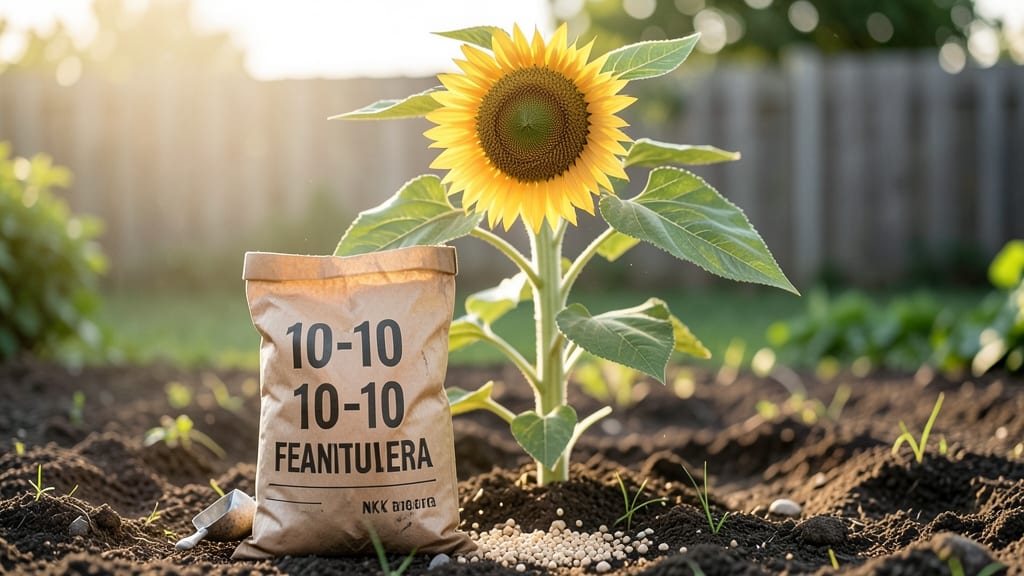
Understanding 10-10-10 fertilizer for sunflowers: NPK breakdown and growth impact
Sunflowers are nature's sun-powered giants, and their growth depends heavily on the nutrients they absorb.
The 10-10-10 fertilizer is a balanced option that provides equal parts nitrogen (N), phosphorus (P), and potassium (K), but understanding how each nutrient impacts your sunflowers at different stages is key to maximizing their potential. Let me break down how this fertilizer supports your sunflowers from seedling to full bloom.
First, the numbers in 10-10-10 represent the percentage of nitrogen, phosphorus, and potassium by weight. This balanced ratio means each nutrient contributes equally to your sunflowers' growth. Nitrogen fuels leafy green growth, phosphorus strengthens root development and flowering, while potassium enhances overall plant health and disease resistance.
For sunflowers, this balance is particularly effective because it supports both their rapid vertical growth and vibrant blooms.
Nitrogen is crucial during the early stages of growth when your sunflowers are developing their foliage and stalks. A deficiency here can lead to pale, yellowing leaves, while an excess may result in lush leaves but weak stems that can't support the plant's weight. The 10% nitrogen in 10-10-10 provides just the right amount to encourage strong, healthy leaves without overpowering the plant.
Phosphorus plays a vital role in root development and flowering. Sunflowers need robust roots to anchor their towering stalks and absorb water and nutrients efficiently. The 10% phosphorus in this fertilizer ensures that your sunflowers establish a strong root system early on, which is essential for their later growth phases. Additionally, phosphorus promotes the formation of large, vibrant blooms, making it a critical nutrient during the flowering stage.
Potassium, often overlooked, is essential for overall plant health, particularly in flowering and seed development. It helps regulate water uptake and enhances the plant's resistance to diseases and environmental stresses. The 10% potassium in 10-10-10 ensures that your sunflowers remain robust and healthy, even as they reach their impressive heights. Potassium also contributes to the size and quality of the seeds, making it beneficial if you're growing sunflowers for their seeds as well as their beauty.
| Nutrient | Role in Sunflower Growth | Best Growth Stage | Signs of Deficiency |
|---|---|---|---|
| Nitrogen (N) | Promotes leaf and stalk growth | Seedling to early vegetative | Yellowing leaves, stunted growth |
| Phosphorus (P) | Strengthens roots and flower development | Early root growth to flowering | Purple stems, delayed flowering |
| Potassium (K) | Enhances flower and seed quality | Flowering to seed development | Weak stems, poor seed set |
When using 10-10-10 fertilizer for sunflowers, timing is everything. During the seedling stage, focus on nitrogen to build a strong foundation of leaves and stalks.
As your sunflowers transition into the flowering stage, shift your attention to phosphorus and potassium to support the development of large, vibrant blooms and robust seeds.
Research shows that sunflowers fertilized with a balanced NPK ratio like 10-10-10 can achieve 20-30% taller stalks and 15-25% larger blooms compared to those grown without proper fertilization.
One of the biggest advantages of 10-10-10 fertilizer is its versatility. It can be applied as a pre-planting treatment to enrich the soil before sowing seeds, or used as a side-dressing during the growing season.
For pre-planting, mix 1 tablespoon of 10-10-10 fertilizer into the top 6 inches of soil for every square foot of planting area. This ensures that your sunflower seeds have access to nutrients right from the start.
During the growing season, apply a light dose of fertilizer every 4-6 weeks to maintain balanced growth.
However, it’s important to avoid over-fertilizing, as this can lead to nutrient burn and other issues. Sunflowers are relatively forgiving, but excessive fertilizer can cause leaf scorch or inhibit flowering. Always follow the recommended dosage and monitor your plants for signs of stress.
If you notice yellowing leaves or stunted growth, it might be time to adjust your fertilization schedule or consider a soil test to check nutrient levels.
In summary, 10-10-10 fertilizer is an excellent choice for sunflowers because it provides a balanced mix of nutrients tailored to their growth needs.
By understanding how each component—nitrogen, phosphorus, and potassium—contributes to different stages of development, you can optimize your fertilization strategy for taller stalks, larger blooms, and healthier plants.
Whether you're growing sunflowers for their beauty or their seeds, this fertilizer can help you achieve impressive results with the right application and timing.
🌻
Step-by-step guide: when and how to apply 10-10-10 for maximum sunflower growth
Timing and technique are everything when feeding sunflowers with 10-10-10 fertilizer. Unlike many plants, sunflowers need precise nutrient delivery to avoid stunted growth or weak blooms.
I've learned the hard way that dumping fertilizer all at once leads to burnt foliage—so we'll follow a three-stage schedule that matches their growth phases.
Before applying any fertilizer, test your soil's pH. Sunflowers thrive in slightly acidic to neutral soil (6.0-7.0). If your soil is too alkaline, mix in sulfur or compost to adjust it.
I always add 2 inches of compost to planting holes for extra organic matter, which helps retain moisture and nutrients.
| Application Method | Best For | Dosage | Application Time | Pros | Cons |
|---|---|---|---|---|---|
| Granular 10-10-10 | Pre-planting & early growth | 1 tbsp per plant | Spring planting | Long-lasting, easy to store | Can burn if overapplied |
| Liquid 10-10-10 | Flowering stage | 1 tbsp per gallon of water | Every 4-6 weeks | Faster nutrient absorption | Requires frequent application |
| Organic Alternatives | All stages | 2 tbsp compost tea or fish emulsion | Monthly | Improves soil health | Slower nutrient release |
For pre-planting, mix 1 tablespoon of granular 10-10-10 into the bottom of each planting hole. This gives roots an instant nutrient boost as they establish.
I always water thoroughly after planting to help dissolve the granules and prevent root burn. Never apply fertilizer directly to seeds—this can damage delicate seedlings.
When sunflowers reach 4-6 inches tall (about 3-4 weeks after germination), it's time for the first feeding. Use either liquid 10-10-10 (1 tbsp per gallon of water) or a light application of granules.
Focus on the soil around the base, keeping it 2 inches away from stems to avoid damage. I've found that early feeding encourages stronger stalk development—my tallest sunflowers always get this second boost.
During the flowering stage (6-8 weeks after planting), switch to monthly liquid applications of 10-10-10. This supports bloom size and seed production. I dilute the fertilizer to half-strength during hot weather to prevent stress.
For organic gardeners, compost tea or fish emulsion works beautifully here—just apply every 2-3 weeks instead of monthly.
Stop fertilizing 4-6 weeks before harvest to allow nutrients to translocate to the seeds. Over-fertilizing at this stage can lead to bitter-tasting seeds.
I always mark my calendar to remind myself when to stop—last year, I accidentally fertilized right before harvest and had to wait an extra week before enjoying my seeds!
Remember, sunflowers are heavy feeders but also drought-tolerant once established. Pair your 10-10-10 applications with deep watering (1-2 gallons per plant weekly) to maximize nutrient uptake. With this schedule, you'll see stalks reaching their full potential—some even topping 12 feet!