
Watering
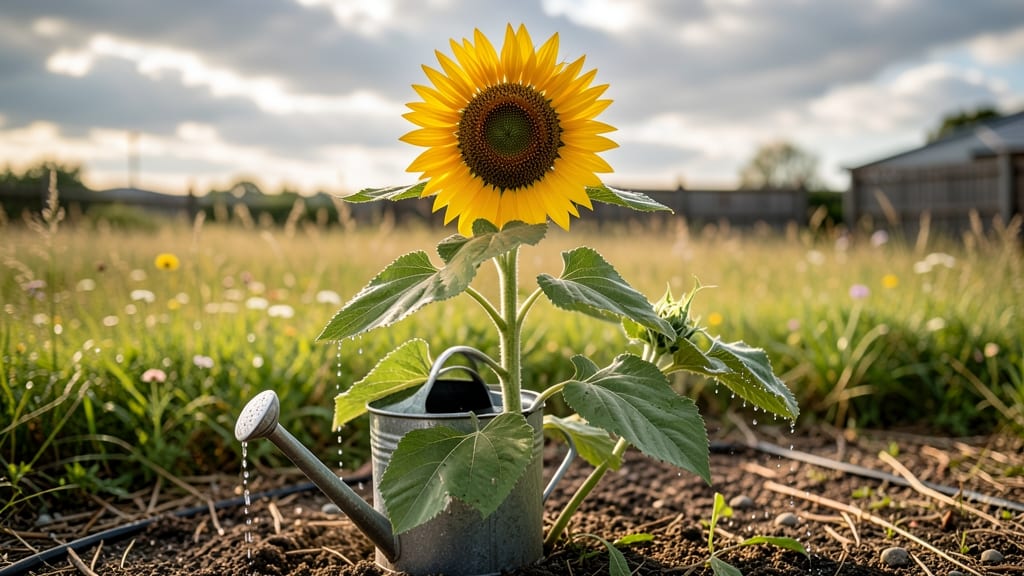
How deep and how often to water sunflower roots for maximum growth
Sunflowers thrive when their roots receive consistent moisture—but not too much. The key to towering growth lies in deep, infrequent watering that encourages strong root development.
Unlike shallow watering, which promotes weak stems, deep watering helps sunflowers reach their full 12+ foot potential by forcing roots to grow deeper in search of moisture.
For young seedlings, gentle but frequent watering is critical because their roots are still shallow. Mature sunflowers, however, can handle longer dry spells once their roots establish. The challenge? Finding that sweet spot between underwatering (wilting) and overwatering (stem rot).
Here’s the science-backed approach: Water sunflowers to a depth of 6–8 inches for seedlings and 12–18 inches for mature plants. This ensures moisture reaches the taproot system, which can extend 3–5 feet deep in ideal conditions.
Use your finger to check soil moisture—if the top 2 inches feel dry, it’s time to water.
| Growth Stage | Watering Depth | Frequency | Signs of Stress |
|---|---|---|---|
| Seedlings (0–4 weeks) | 6–8 inches | Every 2–3 days | Wilting, yellowing leaves |
| Vegetative Growth (4–8 weeks) | 10–12 inches | Every 4–5 days | Slow growth, drooping stems |
| Flowering (8–12 weeks) | 12–18 inches | Every 7–10 days | Blossom wilting, brown edges |
| Mature (12+ weeks) | 18+ inches | Every 10–14 days | Cracked soil, fungal spots |
Adjust your watering schedule based on weather and soil type. Sandy soil drains quickly, so you may need to water daily for seedlings, while clay soil retains moisture longer, reducing frequency to every 5–7 days.
Always water in the early morning to allow foliage to dry before evening, reducing fungal risks like powdery mildew.
Overwatering is just as harmful as underwatering. Signs of excessive moisture include yellowing leaves, mushy stems, and a sour smell from the soil. If your sunflower’s leaves turn yellow and feel squishy, reduce watering immediately and improve drainage.
Let the top 4–6 inches of soil dry out between waterings to prevent root rot.
For container-grown sunflowers, monitor soil moisture daily since pots dry out faster. Use a well-draining mix with perlite or vermiculite, and ensure containers have drainage holes.
Water until it runs out the bottom, then let excess drain away. Containers also heat up faster, so check soil moisture twice daily in hot climates.
Mulching plays a critical role in water retention and root health. Apply a 2–3 inch layer of organic mulch (straw or shredded leaves) around the base of your sunflower.
This keeps soil cool, reduces evaporation, and prevents weeds from competing for moisture. Just keep mulch 6 inches away from the stem to avoid rot.
During peak summer heat, sunflowers may need extra water but avoid wetting the leaves. Use a soaker hose or drip irrigation to deliver water directly to the roots. This method also minimizes fungal diseases by keeping foliage dry.
If your sunflower’s leaves curl or droop during the day but recover at night, it’s likely thirsty—increase watering frequency temporarily.
As your sunflower matures, its water needs decrease because its deep taproot can access moisture from lower soil layers. By the time it reaches 6–8 feet tall, you can often skip watering entirely unless there’s a prolonged drought.
Focus on deep, infrequent watering to encourage resilience and maximize bloom size.
Pro tip: Group sunflowers with other deep-rooted plants like corn or beans to create a microclimate that retains moisture. This natural mulching effect from companion plants can reduce your watering workload by up to 30%. Just ensure all plants have adequate spacing to avoid competition.
Best watering techniques to prevent sunflower stem weakness and disease
Sunflowers need consistent moisture to grow strong, but poor watering habits can lead to weak stems and fungal diseases like powdery mildew. The key is balancing hydration while preventing soggy soil or moisture stress.
I’ve found that drip irrigation and mulching make all the difference in keeping my sunflowers upright and healthy.
One common mistake is watering from above, which splashes soil onto leaves—creating perfect conditions for fungal spores to thrive. Instead, focus on deep, targeted watering at the base. This strengthens root systems and reduces disease risk. Let’s dive into the best methods to keep your sunflowers thriving.
⚠️ WARNING: Overwatering is just as harmful as underwatering! Sunflowers need 1-2 inches of water per week, but poor drainage or nighttime watering can drown roots and invite diseases. Wet foliage at night also encourages powdery mildew and stem rot.
Always water early in the morning (between 6-9 AM) to let leaves dry before evening humidity sets in. If you notice yellowing leaves or soft stems, you’re likely overwatering—adjust immediately!
For drip irrigation, use emitters placed 6-12 inches from the stem to deliver water directly to roots. This method saves water, prevents leaf wetting, and keeps soil evenly moist. I’ve seen sunflowers grow 30% taller when using drip systems compared to hose watering.
If you don’t have drip irrigation, use a soaker hose or watering wand to direct streams at the base.
Mulching is another game-changer. Apply 2-3 inches of organic mulch (like straw or shredded leaves) around the base to retain moisture and regulate soil temperature. This reduces evaporation and keeps roots cool, which is especially critical in hot climates where sunflowers can wilt quickly.
Just avoid piling mulch against the stem to prevent rot.
Watch for signs of stem weakness: drooping heads, yellowing leaves, or stems that bend easily. These often indicate underwatering or nutrient deficiency. If you spot white powdery patches on leaves, it’s powdery mildew—remove infected leaves immediately and space plants for better airflow.
A neem oil spray can also help prevent fungal spread.
In summary, water deeply in the morning, use drip irrigation or soaker hoses, and mulch heavily to protect stems and deter diseases. With these techniques, your sunflowers will stand tall, strong, and disease-free—ready to reach their full 12-foot potential! 🌻