
Flowers
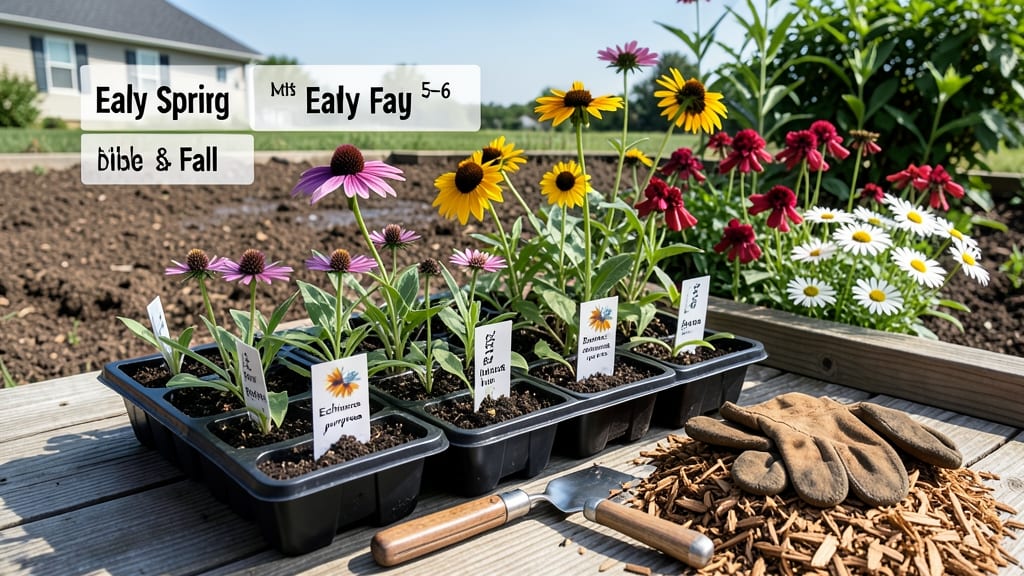
Timing your flower planting in Michigan isn’t just about the calendar—it’s about dodging those infamous late frosts that can turn your 🌸 dreams into a sad, wilted pile of disappointment.
Whether you’re dreaming of vibrant annuals or hardy perennials, getting the schedule wrong means waiting months for those blooms (or never seeing them at all).
The best time to plant flowers in Michigan depends on whether you’re working with delicate annuals or tough-as-nails perennials—and trust me, there’s a huge difference.
Spring planting kicks off in April after the last frost (usually mid-month), but fall is your secret weapon for perennials that need time to establish roots before winter. Let’s break down exactly when to plant for maximum blooms and minimal frustration.
If you’ve ever stared at a seed packet wondering, “Should I plant this now?” or cursed under your breath after a surprise frost, this guide is for you.
I’ll walk you through Michigan’s planting zones, the critical frost dates you can’t ignore, and even which flowers play nice in your backyard’s microclimate—because not all gardens are created equal, even in the same state.
By the end, you’ll know exactly when to pop those seeds in the ground (or transplant those seedlings) to turn your yard into a nonstop flower show. Ready to stop guessing and start growing? Let’s get to it.
Michigan flower planting calendar: perennial vs annual timing differences
Timing your flower planting in Michigan is all about understanding the frost dates, soil temperatures, and your specific USDA zone—whether you're in the Upper Peninsula or Southern Lower Michigan.
Perennials and annuals each have their own ideal windows, and getting them wrong can mean the difference between a vibrant garden and a sad, frost-bitten disappointment.
For annuals, which complete their life cycle in one season, the goal is to plant after the last frost when soil temperatures consistently stay above 50°F.
In contrast, perennials—especially hardy varieties—often thrive when planted in early spring or fall, giving roots time to establish before extreme weather hits. Let’s break down the best months for each type, tailored to Michigan’s climate.
In the Upper Peninsula, where winters are longer and springs arrive later, aim to plant hardy perennials in late April or early May to avoid early frosts.
For the Southern Lower Peninsula, you can often start as early as mid-April, but always check your local last frost date—it can vary by 1-2 weeks even within the same region.
For annuals, the key is planting warm-season varieties like geraniums and zinnias only after Memorial Day, when soil temperatures reliably stay above 60°F. Cool-season annuals, however, can handle March plantings in milder microclimates, like near south-facing walls or in greenhouses.
Fall planting is another great strategy for perennials, especially in USDA Zone 6a areas. Planting in September gives roots time to establish before winter, often resulting in healthier, more vigorous plants the following spring.
Just avoid planting tender perennials too late—they won’t have enough time to root before the ground freezes.
One of my favorite tricks is using row covers or cold frames to extend the planting season. In early spring, these can protect annuals from late frosts, while in fall, they can shield perennials from early freezes.
This flexibility is especially useful in Michigan’s unpredictable climate, where a 50°F day in April can quickly drop back to 30°F.
Don’t forget to prep your soil before planting! Michigan’s clay-heavy soil benefits from compost or aged manure to improve drainage and fertility.
For annuals, a light application of balanced fertilizer (like 10-10-10) at planting time gives them a strong start, while perennials often do better with a slow-release fertilizer worked into the soil.
If you’re unsure about your local frost dates, I recommend checking the Michigan State University Extension’s frost date maps or using a frost-free date calculator. These tools can help you fine-tune your planting schedule based on your exact location—whether you're in Detroit, Traverse City, or Marquette.
Finally, keep an eye on your garden’s microclimates. A sunny, south-facing bed will warm up faster in spring than a shady spot, so you might be able to plant annuals a week or two earlier in those areas.
Observing your garden’s unique conditions over time will help you refine your planting schedule year after year.
5 Critical factors that determine your Michigan flower planting success
Michigan’s last frost dates are the first rule in your planting calendar, and they vary wildly across the state. In the Upper Peninsula (Zone 5a), you might not see your last frost until early June, while Southern Michigan (Zone 6b) could be frost-free by mid-April.
Checking the Michigan frost-free date calculator is non-negotiable—this tool saves you from the heartbreak of frost-nipped blooms.
Soil temperature is your second critical factor. Most flower seeds and seedlings need soil that’s at least 50°F (10°C) before they’ll thrive. Cold soil slows germination and stresses young plants.
Use a soil thermometer ($10 at garden centers) to check—if it’s below 50°F, wait it out. Patience here means stronger roots and bigger blooms later.
Here’s the game-changer: moisture levels during planting. Michigan’s spring showers can be deceptive—what looks like perfect rain might actually waterlog your soil, suffocating roots. Aim for consistent moisture (not soggy) by watering deeply after planting and using mulch to retain humidity.
A 2-inch layer of straw keeps roots happy without the risk of rot.
Now, let’s talk early vs. late springs. If you’ve got a warm March, don’t rush—those unpredictable cold snaps can still hit. Use row covers or wait until late April for most annuals.
For perennials, fall planting (September) gives them time to establish roots before winter, while spring planting should happen after the last frost but before July heat sets in.
- 📅 Last Frost Dates: Upper Peninsula (Zone 5a) = early June; Southern Michigan (Zone 6b) = mid-April. Check your exact date—this is your planting deadline.
- 🌡️ Soil Temperature: Wait until soil reaches 50°F (10°C). Cold soil = slow growth. Use a soil thermometer to avoid guessing.
- 💧 Moisture Balance: Keep soil consistently moist (not soggy). Water deeply after planting and mulch to retain humidity.
- ⏳ Early/Late Springs: Warm March? Wait—cold snaps can still hit. Use row covers if needed. For perennials, fall planting (September) is ideal.
- ☀️ Sunlight Exposure: Most flowers need 6+ hours of sun. Southern Michigan gardens get more sun; Northern areas may need partial shade varieties.
Don’t overlook sunlight exposure—it’s the difference between a garden full of blooms and one full of leggy, sad plants. Most annuals and perennials crave 6+ hours of sun daily, but Michigan’s Northern gardens might need shade-tolerant picks like hostas or asters.
If your yard has spots with partial shade, choose flowers labeled “part sun” to avoid disappointment.
Finally, adjust your timeline based on your garden’s microclimate. A sunny South-facing bed warms up faster than a shady North corner. Use these tweaks: Plant heat-loving annuals (like zinnias) a week later in cooler zones, and prioritize hardy perennials (like coneflowers) for Northern gardens.
With these factors nailed down, your Michigan flower garden will bloom like a dream—no more guessing, just growing.