
Flowers
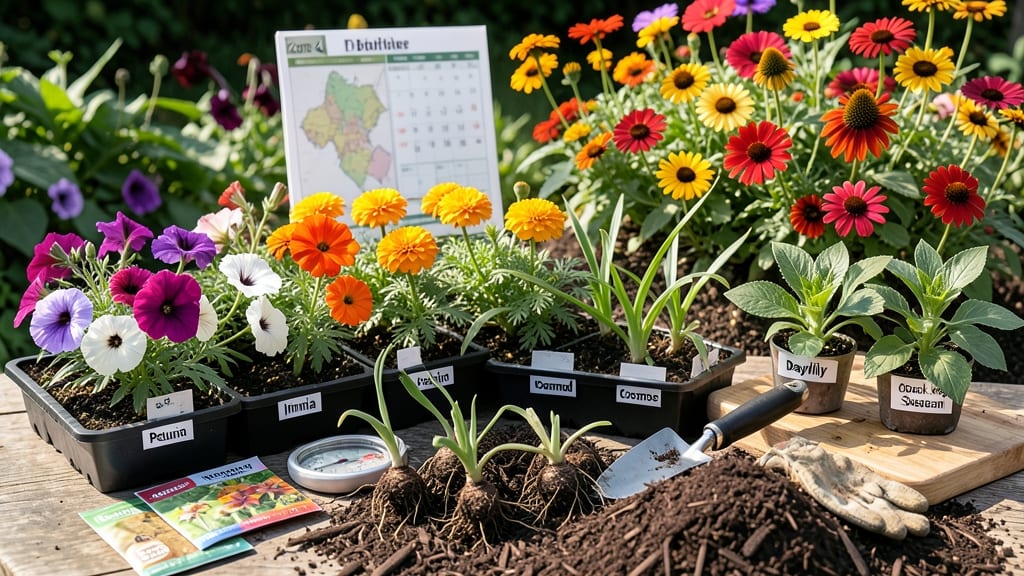
Timing your flower planting in Wisconsin isn't just about the calendar—it's about beating that sneaky spring frost that can turn your 🌸 bright blooms into icy casualties.
With USDA Zones 4b-6a and frost dates that shift from mid-April in the north to late April in the south, getting it right means the difference between a showstopping garden and a sad, half-bloomed disappointment.
I’ve learned the hard way that planting too early—even by a week—can leave your flowers wilting before they ever get a chance to shine.
But here’s the good news: once you know the exact window for your region, you can transform your yard into a vibrant escape. Whether you’re planting hardy perennials like coneflowers or delicate annuals like marigolds, the key is working with Wisconsin’s unpredictable weather—not against it.
Let me walk you through the perfect planting schedule for your zone, plus pro tips to protect your flowers from late frosts and extend their blooming season. Your garden’s best days start with the right timing.
Wisconsin frost dates by region: when to plant flowers for zero-frost success
Wisconsin’s frost dates vary dramatically from south to north, making timing your flower planting a critical skill for success. In USDA Zones 4-5, a late frost can wipe out tender seedlings overnight, while planting too early risks stunted growth.
Understanding your local frost timeline ensures your garden thrives from spring blooms to fall color.
Southern Wisconsin—like Milwaukee and Madison—typically sees its last spring frost between April 15-30, while northern areas such as Green Bay often wait until May 10-20. The first fall frost arrives earlier in the north (September 20-October 5) compared to the south (October 10-20).
These regional differences mean hardy annuals like marigolds and cosmos can thrive in southern gardens by early May, while northern gardeners should wait until late May.
To navigate these variations, I’ve broken down Wisconsin’s frost dates by region in the table below, along with planting windows for annuals, perennials, and bulbs. This ensures you’re planting at the perfect time to avoid frost damage while maximizing your garden’s potential.
For hardy annuals like sunflowers and zinnias, you can start seeds indoors 4-6 weeks before your region’s last frost date.
In Milwaukee, that means sowing by mid-March, while Green Bay gardeners should wait until late April. Tender perennials, such as geraniums and petunias, need warmer soil and should only be planted after the last frost risk has passed.
Bulbs like tulips and daffodils can be planted in fall (September-October), but spring-blooming bulbs like hyacinths should go in early autumn to establish roots before winter.
In northern Wisconsin, aim for August-September planting to avoid frost heaving. For summer-blooming bulbs like dahlias, wait until after Memorial Day in all regions.
One of my biggest mistakes was planting marigolds too early in Madison—a late April frost wiped out my seedlings! Since then, I’ve learned to use row covers for early plantings and always check the National Weather Service’s frost predictions for my area.
For extended blooms, consider fall-planted annuals like pansies and snapdragons, which thrive in cooler weather and can handle light frosts.
If you’re unsure about your local frost dates, use frost-sensitive plants as a guide. For example, coleus and begonias won’t survive Wisconsin winters, so plant them only after June 1 in most areas.
Meanwhile, coneflowers and black-eyed Susans are perennial workhorses that bounce back year after year if planted at the right time.
Pro tip: Mark your calendar with these key dates—and set reminders for two weeks before your region’s last frost. This gives you time to harden off seedlings
Best flowers to plant in Wisconsin by season: spring, summer, and fall timing guide
Wisconsin’s cool springs and short growing season demand smart planting choices. The key is matching your flower varieties to the right soil temperatures and frost-free windows. For example, tulips and daffodils can handle Wisconsin’s chilly soil, while marigolds and zinnias need warmer conditions to thrive.
I’ve planted everything from hardy perennials like coneflowers to delicate annuals such as impatiens, and the difference in success comes down to timing. Plant too early, and frost zaps your blooms before they open.
Wait too long, and you miss peak flowering seasons. Let’s break down the perfect planting schedule for each season to maximize your garden’s potential.
🌱 Wisconsin Flower Planting Timeline by Season
- Early Spring (March-April): Plant hardy bulbs like tulips and daffodils after frost danger (soil temps 40-50°F). Perennials like peonies and daylilies can go in late April once soil warms.
- Late Spring (May): Annuals like marigolds and petunias thrive when soil hits 55-60°F. Vegetable flowers (e.g., nasturtiums) love this warmth.
- Summer (June-July): Heat-loving flowers like zinnias and sunflowers need soil temps above 60°F. Deadhead spent blooms to encourage regrowth.
- Early Fall (August-September): Cool-season flowers like pansies and snapdragons go in 6-8 weeks before first frost (soil 50-55°F). Bulbs like crocuses can be planted in late September.
For northern Wisconsin (USDA Zone 4b), aim to plant spring bulbs in early April and fall flowers by mid-August. In southern Wisconsin (Zone 5a-6a), you’ve got a 2-week buffer—plant spring bulbs in late March and fall flowers in late September.
Don’t overlook soil prep: Amend your beds with compost in fall or early spring to improve drainage. Mulch after planting to retain moisture and regulate soil temperature. I’ve seen zinnias bolt when soil gets too hot, so a light mulch layer saves the day.
Pro tip: Use row covers for late spring plants if frost threatens. I’ve protected petunias with floating row covers and still gotten months of blooms—worth the effort! For fall planting, choose frost-hardy varieties like chrysanthemums to brave early chills.
Plan your flower succession so blooms overlap: Start with tulips in May, transition to zinnias in July, and end with pansies in October. This ensures your garden stays colorful year-round—even in Wisconsin’s unpredictable climate. 🌷