
How To
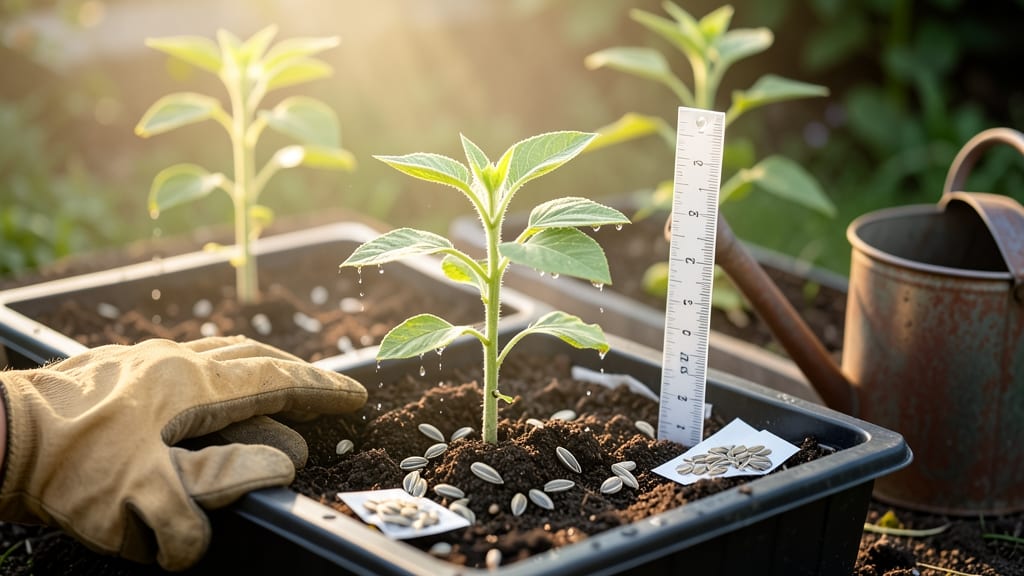
When you plant a sunflower seed, you’re not just growing a flower—you’re starting the race to see how fast these seeds grow and how quickly that 🌻 can shoot up from the soil.
Some varieties pop up in just 5 days, while others take nearly twice as long, leaving gardeners wondering: What’s the secret to speed? The answer lies in the perfect mix of patience, preparation, and a little insider knowledge about what these powerhouses need to thrive.
If you’ve ever stared at a freshly planted sunflower seedling and thought, "Where’s the growth?"—you’re not alone. The first 2 weeks are the most critical, as roots establish and the first true leaves unfurl.
But here’s the kicker: with the right soil temperature, sunlight, and a few pro tips, you can shave days off that timeline and watch your sunflowers bolt upward like they’re in a growth competition.
In this guide, I’ll break down exactly how fast sunflower seeds typically sprout, what milestones to expect week by week, and—most importantly—how to accelerate that growth so you’re not waiting months to see your towering 🌻 reach for the sky.
Whether you’re a backyard gardener or a container planter, these insights will help you turn those tiny seeds into sun-soaked giants in record time.
Ready to turn your garden into a sunflower speedway? Let’s dive into the science (and secrets) behind how fast these seeds really grow—and how you can give them the best shot at breaking the mold.

Sunflower seed germination speed: days to sprouting & early growth stages
Sunflower seeds are among the fastest to sprout in your garden, typically emerging within 5 to 14 days under ideal conditions. The exact timing depends on factors like soil temperature, moisture levels, and seed quality.
For me, the excitement starts when those first tiny green shoots break through the soil—it’s a sure sign my hard work is paying off!
In my experience, warm soil (70-85°F) is the magic ingredient for speedy germination. If your soil is cooler, like in early spring, you might see sprouts in 10 to 14 days instead of the usual 5 to 7 days.
I’ve even used a seedling heat mat in past years to shave off extra days when planting early.
Here’s what you can expect in the first 30 days of growth, from seed to sturdy seedling:
| Stage | Days After Planting | Key Growth Milestones | Care Tips |
|---|---|---|---|
| Germination | 5–14 | First radicle (root) emerges, followed by shoot breaking soil | Keep soil moist but not soggy; avoid disturbing seedlings |
| Seedling Stage | 7–14 | Cotyledons (first leaves) appear; true leaves develop | Provide 6+ hours sunlight; thin seedlings to 6 inches apart |
| Early Growth | 14–30 | Stem thickens; root system expands 12+ inches deep | Water at soil level (not leaves); add compost for nutrients |
| Troubleshooting | 14+ (no sprouts) | Slow germination or no sprouts | Check seed viability; ensure warm soil (>60°F); avoid overwatering |
The first 7 days are the most critical for sunflower seeds. If your soil stays consistently moist and warm, you’ll likely see the first radicle (root) push through the seed coat within 3 to 5 days.
I always mark my planting dates in my garden journal to track progress—it’s amazing how quickly those little sprouts appear once conditions are right!
Once the cotyledons (seed leaves) emerge, your seedlings will look like tiny, wrinkled green leaves. These aren’t the true leaves yet, but they’re a sign your plant is photosynthesizing and growing stronger.
Within 10 to 14 days, you’ll notice the first true leaves unfurling—these look more like the leaves you’d expect on a mature sunflower.
By day 20, your sunflower seedlings should be 2 to 4 inches tall with a sturdy stem. This is when I start paying extra attention to thinning if I’ve planted seeds too closely.
I use small scissors to snip unwanted seedlings at soil level, which gives the remaining plants more room to grow without disturbing their roots.
If your seeds aren’t sprouting within 14 days, don’t panic—but do investigate. Common culprits include old or low-quality seeds, cold soil, or overwatering (which can cause seeds to rot).
I once had a batch of seeds that refused to sprout until I replanted them in fresh, warm soil—turns out, the original spot had poor drainage.
For faster germination, I swear by pre-soaking seeds overnight in lukewarm water. This mimics natural rainfall and helps soften the seed coat, allowing the radicle to emerge more quickly. Just be sure to plant them immediately after soaking—don’t let them dry out!
In the first 30 days, your sunflower’s root system will grow deeper than you might expect, often reaching 12 to 18 inches below the soil surface. This deep root system is one reason sunflowers are so drought-tolerant once established.
I like to gently loosen the soil around seedlings to encourage root growth without damaging them.
Remember, every sunflower starts as a tiny seed, and with the right care, it can grow into a 10-foot-tall giant in just a few months.
The first 30 days set the foundation for that incredible growth, so keep an eye on your seedlings and give them the love they need to thrive! 🌱
Sunflower height growth timeline: weekly milestones from seed to towering plant
Watching a sunflower grow is like witnessing a 🌻 race to the sky. Within just 6 weeks, a tiny seed can transform into a towering plant, but the pace varies wildly between varieties.
Fast growers like 'Mammoth' can shoot up 3 feet in 3 weeks, while dwarf types like 'Teddy Bear' stay modest at 2-3 feet. The key difference? Genetics, sunlight exposure, and soil nutrition.
Let’s break down exactly what to expect each week—and how to give your sunflowers the best shot at reaching their full potential.
Most sunflower varieties follow a predictable growth pattern when given ideal conditions: 1 foot per week during their rapid growth phase. However, this rate can double—or nearly halt—depending on factors like soil temperature, water consistency, and nutrient availability.
For example, planting in 60°F+ soil can cut germination time by half compared to cooler spring soil. The first 4 weeks are all about root and leaf development, while weeks 5-8 bring the dramatic height spikes that make sunflowers so thrilling to grow.
By week 2, most sunflower seeds will have sprouted, with the first cotyledon leaves (those initial round leaves) unfurling. At this stage, your plants are only 2-4 inches tall, but their roots are already diving deep—sometimes 12 inches or more below the surface.
This is why deep watering (not frequent shallow watering) is critical. Shallow roots mean slower growth later on, as the plant struggles to access moisture and nutrients.
Weeks 3-4 bring the first true leaves—the serrated, more complex leaves that signal rapid growth. During this time, your sunflowers will add 6-12 inches in height, provided they’re getting full sun (at least 6 hours daily).
This is also when you’ll notice the stem thickening, a good sign the plant is preparing for its upward surge. If you’re growing 'Mammoth' varieties, you might see them outpace smaller types by 2-3 inches per week during this phase.
The real magic happens in weeks 5-6, when sunflowers enter their growth explosion. With proper care, a 'Russian Giant' can grow 3 feet in just 7 days, while even dwarf varieties like 'Sunspot' will add 1 foot during this time.
This is when you’ll need to stake taller varieties (like 'Autumn Beauty') to prevent them from toppling in wind or rain. The bud will also become visible at the top of the stem, marking the transition from vegetative to reproductive growth.
By week 8, most sunflowers will have reached 50-70% of their mature height, and the flower bud will be clearly visible. At this point, the plant is focused on flowering, which can temporarily slow height growth.
However, if you’re growing for seed production, this is the stage where nutrient-rich soil and consistent watering become even more important. Neglecting care now can lead to blind stems (stems that produce no flowers) or weak seed development.
For those growing tall varieties, the final 2-3 weeks bring the most dramatic changes. A 'Mammoth' sunflower can add 2 feet in a single week if conditions are ideal.
By week 10-12, you’ll see the flower fully open, and within 4-6 weeks after that, the seeds will be ready for harvest.
The entire process—from seed to towering 🌻—can happen in as little as 80 days for fast varieties, though most gardeners see full maturity in 90-120 days.