
Light Requirements
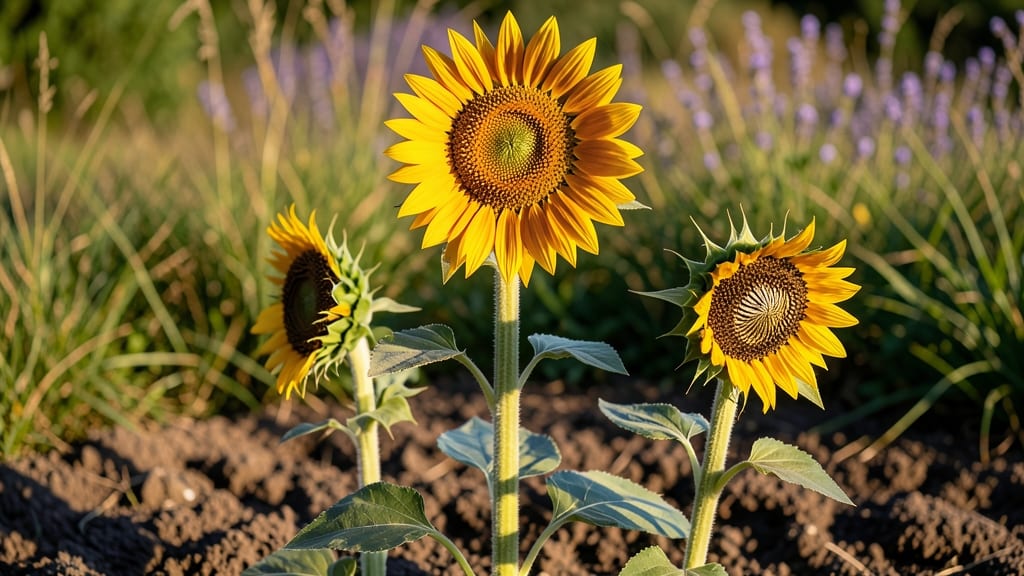
To get sunflowers thriving, you’ll need to know their sunlight secret: these cheerful 🌻 giants demand 6–10 hours of direct sun daily—or risk leggy stems and weak blooms.
Without the right light, even the hardiest varieties won’t reach their towering potential, and that’s a shame when you’re dreaming of 10-foot-tall sunflowers gracing your garden.
Most gardeners assume sunflowers are low-maintenance, but light is their game-changer. Too little sun, and they’ll stretch toward the sky like they’re searching for a better spot. Too much, and those vibrant petals can scorch before they even open.
The key? Finding that sweet spot where your sunflowers get enough energy to grow strong roots and robust stems.
If you’re in Zone 6a like me, planting in April–May means positioning your sunflowers where they’ll catch the morning sun and avoid the harsh afternoon glare.
A south-facing spot is ideal, but even partial sun can work if you’re strategic—just watch for those telltale signs of stress, like yellowing leaves or drooping blooms.
Ready to unlock the secrets of sunflower success? I’ll walk you through exactly how to give your plants the perfect light balance, plus tips for adjusting if your garden doesn’t get the sunniest conditions. Let’s make sure your sunflowers shine brighter than ever.


Sunflower sun requirements: the exact hours for maximum growth and bloom
Sunflowers thrive under the sun like no other flower—6 to 10 hours of direct sunlight daily is their sweet spot for those iconic towering blooms. But not all sunflowers are created equal: giant varieties demand the most light, while dwarf types can tolerate slightly less.
Understanding these nuances ensures your sunflowers grow strong, not stretchy or weak.
Most gardeners assume "full sun" means "as much sun as possible," but sunflowers actually have precise thresholds. Below 6 hours of sunlight leads to leggy, floppy stems, while exceeding 10 hours in scorching climates can cause sunburn. The key? Balancing light exposure with your local climate and variety.
Here’s the breakdown you need to know—sunflower sun requirements by type, plus how to measure sunlight accurately in your garden to avoid costly mistakes.
Giant sunflowers like 'Russian Giant' need 10-12 hours of sun to reach their full 12-foot potential, but even they can handle up to 14 hours if shaded during midday in hot climates.
The secret? Morning sun (6 AM–12 PM) is ideal because it’s less intense than afternoon rays, which can scorch leaves.
For dwarf varieties, like 'Little Becka', 6 hours of sun is the minimum, but they’ll still produce vibrant blooms with just 4-5 hours—making them perfect for urban balconies or north-facing gardens. These types focus energy on flower production rather than stem growth, so they’re more forgiving.
Measuring sunlight accurately is easier than you think. Start by marking your garden spots and using a sunlight calculator app (like Sun Surveyor) to track light exposure for a week.
Alternatively, observe your yard: South-facing areas get the most sun, while north-facing spots may only receive 3-4 hours. Adjust by planting taller varieties on the south side of shorter plants.
Seasonal adjustments are critical. In summer, sunflowers can handle up to 14 hours of light, but mulch heavily to prevent soil drying.
In spring or fall, when days are shorter, aim for at least 6 hours—even if it means supplementing with a reflective surface (like white plastic sheeting) to bounce extra light onto leaves.
Watch for leaf color to gauge sunlight success. Deep green leaves mean optimal light, while yellowing signals too much sun (or drought), and pale, stretchy leaves mean insufficient light. If your sunflowers start leaning toward the sun, it’s time to rotate pots or transplant them to a sunnier spot.
One common myth is that sunflowers can thrive in "partial shade". While they can survive with
What happens when sunflowers get too little or too much sun?
Sunflowers thrive in full sun, but when they don’t get enough—or too much—light, their growth suffers dramatically. Too little sun leads to weak stems and small blooms, while excessive sun can cause scorching and stress.
Understanding these symptoms helps you adjust care quickly to keep your sunflowers healthy and vibrant.
When sunflowers get less than 6 hours of sun, they stretch toward light, producing leggy stems and pale petals. This happens because they’re desperate for energy, but the result is often floppy plants that struggle to support their own weight.
In extreme cases, they may even fail to bloom entirely.
On the flip side, too much direct sun—especially in hot climates—can cause sunburn on leaves and petals. You’ll notice brown spots, crispy edges, or even wilting, as the plant overheats. This is particularly common in dwarf varieties or young seedlings that haven’t yet built up resilience.
Too Little Sun vs. Too Much Sun
| Issue | Symptoms | Solution |
|---|---|---|
| Too Little Sun | Leggy stems, pale petals, slow growth | Move to sunnier spot or use reflective mulch |
| Too Much Sun | Brown spots, wilting, scorched leaves | Provide afternoon shade or mulch heavily |
If your sunflowers are stretched and weak, try moving them to a sunnier spot or use reflective mulch (like white gravel) to bounce extra light onto the soil. For sunburned plants, provide afternoon shade with a sheer curtain or plant taller companions (like corn) to offer natural shade.
Another trick is to amend your soil with compost to improve moisture retention, which helps sunflowers handle heat stress better. Dwarf varieties like ‘Teddy Bear’ are more tolerant of partial shade, making them great for urban gardens with limited sunlight.
Keep an eye on your sunflowers’ leaf color and stem strength—these are the best indicators of whether they’re getting just the right amount of sun. With the right adjustments, you’ll be rewarded with bold, healthy blooms all season long. 🌻